



- Article
- Comments (0)
Nepal: The fog thickens
With intense poverty, confusion and political instability raging on in Nepal, India might have to come out of its 'no-interference' policy to keep alive its global aspirations, writes Mayank Singh.
Tags : Nepal Constituent Assembly dissolution | nepal crisis |
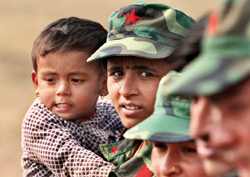 The dissolution of the Nepal Constituent Assembly would have not hurt its citizens as much as the the squabbling going on after it. Not only have the political parties let down the country by squandering an opportunity to put in place the constitution but they have also failed to herald a new beginning for the country and the people.
The economy has gone from bad to worse. The unemployment rate of 46 per cent and an average per capita income of 1,300 US Dollars per year leaves no doubt that Nepal is one of the poorest states in the world. According to World Bank data, about 55 per cent of the population lives below the poverty line.
The economy is suffering because the agricultural production, the backbone of the country's economy, is failing to keep pace with population growth, both in the terai and the hills. With problems of insurgency and political unrest, little or no attention has been paid to this sector. What is most regrettable is the limited scope for remedying this problems with the politicians and bureaucrats busy making their own positions secure.
KV Rajan, retired IFS officer and former ambassador to Nepal, believes it as solely the lack of will from the political parties of Nepal that is causing this mayhem. “It was avoidable. They had reached within a striking distance of making things right but they opted for the easier route of calling the process a failure rather than to taking up the responsibility," he says and adds that this has served the purpose for the Maoists, keeping them in the driving seat.
However, if we overlook the irresponsible behaviour of the law makers, there are a few success stories amidst the gloom in the country. One of the positives achieved is the integration of the Maoist combatants. The decision to hand over the command of the Maoist cantonments, including weapons and other logistics, to the Nepal Army in April taken by the all-party Special Committee (SC) for the Supervision, Integration and Rehabilitation of Maoist combatants, had generated renewed optimism.
The Nepal Army has been made responsible for the security of the 15 remaining Maoist cantonments, including their infrastructure. Around 9,700 combatants who have opted for integration remain in these cantonments, and there are over 3,000 weapons in containers. Around 7,000 former fighters had voluntarily retired and accepted a cash package and left the camps in mid February, while 12 satellite camps were shut down in March. The signing of a peace agreement between the former Maoist rebels and the state has also been cause for enthusiasm. Abolition of monarchy, adoption of a federal structure and election of a Constituent Assembly (though proven ineffective) have all been high points in the recent past.
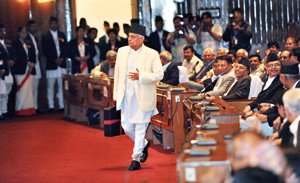
However, the question now is – what does the future hold? Experts feel the political volatility of the nation will rise without Indian intervention. India has been of the view that the various factions and parties in Nepal should be evolving their own formula to resolve the situation. If the present is any precursor, they will probably be proven right.
On the one hand, the Prime Minister of the interim government, Baburam Bhattarai has already stated that he needs to stay in his position to prevent a political and constitutional crisis and safeguard democracy in Nepal. As such, he had announced that fresh elections were to be held in November, 2012. However, 19 opposition parties, including the Nepali Congress and Communist party of Nepal (Unified Marxist Leninist) have already termed Bhattarai’s move to announce fresh elections as unconstitutional, demanding his removal and expressing unwillingness to participate in the next elections. Without the support of these parties, it will be difficult for Bhatarai to remain in power.
Question have also been raised on the timing of elections as November is the winter season and the mid-western districts receive rainfall, which will make it difficult for the voters to reach the voting booths. Nihar Nayak, Associate Fellow at the Institute for Defence Studies and Analyses believes the elections will have to be be extended to the early months of 2013. “Although the November of 2012 has been scheduled for the fresh elections but the weather conditions will press upon the administration to take the election to March-April of 2013.” says Nayak.
Amid all the chaos, India is expected to play an active role to alleviate the situation. Says Nayak, “India should try playing a constructive role as, if this unrest in its neighbourhood continues, it will affect its future aspirations to play an important role at the international stage.” What he is talking is about India’s aspirations to secure a permanent seat at the United Nations. If India is not able to control things in its own backyard, questions will rise about its ability to play any decisive role in the international situation.
More importantly, if the situation in Nepal is not resolved, it will affect the power balance in south-east Asia. The confusion in Nepal is making it difficult for China to get a clear picture of the developments. This might prompt them to further strengthen their presence in Nepal, leading to a diplomatic nightmare.
However, India's steps have to be extremely cautious and measured. KV Rajan says the situation is of serious concern for India as it means continuation of instability, polarisation and an explosion in ethnic demands. Says Rajan, “It (India's intervention) has to be careful and should address the interest of Nepal and more so of the people of Nepal like an honest friend.”
The officials who deal with the Nepal have been candid enough to accept lack of coordination amongst the various agencies. The onus of redressing the protracted maladies faced by Nepal lies with the entire political leadership. No one can be absolved of it. And if we do not take the things seriously, the problem will hurt India more than any other country.


 Issue Dated: Feb 5, 2017

