



- Article
- Comments (0)
Movie Review-Harud
Tags : Movie Reviw harud | Kashmir | chinar leaves |
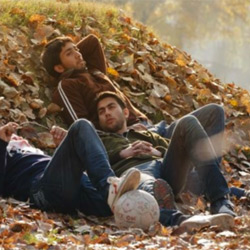 Harud-the word means autumn-is set in a season of gloom that has weighed heavy on Kashmir for over two decades. It is slow, meditative and melancholic–not the sort of film that will have Hindi movie fans falling over each other to catch. But Harud is an important film, a must-watch not only for what it says but also for the way in which it says it.
Harud, an impressive directorial debut by actor Aamir Bashir, is a disquieting tale about a Srinagar youngster grappling with the unexplained disappearance of his elder brother and the impact of the event on his aged parents.
Here, autumn isn’t just a time of the year when the Valley’s ubiquitous chinar trees shed their drying and reddish leaves in preparation for the onset of a long winter.
In Harud, the season of loss seems unending. Falling rust-and-bronze chinar leaves are the principal motif as this sombre, minimalist drama explores the fears, uncertainties and simmering anger that gnaw at the very heart of existence under the shadow of guns and grenades.
Set at a time when mobile phones first arrived in the Valley and triggered a wave of excitement among the youth, Harud is a film crafted and paced in a manner that immediately sets it apart not only from conventional Hindi films but also, and particularly, from all recent movies that have attempted to make sense of the depth and extent of the Kashmir tragedy.
In one sequence, an excited television reporter asks a young man in a queue outside a BSNL outlet how a mobile phone will change his life? It will enable me to keep in constant touch with my family and keep them informed of my whereabouts, the man said.
That utterance suggests how unsafe people feel in a climate of distrust where armed men in uniform appear to outnumber people on the streets. Another interviewee says pretty much the same thing. Our lives will improve, he asserts naively. But for the characters that Harud revolves around, there is no real sliver of hope.
The unhurried pacing of the film approximates the severely disrupted rhythms of the lives of people on the brink, and the aimless meanderings of the twenty-something protagonist, Rafiq Bhat (Shahnawaz Bhat), is a stinging comment on the sheer hopelessness of his plight.
While the young man drifts from one odd job to another and grabs at every timorous straw in the wind, his father Ramzan, a traffic policeman (played by Berlin Silver Bear-winning Iranian actor Reza Naji), suffers from post-trauma paranoia. Neither can escape the fate that history and the men who influence it have cruelly written for them.
Several decades separate father and son in terms of age, but the younger man, weighed down by tension and anxiety, is no better off than the wizened old gent. He trudges around on foot or moves about on a bicycle like an individual who has lost his will to live.
After the disappearance of his tourist photographer-brother Tauqir, Rafiq makes an abortive bid to cross into Pakistan along with a few friends. He returns to his distraught family and sinks into complete numbness. A friend calls him a zombie. Yes, he is one.
The only time a flicker of hope flashes across his visage is when he discovers his brother’s old camera with a roll of undeveloped film. The roll yields a bunch of photographs of Tauqir and a pretty girl. Rafiq espies the girl at a meeting of the Association of Parents of Disappeared Persons and follows her in an attempt to exorcise the past and get a hold on his present. But like all his dreams and hopes, this too is fated to vanish soon enough.
Harud is a fiction film but the story it narrates has a docu-drama feel. Both in terms of substance and treatment, it is remarkably unique, unlike any Kashmir-themed film you’ve seen before.
Harud has opened in Mumbai and Delhi under PVR’s Director’s Rare initiative.


 Issue Dated: Feb 5, 2017
