

Tuesday, September 29, 2026


- Article
- Comments (0)
Book review: The Man Within My Head
SAIBAL CHATTERJEE | New Delhi, June 9, 2012 09:46
Tags : Book Review | The Man Within My Head | Pico Iyer | Penguin |
Tags : Book Review | The Man Within My Head | Pico Iyer | Penguin |
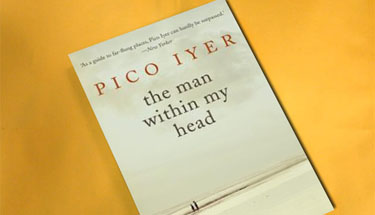
The Man Within My Head
Pico Iyer
Penguin
Edition: Hardcover
ISBN: 978-0-670-08627-6
Pages: 242
Price: Rs 499
 Pico Iyer never met Graham Greene, a writer who, he says, “was always too popular and readable to win much critical acclaim”. Just as well. The lack of direct physical contact with his literary lodestar only cemented the Indian-origin essayist and travel writer’s affinity to the peripatetic English author, “the patron saint of the foreigner alone”, who travelled around the world relentlessly in search of stories, characters and anecdotes that helped him examine, even exorcise, the pains and paradoxes of life.
Over the years, Greene, or more specifically his widely read books, some more than the others, assumed the form of an abiding disembodied voice inside Iyer’s head. He tells us that there were two Greenes, one distinct from the other: the emotionally maladroit man in private life and the writer and wayfarer who was always running away from his own self and his immediate environs. “We run and run from who we are – this was Greene’s theme from the beginning – only to discover, of course, that that is precisely what we can never put behind us.”
Greene’s voice, by Iyer’s own admission, whispered his “secrets and fears” into his ears, influenced some of his deepest thoughts and taught him to move around the world without ever feeling out of place anywhere.
Iyer, of course, had a natural early advantage. “My ancestral people,” he writes, “are an itinerant lot, given to putting themselves in faraway places where the law of supply and demand will sustain them even if that of cause and effect does not.” Later in the book, he asserts: “If you grow up between cultures, if you get accustomed to travelling, it’s easy to find yourself always on the outside, looking in.”
Looking in from outside is what fascinates Iyer and informs his writings. This book, Iyer’s tenth, cuts an impressively wide swath. It is crammed with personal reminiscences, autobiographical details, clear-headed philosophical ruminations, literary criticism and, of course, lively travel tales.
The writer, as is his wont, crisscrosses the world, from Bolivia to Ethiopia, from Cuba to Sri Lanka, while throwing light on the coincidences and connections that make Greene such an inseparable of his life and work, including on his idol’s ambivalent attitude towards religious faith.
Greene was a natural fit in Iyer’s scheme of things. “I never wanted,” he writes, “to seek out Greene’s manuscripts or letters in research libraries; I made no conscious effort to track down those people who’d known him. He lived vividly enough inside me already, in some more shadowy place.”
The Man Within My Head explores just that “shadowy place” from where Iyer seems to draw his inspiration. This wonderfully well written and passionate book is significant for many reasons. Of all the riches that it contains, none is as precious as his extended meditation on the relationship that he has as a writer and a man with Greene. Not only does it tell as a great deal more about the Englishman than we already know, it also gives us an insight into who Iyer really is and what he wants to be.
Several of Iyer’s books have explored with great lucidity and insight the joys and effects of travel across the globe. Greene is omnipresent in his work, constantly nudging him forward on his voyages of discovery. The popular storyteller’s words ring in Iyer’s mind: “I never felt myself…till I had put at least the Channel between my native country and me…”
The Man Within My Head also turns the spotlight on Iyer’s somewhat formal relationship with his professor-father, an urbane, erudite and spectacularly articulate man who was born in Madras, grew up in the outskirts of Bombay and went on to win India’s only Rhodes scholarship in 1950.
Iyer contrasts the influences of an imagined ‘adopted’ father with those of the real one. He does not shy away from highlighting the troubles he had in understanding his father. The mystery, the writer confesses with disarming candour, remained unresolved till the very end.
He writes: “The whole point of an adopted parent… is that you can have him to yourself. He is a figment of your imagination… he’s always there in your head, at your disposal. Real parents have lives to attend to, lives beyond our understanding, and they commit, most of all, the sin of being real; they’re human and distractible and fallible.”Graham Greene was his at his beck and call, day and night; Raghvan Iyer was ironically often out of reach.
The Man Within My Head is a multi-layered and highly readable book, as good as anything that Iyer has ever produced.


 Issue Dated: Feb 5, 2017

