



- Article
- Comments (0)
Book review: A Stolen Life
Tags : A Stolen Life – A Memoir | Jaycee Lee Dugard | |
A Stolen Life – A Memoir
Jaycee Dugard
Simon and Schuster
Edition: Paperback
ISBN: 9781849838344
Pages: 273
Price: Rs 299
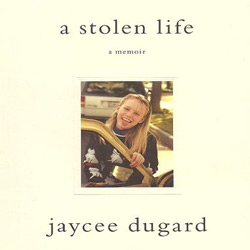
“Let me get one thing straight. My name is Jaycee Lee Dugard. I was kidnapped by a stranger at eleven years of age. For eighteen years I was kept in a backyard and not allowed to say my own name. What follows will be my personal story of one fateful day in June 1991 changed my life forever.” So begins Jaycee Lee Dugard's memoir, A Stolen Life – A memoir.
Powerful though the beginning is, it does not even come close to preparing the reader for the absolute maelstrom that follows. For sheer intensity and power, there are few books that can match Dugard's book.
Jaycee was kidnapped in 1991, then a child of 11, as she was walking to her school bus stop from her home in South Lake Tahoe, California. Her abductor, she would later find out was Philip Garrido and his wife Nancy. For the next 18 years, Jaycee was kept as Philip's sex slave, living in a series of sheds and storage units. During that time, she survived several night long, drug fuelled, orgies; survived the jealousy of Philip's wife, Nancy; mothered two girls; help run the Garridos' 'printing business' and helped take care of Philip's mother, afflicted with Parkinson's disease and dementia.
The book begins with a short background on her – how she lived with her mother and step father, how she did not like her step father much and felt the feeling was mutual, about her chronic shyness and budding sexuality. But it is not a long treatise. All this is packed into the depiction of the morning she got kidnapped – the first chapter.
The sheer honesty of her writing style takes one's breath away. Even a casual read through the book reveals that here is a completely honest telling of a tale. There is no set structure to the book. Initially, she writes a chapter about her experiences and then follows it up with a retrospective piece titled Reflection. Very soon she gives this up and follows a straight pattern of story telling. A bit later, she puts in pages from the journal, some in her own hand, some typed out later. In other words, it is quite evident that this is not a novel, it is just her experiences – haphazard, chaotic and intense – put down exactly as they came back to her.
At times, the honesty of the book gets almost physically nauseating. We are told how the young girl, completely sexually innocent, is raped by Philip. How he convinces her actions are righteous and that she was helping the world because it was allowing him to keep his “sexual problem” in check. Then, we see the Stockholm syndrome take over and her utter dependence over Philip and relief every time he comes close to getting discovered but does not.
She was not only physically and sexually tortured. The Garridos achieved a complete moral disintegration. Nothing she got attached to was she allowed to keep, the many kittens, birds and dogs that she adopted were all either taken away or killed through the callousness of her captors. She was not allowed to be a mother to her two daughters. She was forced to accept the fact that her daughters would grow up calling some other strange woman their mother. She was forced to play family with the people who perpetrated this physical, mental and sexual torture on her day in and day out. What is most discomfiting is her tone of absolute resignation. Speaking of Star Trek, a TV show she had come to like, Jaycee says, “I like the future because I don't have one”.
The book fills one with revulsion and also, at some stage, a hopeless, aimless anger. Anger against a society that creates monsters of depravity like Philip Garrido. Anger against the system that allowed Garrido to be able to bluff his way through therapists, parole officers and the police. Anger at the apathy of the people who could not recognise the girl even though she was virtually paraded to the world in supermarkets and stores. An anger that does not find any target, nor any expression.
Though it ends on a very positive note, with her rescue and therapy, somehow, a dark cloud of foreboding remains. One is also aware of the recognition of her courage that the world eventually gave her. Dugard was awarded a "Lifetime Leadership" honour at the third annual Diane von Furstenberg awards on March 9, 2012 for her courage and her JAYC Foundation which gives support to families dealing with abduction and other tragedies. The DVF awards honour women who are courageous and fight for justice. Somehow, one is unable to shake off the unthinkable depravity of what one has read, even a long time after the book has been finished. In short, the book is a must read for everybody.


 Issue Dated: Feb 5, 2017

