


- Article
- Comments (0)
A long and bearish winter
Economic slowdown is scaring investors away from stock markets. While tax incentives are proposed, one of the most pressing priorities is to get business confidence back on track. By Mona Mehta
Tags : INDIAN ECONOMY |
 Even though markets cheered the recent return of P Chidambaram as finance minister in anticipation of more market friendly policies, tackling the huge challenges in marketing financial products remains a distant dream. Indian industry is grappling with global economic downturn, slowdown in the domestic industry and high inflation leading to less savings apart from an imminent drought year as has been predicted by the Indian Meteorological Department (IMD). Inflation has seen a six month low of 6.87 per cent in July. But Chandrajit Banerjee, Director General, CII, cautions, "What is causing concern is the steep rise in food prices which are way above the comfort zone owing to a sharp rise in prices of potatoes, pulses, vegetables, milk and rice." It is anticipated that weak monsoons can further lead to price hikes and squeeze means for India's middle class.
Consequently, the markets are having an unenviable time, as retail investors, in particular, are finding it hard to muster up enough confidence. One year ago, the Sensex was at 16,676.75 points, a P/E multiple of 18.36. Currently, it is at 17,633.45, a P/E multiple of 16.68. This shows the extent to which the markets are undervalued and how investors are considering them as risky investments. Average AUM for all MFs operational in India has dropped alarmingly from Rs 743.71 billion in Q1, FY 2011-12 to Rs 664.79 billion in Q4, FY 2011-12 before rising slightly to Rs 692.79 billion in the first quarter this year. Also, the monthly turnover of BSE stood at Rs 443.15 billion in June 2012, a 25.3 per cent decline year on year (SEBI).
On the other hand, gold investments were doing comparatively better until recently when high prices led to sluggish demand and quadrupling of customs duties on standard gold to 4 per cent of imported value. In Q1, 2012, gold demand in India faced a decline of 19 per cent yoy to reach 152 tonnes as per the World Gold Council. Due to the steep depreciation of the Rupee against the Dollar, the prices of precious metals have not come down in Rupee terms, though they have corrected by more than 25 per cent in Dollar terms. Unsurprisingly, fixed deposits and fixed income instruments are on a roll. Due to these factors, bond and fixed income instruments have been doing quite well in the last year. Experts affirm that just about any debt instrument with a decent coupon is being lapped up by investors and the main reason for this is the slowing of the economy on several fronts.
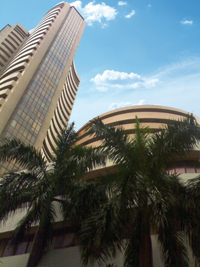
There is no dearth of products in the financial space. The only problem has been the lack of a government push to make them attractive. There have been talks of some mutual fund reforms and other financial market-related reforms, but no real initiatives have been taken. Some changes in the regulations that could bring down the cost of acquisition of financial products are expected only in the Union Budget next year. SEBI is also contemplating tax incentives as well as a safety net for retail investors.
The real game changer, of course, is economic revival. India Inc continues to wait for decisive political steps. Reserve Bank of India left its key rates unchanged in its policy review. It reduced the Statutory Liquidity Ratio (SLR) limit from the existing 24 per cent to 23 per cent. The move is rather cosmetic as banks already maintain an SLR at 27 per cent, way above the permitted 24 per cent. Aneesh Srivastava, CIO, IDBI Federal Life Insurance Co Ltd says, “No change in repo rates and CRR did not impact the sentiments in the market as much as the news of reduction in SLR. The equity markets were anyway not expecting a repo rate cut or CRR cut. Hence there was a disappointment because of the downward revision of growth." Globally, markets have gone up due to expected favourable policies by the European Central Bank and Fed. However, it is tough to foresee a similar situation in the domestic market.
While it is important for RBI to consider some monetary easing, there have to be urgent initiatives by the central government as well to revive investment in the economy. The government has little room for fiscal easing at the moment considering the high deficit, but the least it can do is to reassure global investors on the policy front. Allowing 51 per cent FDI in multi-brand retail can be a very positive move in that direction but the consensus is still missing, with a recent release stating that only one state and four union territories had expressed written consent to the proposal (Commerce Minister Anand Sharma later clarified that the report was incomplete and a complete version will be brought out with 'actual details of consultations'). Furthermore, with the imbroglio regarding GAAR and all the spectrum fee hike that has caught telecom players unawares, there is a distinct lack of confidence in global investors when it comes to India. Certainly, this has to be one of the most urgent issues for Chidambaram, and the UPA government, to address.


 Issue Dated: Feb 5, 2017

