



- Article
- Comments (0)
Warsaw Calling!
Tags : Warsaw | Poland | Thailand |
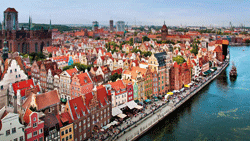 We Indians are not particularly known for our love of travelling. For most Indians, the world on our West starts from Italy and France and stretches till their trans-Atlantic cousins. On our East, we have managed to show some creativity and have mapped a whole range of countries. However here too, a creep’s love of Thailand for the obvious reasons beats any other motivation hands down. In between, what we Indians miss is a lovely panorama called Central and Eastern Europe. Beautiful cities, breathtaking landscapes, sparkling clean water-bodies and what not: countries of this region have lot to offer. And because of the history attached to it and its significance during and after the World War, the city of Warsaw comes right on the top.
The story of the city is a curious mix of joy and tragedy. Ravaged during the early days of World War II and razed to ground during its final days, the city has been rebuilt from scratch and it is in this that it finds its novelty and exclusivity.
First the essentials. Poland comes under the Schengen Visa Regime and hence you can travel to adjoining counties without bothering about frustrating immigration or customs officials. Also, since it has not adopted Euro as its currency, and will take close to 7 years or more to do so; it is fairly cheap for Indian travellers. One can make it a base and then roam around the entire Central Europe through cheap public transport, especially Euro Rail that is well connected to the Polish Railways. Like any other city in the region, the best time to visit Warsaw is between the spring and autumn unless you especially enjoy sub -15 degree Celsius temperatures.
The city of Warsaw in itself is fairly large and is almost split down the middle by the river Vistula on the north-south grid; however most of the tourists will remain largely confined on the western side of the river as suburbs on the East are fairly new with little tourism value. The city is served by Chopin International Airport that has daily flight to India via both Moscow as well as Istanbul. People coming from other European countries are served by the Centralna Train station and the International Bus station at Al Jerolozimskie.
Speaking of the tourist attractions, most of them fall in the Centrum and Mokotow area on the West of the river along the well-trodden streets of Nowy Swiat and Krakowskie Przedmiescie. Keep at least two to three days for the city itself in order to fully soak in its flavour. You can divide the visits between old and modern attractions.
Among the old attractions, make the square and the overlooking Royal Castle as the starting point and you can see the historical Warsaw in a day on foot if you start pretty early in the morning. The Royal Castle, the seat of the King and the first parliament was razed to dust in the WWII, like everything else but has been reconstructed on the old design. Breathtaking halls, linens and chandeliers and the statue of King Sigismund will keep you occupied for hours. Next to it is St Anne’s house with the breathtaking watching platform that will give you a thorough view of Old Warsaw as well as the newer districts. Next to it is the 17th century Camelite Church, which is probably not the best that the city has to offer, but it represents the original Polish Classicist style.
The Presidential Palace, the only building that survived the Nazi bombing, is a must visit. Students of history will remember this building as the place where Warsaw Pact was ratified and also where the Iron Curtain started unravelling in 1989. This building is followed by the breathtaking University of Warsaw campus, Holy Cross Church and the Copernicus monument.
Top this up with a visit to the Old Town (Stare Miasto) and the Citadel, which will take no more than a couple of hours in the hands of an expert guide. Admire the churches, cafes and restaurants around the Old Town Square which were all reconstructed on the old designs and the layouts from the 1950s. Spend some time in the evening in any one of the cafes and let your soul soak in the fabulous energy of this city. People who love delving into history can further enjoy the tour of buildings and monuments that signify both Warsaw as well as the Jewish ghetto uprisings of the early 1940s. Beware, the stories of atrocities can make the mood sombre, so you can chose to keep this either at the end of the trip or at the very start.
Warsaw is a city of museums and even if you want to skip a few of them, it will still leave a handful to visit. The topmost on the list should be the Historical Museum of Warsaw that displays thousands of exhibits, films and microfilms based on the different era in the history. For the politically initiated, Museum of Independence (formerly Lenin Museum) as well as the Museum of Pope John Paul II will be interesting. Other ones on the not-to-be-missed are the quintessential Chopin Museum that through various audio-visual aids takes you through the life of celebrated composer Frederick Chopin, as well as the Warsaw Uprising Museum that can help you understand the emotion and motivation behind the Warsaw Uprising.
Among the new buildings, the Palace of Culture and Science, gifted by Stalin to the city, is hard to miss, even if you want too. That is because this breathtaking skyscraper is visible from fairly anywhere in the city and is situated at the very heart of the Central district of Centrum. For kids as well as their parents with a knack for science, the Copernicus Science Centre is a must visit. Probably the best science centre in the world, this automated state of the art building exhibits hundreds of apparatuses and working models that one can try his hands on. The performance is recorded in the biometric card held by one and is sent through the email. A perfect way to end the sightseeing.
Warsaw’s nightlife, both adult and otherwise, is no less. Fabulous bars, clubs and mistakenly named Gentlemen’s Club dot the city landscape and can be accessed till very late in the night. The culturally inclined can chose to visit the National Theatre or the Warsaw Philharmonic and catch a performance depending on the schedule.
A couple of hours' drive can take you to Krakow, a world in itself. Further adrift is the site of the Auschwitz concentration camp and the adjoining Oskar Schindler’s factory which will take a day to fully understand.
The public transportation in Warsaw consists of the Metro, trams and buses which collectively give fabulous service at an astonishingly cheap price. Taxis are plenty and cheap and a class apart from their rowdy, ill-mannered cousins in India. And so are restaurants. Overall, the city will not burn a hole in your pocket and still let you experience the best of Europe.
saurabh.shahi@thesundayindian.com


 Issue Dated: Feb 5, 2017

