


- Article
- Comments (0)
Unlocking locked-in
Brainstem stroke or Locked-in Syndrome leaves one trapped in one’s own body. Recently Tony Nicklinson was defeated in his fight with this condition. But Kate Allatt has a different story to tell. Left paralysed after such a stroke, she found herself unable to respond to the world even though she understood everything, Kate Allatt willed herself to escape the dark void that her body had become. In a conversation with Sneha Theeng, Kate reminisces about the ‘living dead’ experience and her way out of it…
Tags : Kate Allatt |
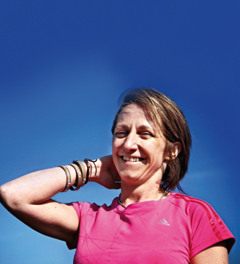 You lie awake in bed. Your whole body hurts, but you cannot move a finger. Your body is wired to drips and machines that keep you alive. Nurses come and go but nobody seems to notice that you are in pain. You want to cry out, you want to speak, utter some kind of sound, but nothing happens. You feel like an outsider watching the world pass by. There are many things that you want to do, many things that you want to say, but you are trapped – trapped inside your own body. You are locked-in.
Kate Allatt was a busy mom, her hands full with three kids. Yet she always found time for her passion: running; she ran about 70 miles every week. She started having headaches over a couple of weeks, but did not give it much thought. When she finally went to the doctor, she was told that she was suffering from stress migraine. It was kind of odd: why now? She went back home with a few painkillers. Six hours later, she was wheeled back to the hospital in a semi-conscious state and that was when the doctors diagnosed her with brain stem stroke.
Brain stem stroke, in layman’s terms, is a condition when the part of the brain that controls mobility and speech is destroyed. Victims can feel all sensations in the body but find themselves unable to move; all they can do is blink. In medical terms, it is the locked-in syndrome.
Now fully recovered, Kate sounds almost chirpy over the phone. She recounts her journey from being a fully functional mum to a “sack of potatoes” at the hospital to being fully functional again.
Locked-in syndrome is often erroneously mistaken to be the same as being in a vegetative state. Kate describes the syndrome, “You look different, you can’t do anything, but you are still the same person inside. And people must know that and assume that you are cognitively there until tests prove otherwise.”
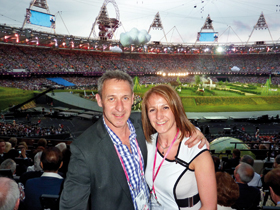
Kate went through months of physiotherapy. “The physiotherapist moved my limbs in the hope that my brain would relearn how movement is supposed to happen.” It was a long drawn out process and more than once, she felt like giving up. “The fear, the loneliness, the indignity, the anxiety of separation from my children, the pain of not moving sufficiently and a lot of them not understanding the condition in many ways was overwhelming at times,” she admits. During the first 16 weeks after her stroke, she remembers wishing for death. It was depressing and the worst part was that she understood it all.
So what changed around week 16? Seated in a wheelchair with a headrest, dribbling, surrounded by family and nurses, she awaited her routine review. She had been making progress: she had been able to move her right thumb a quarter of a millimeter in week 8, which was a great achievement for a person with locked-in. However, the doctor opened the meeting and said, “Hello everybody. I have nothing more to add.” And then everybody in the room repeated that they hadn’t seen much improvement in her, and the conversation geared towards a long-term home nursing plan, “I was absolutely devastated. My son, my best friend and my mum came to my room and when they gave me the communication board (I blinked twice for ‘yes’ and one for ‘no’ to each letter pointed to), I spelt out ‘Stand by me’, because at that point I, in my locked-in world, felt that everybody had written me off. Three-four days later, I thought I had enough of self-pity and depression and resolved ‘I am gonna bloody show you all that you are wrong’. I was prepared to fight it out.”
Kate was soon on her way to a miraculous recovery. The first sign was when her left toe moved. She recalls, “It was a huge moment for me because I thought if I could move my left big toe, which was the farthest place away from my brain, then ‘Game On!’ for the rest of my body!"
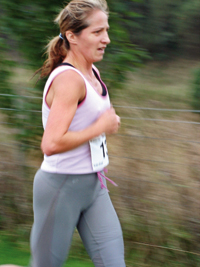
And ‘Game On!’ it was. For the next few months, she “willed and willed and willed” her body to move, and did many exercises as part of therapy. Five months into her stroke, Kate uttered her first word. She has fond memories, “My children came to visit me on a Friday with their dad. I was writing with my right hand at that time instead of using the communication board, and Woody (her six-year old son) said, ‘Aw Mum! Don’t write my name. Say my name!’ He said it so innocently that I mustered all my effort and managed to say ‘Woody!’ And my other children said, ‘Say Harvey’, ‘Say India’… I could say ‘Arvey’ and not that clearly. All weekend I continued to practice on my own in the hospital room. On Monday morning, my favourite nurse Oliver entered with a box and said, like he did every morning, ‘Morning Kate’. Usually I never replied, of course. But this morning, I said ‘Orning Oliver’, and he dropped the box, cried and said, ‘it is for moments like these that I joined nursing!’” Little did Kate know that she had been diagnosed with a tracheal condition and the doctors had told her husband that she would never speak again. Three months later, Kate walked out of the hospital, fully recovered.
On euthanasia, Kate believes in willpower and hope, over giving up. She does however mention Tony Nicklinson (locked-in for seven years and alive at the time of the interview); he had been fighting for the right to legally end his life before he passed away a few days back after refusing food for a week. She said, “It’s his life and he should do what he wants. It wouldn’t be my view, but why shouldn’t he have that choice? He has to have someone to wipe his bottom, feed, brush his hair…. At the end of the day, I have learnt that you can lead the camel up to the water but if it doesn’t want to drink, there is not much that you can do.”
Life for Kate obviously changed after the stroke and the recovery. “I want to use my experience to help other people because it is so misunderstood… That makes me feel better and helps me deal with things. I probably am a bit selfish that way, but that selfishness has got me here. A lot of the stroke-related effects – my depression, my irritability or my anger – are worse. But those are classic stroke signs. I find those hard to control, the same way I find it hard not to laugh in situations that one should not. I laugh a lot, which is good and bad. Humour is something that I discovered as a locked-in person, and those all over the world should share that humour,” says Kate Allatt, highlighting the silver lining.


 Issue Dated: Feb 5, 2017

