



- Article
- Comments (0)
The truth lies in paradox
Tags : book review | Portraits from Ayodhya | ayodhya issue | babri masjid | ram janambhoomi |
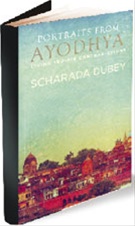
Portraits from Ayodhya
Scharada Dubey
Tranquebar
Paperback
272 pages
Rs 295
ISBN 978-93-81626-21-4
Ayodhya is quite a conundrum. Is it an ancient place of Islamic worship or the fountain head of Hindu faith as the birth place of Lord Ram that the Muslims usurped? Was December 6, 1992 an expression of religious emotion of the masses or merely politically motivated stunt? Was it an original centre for the Buddhist faith or were they outsiders? Who displaced whom? Who has the rightful claim on the land. The answer, to quote Scharada Dubey, lies in paradox.
At the very onset, Dubey clarifies that her 13th book, “Portraits from Ayodhya” is not an “attempt at tracing the steps of the movement for a Ram temple” at Ayodhya. Instead she chooses to cut through the emotion, the anguish, hate, strife and bloodshed around what is, in essence, a glorified land dispute and focus on the people, the actual men on the ground who make up the modern town of Ayodhya.
Dubey's book is a compilation of the profiles of 25 people who have experienced the life in Ayodhya and have influenced it in some way or the other. She divides them into three categories, mavericks who had exploded onto the Ayodhya scene, the figures in the administration and the common people. Through these profiles, she tries to analyse exactly how the inhabitants of Ayodhya have dealt with the Babri incident of 1992 and gone on with their lives.
The first section tells the stories of four people. There is an Ambedkarite Buddhist who lost his inheritance to the conflict who got involved in the politics of the town and was berated by his opposition and members of his own faith alike for his fondness of the spotlight. There is an itinerant god man who hobnobbed with the rich and powerful of the nation and then settled down in the town, fighting against the oppression of the Sadhus and commanding obedience, if not respect from all. There is a firebrand proponent of secularism who broke away from the Sangh because of the cast prejudices inside the organisation. And then there is also a sadhu who has no interests in flexing his muscles and quietly goes about cleaning the gutters of the city.
The second section, which is larger, talks of the administration – both the apathy and the desperate fight of the genuine workers to do their work despite shortage of funds and help. There is the uninterested king, so deeply ensconced in his Earl Gray and his tennis that there is absolutely no connection between him and his subjects. There is the humble home-maker turned chairperson of the Muniipal Council battling with the lack of staff and funding to keep the streets of the town clean. There is the immensely learned Mahant who was in the thick of the worst of the madness yet remembered to protect the idols he prayed to. Finally there is the sadhu who does not shy away from the use of any force necessary, even if illegal, for what he thinks is the betterment of his faith.
The final section, and the largest section by large deals with common people. People like the young girl, enthused by a young Mayawati's pro-dalit campaign chose to question the set norms about gender and cast in her own quiet way but lost out to a bramhin driver when she tried to go for a public post. Like the astrologer who does not need clairvoyance to be able to predict that the political parties will not leave Ayodhya in peace. Like the grass roots level journalist who feels that the Hindutva cry is misleading people but is equally hurt by the defiling of Hindu deities.
Throughout, Dubey's style is objective and reportorial. She does not take sides. Yet as the book unfolds, one gradually becomes alive to the sense of betrayal and discontent that the citizens of Ayodhya feel. Somewhere down the line, the cry for justice of people who have lost their homes to the land dispute or have had their homes barricaded in is choked out by administrational apathy, vested interests and incessant flexing of muscles. People in Ayodhya are not inflamed by religious ideals. They do not fight for the birthplace of Ram or the Sufi saints of old who lived and preached here. Instead, they actually fight for their right to walk to their homes in peace. They fight for the protection of themselves, their children and pets. They fight for their common, everyday lives.
Scharada Dubey's book does not hit you with a force of a revelation. It does not lay bare any unthinkable depravity of the powers that be. Instead, in her quite yet powerful way, she makes you think. She poignantly brings to life the plight of the common man in Ayodhya.


 Issue Dated: Feb 5, 2017

