


- Article
- Comments (0)
Stinking Mad Kitchen
Tags : Scams | UPA | inflation | LPG | Manmohan Singh |
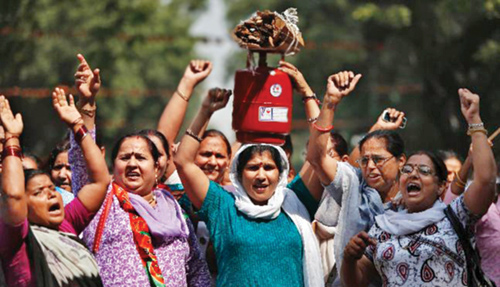 Sunaina Panigrahi and Sabita Patil don't really have much in common except the fact that both are married and have kids that are growing up. One is a resident of Odisha and a school teacher. The other lives in Maharashtra and helps her husband in his materials supply business. The first one adores Naveen Patnaik while the latter thinks Raj Thackeray is nothing short of a Messiah. The first one is a Masters in Computer Applications while the latter discontinued her graduate studies when her first kid was born. The two are as different as chalk and cheese when it comes to ideology and world view and personal interests. Sunaina cannot keep her eyes off the idiot box when Big Boss is on air while Sabita tries her best not to miss an episode of Kaun Banega Crorepati.
And yet, both share one passionate feeling: a sense of betrayal and hurt coupled with a deep and abiding anger at Dr Manmohan Singh. The reasons are threefold: tomatoes, bananas and eggs. Or rather their prices. Sunanina says it was routine for tomato prices in her locality to drop to less than Rs. 5 a kilo during winters. " In the last few years, it simply doesn't drop below Rs. 20 a kilo even during peak season. How is that possible. Manmohan Singh is an economist. Doesn't he understand this?"she complains. Sabita is outraged because her kids love omlettes for breakfast and her pocket hurts when she buys eggs. "My husband tells me that India is the largest producer of eggs in the world. Then how come prices per dozen have gone up from about Rs. 20 a dozen to about Rs. 60 now? What is Manmohan Singh doing?" she asks. Both Sunaina and Sabita recently got a Facebook post that claimed banana prices in India were higher than those in America. They don't know if it is fact or not. But they know one thing: inflation has been a curse and they openly accuse Manmohan Singh and his UPA government for this.
Try telling them the following: that food inflation that hurts their family budgets so badly is not entirely the fault of Manmohan Singh. That rising income levels amongst the poor has led to a massive increase in demand for products such as tomatoes, eggs and bananas. It won't cut much ice. Both have a startlingly similar riposte: " If mobile call rates and prices of TV sets can fall every year, why do prices of such daily needs go up every year?" Manmohan Singh is himself a distinguished economist and his core team has many star economists. But can they answer these questions raised by Sunaina and Sabita? The hard truth is: housewives and working wives are very pissed off with the UPA government because it has been a miserable failure when it comes to controlling prices and helping families retain control over household budgets.
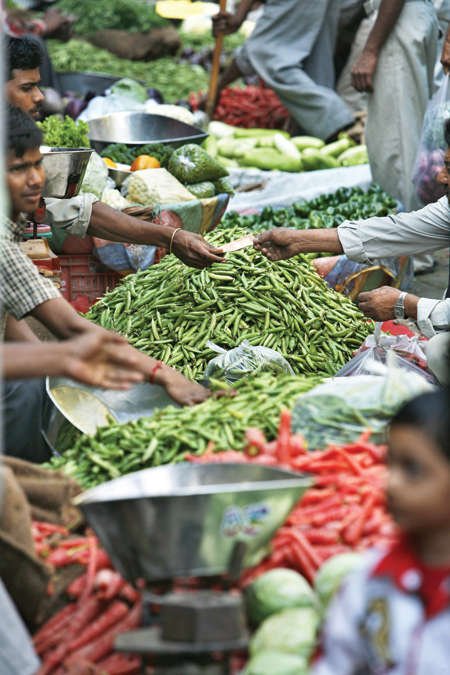 The political repercussions could be devastating. And much more than the media pundits claim to know. Ever since the 2G and the CWG scam burst across the nation's psyche after the Supreme Court nixed the best efforts of the UPA government to hide them, the talk of town has been the political costs of scams. When Anna Hazare took the country by storm with his anti corruption movement, breathless television anchors and pundits thundered that the Indian voter will no longer tolerate corruption. That she is fed up of the series of scams and is determined to punish governments that are perceived to be corrupt. They completely missed the point: the wife may be angry when she hears of scams and loot at the top echelons of power. But she goes ballistic when she fights a losing battle to stretch her household budget. Lets remember two recent examples to keep things in perspective. Uttarakhand had a BJP government and Punjab had a government run by the Akali Dal-BJP alliance. Both were widely perceived to be steeped in corruption and scams. Both governments had faced a barrage of media reports and opposition cries listing out specific cases of corruption. So when both the states went to elections recently, pundits would have you believe that angry voters would throw the kitchen and sink at these ruling parties. But what happened really? The BJP lost Uttarakhand to the Congress literally by a whisker while the Akali-BJP won a historic second consecutive term in Punjab, something that had never before happened in the past. Even in the recent Himachal Pradesh elections, it was the angry wife who turned decisively against the Congress because of LPG.
Ah yes, LPG. The pink papers and the sycophants of the UPA government have hailed the decision to hike LPG prices and put an arbitrary cap on their use as bold decisions. But the wife couldn't give a damn about them and their jargon. She is hurting and she is very, very pissed off. She is angry not just because she now has to pay more than double for an LPG cylinder. She is angry at the double whammy of a cap on usage of subsidized cylinder. Talk to housewives across India and you hear tales of how the LPG dealer tells them that there is no stock of LPG. Of course, it is always available when you are willing to cough up more than Rs 1000 for a cylinder. This stupid LPG decision has taken elderly members of middle class families back in nostalgia to the bad old days of socialism when there was a quota on everything and when the black market had everything available if you had the money to pay. It hasn't helped that the media has highlighted how ministers, legislators and rich businessmen continue to use literally hundreds of subsidized cylinders every year when the aam aadmi has to bear the cross of caps. Like in Himachal Pradesh, this single LPG decision could prove very costly for the UPA regime.
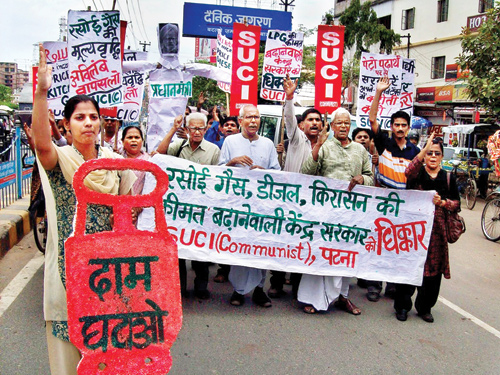 It is not just tomatoes, eggs, bananas and LPG that are hurting household budgets. Virtually everything appears unreasonably expensive. Schools have hiked fees. And they will hike fees even more as school managements claim they have to recover the cost of free education for poor children from others. Schools have hiked bus fares to absurd levels. Doctors and clinics are charging more. The Dhobhi has virtually doubled prices. In every instance, the higher prices are explained away as the result of everything else being expensive. Sunaina and Sabita have not done a formal course in modern economics. If they had, they would have read that inflationary expectations are even more dangerous than inflation. And the bitter fact is that inflationary expectations have become a settled norm in the Indian economy. Quite simply put, if everybody expects prices to go up, they will.
Some will claim that the middle class complains too much, far more than even the poor who really suffer. Perhaps there is some truth in that contention. But who can deny that even them so called pampered and privileged middle class is suffering and hurting? Look at the trauma faced by so called upper middle class families who took housing loans after the UPA came to power. For those paying an EMI of Rs 20,000 for a home loan in 2008, the amount payable has crossed Rs 30,000 every month. In many cases, not only have monthly installments shot up, the tenure of repayments has been stretched to infinity. The simple reason: uncontrolled inflation in the cost of loans, or interest rates. Ironically, interest rates have relentlessly gone up and destroyed many middle class dreams because the central bank insists on higher interest rates to curb inflation. Talk of a double whammy.
Is the UPA government worried about the simmering anger of housewives and working wives? If you go by media reports, it doesn't look like it. Apparently, the new cash transfer scheme will act as a decisive game changer during the next Lok Sabha elections and earn the UPA yet another stint. Well, castles have always been built in sand. And then there was that French queen who wondered why people were not eating cakes when she was told that they were not getting bread.


 Issue Dated: Feb 5, 2017
