

Wednesday, September 23, 2026


- Article
- Comments (0)
Indian Cinema: The First 100 Years
Soup operas for wearied souls
SAIBAL CHATTERJEE | Issue Dated: April 29, 2012, New Delhi
Tags : Indian Cinema | The First 100 Years of Indian cinema |
Tags : Indian Cinema | The First 100 Years of Indian cinema |
 From traders of turgid trash to conjurers of dewy dreams to chroniclers of the bare truth – indian cinema embraces an entire spectrum of movie mavens, mavericks and masters to inveigle a nation in love with a heightened reflection of itself on the silver screen
The raw numbers say it all. Nearly 1,000 films are made every year in 30 languages and dialects, almost three billion movie tickets are sold annually, and theatrical revenues are poised to cross the Rs 100 billion mark within the next three years. In its 100th year, the world’s most prolific movie industry is poised to go up, up and away.
Indian cinema is a world unto itself. As diverse as the land itself, it thrives on intrinsic plurality. A multiplicity of filmmaking centres, cultures, social influences, languages, creative streams and star systems lies at its heart. Its head, however, is often rather woolly.

 A huge percentage of Indian movies are of questionable quality, but this vast nation of 1.2 billion people does not seem to believe in asking questions. Not only are these films gleefully lapped up – even those that fail to recoup their ever-mounting production costs are never complete washouts – they also impact the lives and lifestyles of the teeming millions.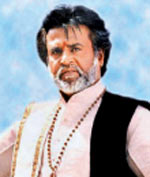
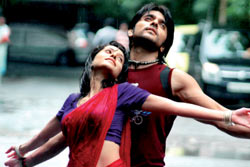
.jpg) These psychedelic soup operas for wearied souls sell colour-spangled dreams, liberally laced with song and dance. In the universe that commercial Indian cinema conjures up, life is a freeway cruise in a Lamborghini. The road blocks, represented by over-the-top villains, overbearing parents or overly earnest rivals in love, are few and far between. Love conquers all and it’s all about loving your family. So, they all go home happy, a spring in their steps.
These psychedelic soup operas for wearied souls sell colour-spangled dreams, liberally laced with song and dance. In the universe that commercial Indian cinema conjures up, life is a freeway cruise in a Lamborghini. The road blocks, represented by over-the-top villains, overbearing parents or overly earnest rivals in love, are few and far between. Love conquers all and it’s all about loving your family. So, they all go home happy, a spring in their steps.
But as opposed to the star-studded assembly-line movies that shield us from the harsh realities of life, another strain of cinematic storytelling holds its own, but not without a bitter struggle for survival. Non-mainstream, auteur-driven Indian cinema is a fringe entity that depends principally on the relevance it derives from its substance and spirit and the critical acclaim that it sometimes garners within the country and outside it.

 This divide is today accentuated manifold by the corporate media which ironically makes no bones about speaking for the consumerist interests of the nation’s wealthy elite but unabashedly celebrates the kind of escapist cinema that is targetted at the general masses.
Thanks to its sustained mass appeal, Bollywood has of late become a catchall phrase that is often erroneously used to denote Indian cinema as a whole. The reality is that popular Hindi cinema – which contributes around 200 films a year – accounts for no more than 20 per cent of India’s annual
cinematic output.
cinematic output.
India has kept Hollywood’s hegemony at bay like no other nation, not even China. Blockbusters from the world’s movie capital are routinely dubbed in local languages and released in the metropolises, but Hollywood's share in the Indian market is only 6 per cent as opposed to 38 per cent in the Chinese movie exhibition space.
On the other hand, while Bollywood is the world’s second most important film industry today and boasts more than double the ticket sales registered in the US, its piece of the global movie business pie remains minuscule. In the domestic market, however, Indian cinema brooks no obstacles. The cultural inflections and narrative norms of popular Indian films – especially those made in Hindi in Mumbai, in Tamil in Chennai, and in Telugu in Hyderabad – set them completely apart from anything else that the world can throw up by way of competition.
Barring stray exceptions – these have of course become more frequent in the current multiplex era, which has seen an increasing fragmentation of the audience base – the narrative and stylistic model has remained the same since India’s first sound film, Alam Ara, was made in 1931.
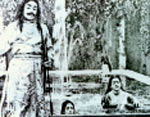
The first fully indigenously funded and produced Indian film was Dhundiraj Govind (“Dadasaheb”) Phalke’s Raja Harishchandra – commercially released on May 3, 1913 after being premiered on April 21.
In 1936, the first major star pair of Hindi cinema, Ashok Kumar and Devika Rani, emerged with the release of Janmabhoomi and Achhut Kanya. Both films were directed by the German-born Franz Osten and produced by Bombay Talkies.
In the tumultuous '40s, the decade of World War II and the climax of India’s freedom struggle, the Bombay movie industry produced an array of unforgettable films that were rich in content and stylistically innovative. These included V. Shantaram’s Dr Kotnis ki Amar Kahani, Mehboob Khan’s Roti, Chetan Anand’s Neecha Nagar, Uday Shankar’s Kalpana, K.A. Abbas’ Dharti Ke Lal, Sohrab Modi’s Sikandar, Pukar and Prithvi Vallabh, Homi Wadia’s Court Dancer, S.S. Vasan’s Chandralekha, Vijay Bhatt’s Bharat Milap and Ram Rajya and Raj Kapoor’s Barsaat and Aag.
One of the biggest films of the 1940s in terms of impact was Kismat (1943), directed by Gyan Mukherjee. It had Ashok Kumar in the role of a dashing pickpocket. Kismat was the first genuine blockbuster in the history of Indian cinema. It ran for three years in a theatre in Calcutta.
The '50s saw a spate of films that were influenced by the work of the Italian film maestro Vittorio De Sica. The classic neo-realist Hindi film was Do Bigha Zameen (1953), directed by Bimal Roy. De Sica’s naturalistic exploration of social themes in such films as The Bicycle Thieves and Shoeshine found a reflection in Raj Kapoor’s Boot Polish, Shree 420 and Awara.
In Calcutta, Nemai Ghosh made the starkly realistic Chinnamul in 1950, while Ritwik Ghatak made his directorial debut with Nagarik two years later. The year 1955 saw the premiere of Satyajit Ray’s Pather Panchali. Regarded as one of the greatest films ever made, it not only put Indian cinema on the world map but also inaugurated a stream of movie making that renounced the clichés of commercial films.
As Indian cinema made steady global inroads, a male-dominated star system established itself in Hindi films, primarily owing to the growing popularity of a trio of charismatic actors – Raj Kapoor, Dilip Kumar and Dev Anand. They complemented each other perfectly. While Kapoor was the Chaplinesque tramp, Dilip Kumar was the intense tragedy king and Anand the flamboyant romantic hero. Together they rewrote the rules of popular Indian cinema.
The '70s belonged to the romantic Rajesh Khanna, and the '80s to the towering Amitabh Bachchan. Since the '90s, the irrepressible Shahrukh Khan has held sway. But he isn’t the one-man industry that Bachchan was. He has competition from stars like Aamir Khan and Salman Khan. Aamir, a stickler for perfection, has redefined Bollywood stardom by shifting the focus from himself to the characters he essays on screen.
The contrast between Shahrukh and Aamir is, therefore, as stark as the one between Kamalahasan and Rajnikanth, doyens of Tamil cinema. While Shahrukh and Rajnikanth have built their careers around the mass appeal of their on-screen mannerisms, Aamir and Kamalahasan draw their strength primarily from their chameleon-like ability to sink into the skin of their characters.
Over the last decade, even as Bollywood's star-studded extravaganzas have been carpet-bombed with peppy but often gratuitous item numbers, a new breed of Mumbai directors led by the likes Anurag Kashyap, Vishal Bhardwaj and Dibakar Banerjee have carved an alternative space for themselves within the commercial set-up.
Their films (Omkara, Dev.D, Love Sex Aur Dhokha, among others) are edgy, gritty and rooted in grimy everyday reality but have found ready takers in India's 1,500-odd multiplexes. Is that a sign of things to come in the next one hundred years?


 Issue Dated: Feb 5, 2017

