

Sunday, October 25, 2026


- Article
- Comments (0)
Section 66A contradicts freedom of speech: Aseem
PRATHAM DWIVEDI | New Delhi, December 19, 2012 18:20
Tags : Section 66A | IT Act | Freedom of speech | Aseem Trivedi |
Tags : Section 66A | IT Act | Freedom of speech | Aseem Trivedi |
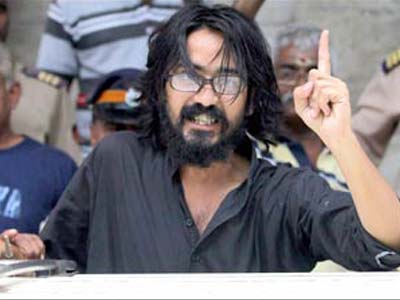
Aseem Trivedi is a cartoonist and activist. He was arrested and charged with sedition and section 66A of IT Act for displaying his cartoons during Anna Hazare's anti-corruption protest in Mumbai and for uploading them in his website cartoon against corruption. He recently staged eight day fast at Jantar Mantar demanding annulment of section 66A of IT Act.
TSI: Why do you think section 66A of IT Act should be scrapped?
Aseem: The definition of this section is vague and this can be invoked against anyone. For example, if anything you say seems offensive, inconvenient to me or hurt my sentiments, I can file a complaint against you and you could be sent to jail. On what basis the sentiments are getting hurt can’t be a yardstick for a law, sentiments can be hurt on different points, so it is hard to decipher what is offensive and what is not.
The second thing is that, there was no need for this section. We already have a different law for defamation; we have a different law if someone’s religious sentiments are hurt, so there is no reason to include this section.
TSI: What do you have to say about recent arrest of two girls in Maharashtra under section 66A?
Aseem: In their case there was a pressure from Shiv Sena. All the recent arrests made under this section had involvement of political parties. This means common man’s sentiments never get hurt; only sentiments of politicians and the government get hurt. The government wants to gag the voice of common man and in the wake of these arrests the government has been able to do so. Consequently, there is fear among people that if they write anything against politicians and the society then they may get arrested. Renu Srinivasan’s crime was only that she liked Shaheen’s status update. We want to get this section scrapped so that the fear among the common man can be removed.
TSI: You say this section curbs freedom of expression, how?
Aseem: On one hand Article 19 (1) A gives us the freedom to express our feelings without any fear through any medium; on the other we are being told that we don’t have such freedom if we use internet as a medium and if someone’s feelings are hurt by what we write on the web or if that is inconvenient to someone. Something that is inconvenient to someone may not be inconvenient for the other person.
TSI: The government has issued new guidelines for arrests under this section, isn't that sufficient?
Aseem: No, even after the new guidelines this section can be misused. These are guidelines only, and no policeman or constable is bound to follow these guidelines. Guidelines can be ignored but a law cannot. If you observe all recent cases under IT Act there was a political pressure from the higher level. Therefore, the guidelines will not make any difference. If the government knows about anomalies in the act and can bring new guidelines then what is the problem in scrapping the section which is impacting the freedom of expression in a big way. Changing the guideline will the not change the process or the rules of the law; and there will be no difference.
TSI: Will change in the definition of this section work for you, or you want it removed only?
Aseem: We chose the government to make laws for us, and if the laws are not appropriate then change them. So the government should not be adamant in its stand that it will keep improving the law with new guidelines, but will not remove the controversial section. There is no need for this section, then why are we bringing new guidelines instead of scrapping this section. Internet is our personal space, as people use it to talk to each other.
TSI: You have already ended your hunger strike demanding abolition of this section, what would be your next strategy?
Aseem: Our next strategy will be to put continuous pressure on the government. Every time we protested against the government, there was huge response from the people and the media. However, there is a need to take this issue to more and more people. As very less percentage of our population uses internet, we need to identify the net users and educate them about our movement. Moreover, most of the net users are youth, so we need to associate more and more youth with this movement to give strength to it.
TSI: There are those who say that there is nothing wrong with the section but people who are enforcing it are misusing it. your view?
Aseem: This law was designed in wrong way, which is why the government has brought new guidelines. Even the Supreme Court has welcomed writ petition questioning constitutional validity of this section. This means something is wrong with the act. Someone’s opinion may cause annoyance to someone or the other, but it doesn’t mean that we will curb the right of a person to speak.
TSI: If the government scraps this section, what are the issues you plan to take up in future?
Aseem: After getting this section scrapped we will continue our fight against corruption with the anti-corruption movements and cartoons on our website Cartoon Against Corruption.


 Issue Dated: Feb 5, 2017

