


- Article
- Comments (0)
Section 66A: A question mark on free speech?
Tags : Section 66A of IT act | Parliament | Rajya Sabha | Lok Sabha | Information Technology Act |
.jpg) A month after 26/11, the Information Technology (IT) Act 2000 was amended in December 2008 to deal with cyber crime and cyber terrorism. The amendment bill was passed in Parliament without any discussion and dissent in Lok Sabha. Now, four years after the act was amended, it is in the eye of a storm due to alleged misuse of section 66A of IT act.
A month after 26/11, the Information Technology (IT) Act 2000 was amended in December 2008 to deal with cyber crime and cyber terrorism. The amendment bill was passed in Parliament without any discussion and dissent in Lok Sabha. Now, four years after the act was amended, it is in the eye of a storm due to alleged misuse of section 66A of IT act.
More than half a dozen people have fallen victim to this allegedly faulty and vague section this year. Nearly a month ago, a 21-year-old girl Shaheen Dhada and her friend Renu Srinivasan were arrested by Mumbai police, when a Shiv Sena leader filed police complained against them. Their crime was that Shaheen updated a status on Facebook questioning the bandh in the city after the death of Shiv Sena chief Bal Thackeray. Renu’s only offence was that she liked the post.
Moreover, back in April, Ambikesh Mahapatra, a professor in Jadavpur University, West Bengal, was arrested under section 66A of IT Act for lampooning West Bengal Chief Minister Mamata Banerjee by circulating a cartoon via email. In May, two Air India employees were arrested under section 66A and 67A of IT Act and were kept in jail for 12 days before they got bail.
.jpg) Few months later, Aseem Trivedi, a cartoonist, was arrested under section 66A and was also charged with sedition for displaying controversial cartoons during Anna Hazare's anti-graft agitation in Mumbai and for uploading the same on his website, Cartoon Against Corruption. Ravi Srinivasan, a businessman from Pondicherry was arrested in October, for tweeting that Karti Chidambaram, a politician and son of Finance Minister P Chidambaram, had "amassed more wealth than Vadra."
Few months later, Aseem Trivedi, a cartoonist, was arrested under section 66A and was also charged with sedition for displaying controversial cartoons during Anna Hazare's anti-graft agitation in Mumbai and for uploading the same on his website, Cartoon Against Corruption. Ravi Srinivasan, a businessman from Pondicherry was arrested in October, for tweeting that Karti Chidambaram, a politician and son of Finance Minister P Chidambaram, had "amassed more wealth than Vadra."
Though all of them were released on bail sooner or later, these repeated arrests under this section have created massive ado against section 66A of IT Act.
According to this section, any person who sends, by means of a computer resource or a communication device, any information that is "grossly offensive" or has "menacing character"; or any information which he knows to be false, but for the purpose of causing "annoyance", "inconvenience", danger, obstruction, insult, injury, criminal intimidation, enmity, hatred or ill will, persistently by making use of such computer resource or a communication device; or any electronic mail or electronic mail message for the purpose of causing annoyance or inconvenience or to deceive or to mislead the addressee or recipient about the origin of such messages, he can be punished with imprisonment for a term which may extend to three years and with fine.
This vague definition of the section, according various sections of society demanding annulment or amendment of this section, is the bone of contention.
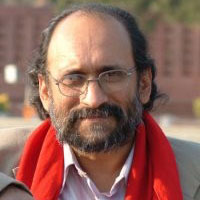 "The definition of section 66A is so vague this act is liable to be misused due to words like offensive, annoyance or inconvenience that are open to arbitrary interpretation. This section should be scrapped or completely redefined," says veteran journalist Paranjoy Guha Thakurta while talking to TSI Online.
Experts argue that this section is an additional restriction on freedom of speech and expression that is ensured by Article 19 (1) A of the Constitution. Though, Article 19 (2) puts some restriction on rights conferred under section 19 (1) a, section 66A of IT Act allegedly puts restrictions on freedom of expression.
Pawan Duggal, a Cyberlaw expert says, "This section is drafted in wide terms and has got inherent parameters for its abuse. It is faulty and overreaches the Constitution. For example, Constitution puts certain restrictions on free speech in national interest. However, section 66A of IT Act is putting far more restrictions on online free speech and the same is ultra vires to the Constitution."
Political pressure is also being perceived as another reason for the misuse. Majority of cases wherein people were arrest under section 66A of Act, politicians were directly or indirectly involved.
"All the arrests made under this act were due to political pressure," claimed Aseem Trivedi while talking to TSI.
Agreeing to the same Paranjoy Guha Thakurta said, "These arrests would not have happened if political pressure was not made."
Even former Supreme Court judge and chairman of Press Council Justice Markandey Katju had reacted sharply over the arrest of two girls from Palghar. He wrote two emails to Maharashtra chief minister Prithviraj Chavan strongly condemning the arrest of the girls.
While speaking to TSI Katju said, "Section 66A should be amended to make it clearer and more specific."
 However, in response to the protests against this controversial section and public outrage after the arrest of Palghar girls, the government has merely issued guidelines making an approval necessary, from a Deputy Commissioner of Police level officer in rural areas and from an Inspector General level officer in metro cities to file a police complaint under this section.
"The guidelines issued by the government are not sufficient," says Pawan Duggal. "When it is raining you can not expect to save yourself from getting wet by just putting a cap on. Similarly, the guidelines can not ensure that this section will not be misused," he added.
Even after cartoonist Aseem Trivadi staged an eight days hunger strike with his aide Alok Dikshit, demanding annulment of this section and hacker group Anonymous defaced BSNL's site expressing support to Aseem, the government response has been nothing more that the lathi charge by the police and detention of Aseem Trivedi and his supporters when he went to talk to Communication and IT Minister Kapil Sibal at his residence.
The Supreme Court though has already noted that the country was outraged after the young women's arrest in Mumbai for posting comments on Facebook. The apex court decided to examine the Constitutional validity of the act, while entertaining a writ petition challenging constitutional validity of section 66A of IT Act.
Balbir Punj, BJP MP in Rajya Sabha has also demanded the amendment of the act to bring it in line with the Constitution. He said, "The law should be suitably amended so that it does not curb the freedom of expression provided by Indian Constitution."
As the government continues to turn a blind eye on rising demands for the annulment or the amendment of this controversial section, the people of the country have to again depend on Judiciary for desired results. And Judiciary has to once again come forward, to ensure the rights of people in the backdrops of government's inability to do so.


 Issue Dated: Feb 5, 2017

