

Wednesday, November 4, 2026


- Article
- Comments (0)
Promised land
The government may have temporarily scuttled an important land reform march, but time is running out for them. Anil Pandey reports
ANIL PANDEY | Issue Dated: October 28, 2012, New Delhi
Tags : land reform | jai ram ramesh | rural development | ekta parishad | |
Tags : land reform | jai ram ramesh | rural development | ekta parishad | |
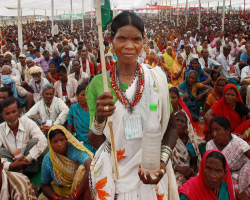 For Phudsi Bai, one of the 50,000 landless tribal labourers in Madhya Pradesh, yet another dream has come down crashing. In a welter of false promises and government skulduggery, it now turns out that a plot of land promised by the government will not materialise.
"I was born in the jungle, which I consider my own land and lived off it. Last year we were informed by the Forest Department that our occupation of the land was illegal. As compensation, we were promised alternative land,'' moans Phudsi Bai. That never happened.
To impress upon the government the need for introducing a transparent National Land Reform Policy, she was one of the 50,000 landless labourers from the state who collected together for a great march. Organised under the aegis of NGO Ekta Parishad, the march commenced on October 2 at Gwalior and was bound for Delhi where it was scheduled to reach by October 30. Singing revolutionary songs, there was great bonhomie among the participants who looked forward to this 350 kilometre-long trek.
Suddenly on the day 10 of their epic walk, it was called off after an agreement was signed between their leaders and the Rural Development Ministry when the rallyists had reached Agra. From fiery slogans, it turned out to be a damp squib.
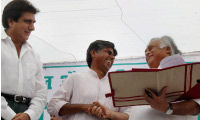 A statement read out by Rural Development Minister Jairam Ramesh on the occasion promised action in six months. Leader of the Ekta Parishad Rajgopal PV warned of a future agitation if the government did not keep its deadline– perhaps given the mood of dismay among the poorest of the poor tribals at the sudden truce, he had no other option left.
In a way, history was repeating itself. Five years ago, a similar Gwalior to Delhi rally had yielded a rash of assurances but very little else. On paper, not only were the demands met but the Prime Minister had ordered the setting up of a Task Force. Since then, the Task Force has not met even once. Says Ekta Parishad coordinator Anish Kumar: "Our struggle is 40-years-old. Our long-standing demand is that the government formulate a National Land Reform Policy. But there is no response because people involved are the poor and dispossessed. A pro-rich policy would have been immediately put into place.''
On October 11, 2012, the agreement between the two sides touched upon ten major points; among them, allotment of agricultural and residential land with guaranteed constitutional rights, increased ownership rights for the dispossessed and landless, fast track land acquisition for the poor, effective implementation of panchayat raj and Forest Act 2006 legislations and conclusion of disputes between the Forest and Land Revenue departments, were considered important. Most of them were `conceded' by Jairam Ramesh.
Similar demands had been `conceded' by then Rural Development Minister Raghuvansh Prasad Singh to another set of marchers in October 2007. Just the names of the ministers had changed, everything else remained the same.
When the 2007 rally, also led by Rajgopal PV, had made themselves comfortable in Delhi, similar assurances were given by Raghuvansh Prasad Singh, who had gone a step further by telling the agitators that the PM had agreed to their demands and that an expert committee headed by him would be set up within a month's time to decide on the modalities. He also said that a Task Force would be put together under the chairmanship of the PM himself.
On January 9, 2008, the National Land Reforms Committee was set up under the aegis of the Rural Development Minister and included among others, Rajgopal PV. On October 13, 2009, this committee with 290 proposals submitted its report to the Task Force, which included 10 Chief Ministers, five Union Cabinet Ministers and NGOs. For a variety of reasons, the Task Force has yet to meet.
Realising that the wheel was not moving and suspicious of government designs, the Ekta Parishad decided to launch a similar march with more numbers to press for their long standing demands from October 2, 2012.Says Anil Gupta, national coordinator of this jansatyagraha, "It is unfortunate that the government had chosen to insult these poor people. After the first march in 2007, the Forest Rights Act has been implemented but the tribals have not been accorded any rights.''
No sooner did the central government hear about this proposed rally, they sprung into action. Rajgopal personally received a letter from PM Manmohan Singh on May 24, 2012, requesting postponement of the rally and a detailed note on the many obstacles that were blocking land reforms.
On August 14, Planning Commission Deputy Chairman Montek Singh Ahluwalia invited Rajgopal for talks. Planning Commission member Mihir Shah kept in constant touch with Ekta Parishad but when the agitators refused to bite the bait, PM Manmohan Singh called them on September 25, 2012, and assured them that the government would publicly meet all their demands.
According to well placed sources, at a subsequent meeting between the PMO and the Planning Commission on September 29, some key officials were of the view that the matter be postponed for the time being. It was then decided that Jairam Ramesh would talk to the agitationists, offer further assurances and break the march.
And that is the way it happened. The Central government may have won a temporary victory but the mood amongst the marchers is despondent and sullen. With a six-month deadline hanging over their heads, the government does not have much time.


 Issue Dated: Feb 5, 2017

