

Saturday, October 31, 2026


- Article
- Comments (0)
Mapmaking: Partition Stories from Two Bengals
Festering wounds of history
SAIBAL CHATTERJEE | New Delhi, April 2, 2012 09:41
Tags : book review | book review of Mapmaking: Partition Stories from Two Bengals | Mapmaking: Partition Stories from Two Bengals |
Tags : book review | book review of Mapmaking: Partition Stories from Two Bengals | Mapmaking: Partition Stories from Two Bengals |
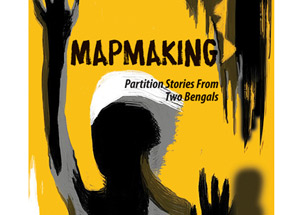 Mapmaking: Partition Stories from Two Bengals
Edited by Debjani Sengupta
Amaryllis
Paperback
ISBN: 978-93-81506-02-8
Pages 207
Price Rs 295
The darkness of night, the disorientation caused by delirium, the fear of hostile lurking shadows, the clammy chill of winter, the piercing intensity of physical pain… these and other metaphoric and real intimations of grief and guilt are recurrent through many of the twelve stories in this riveting and eminently relevant-for-our-times anthology.
These tragic tales about victims and perpetrators alike of the Partition riots and its terrible ramifications in Bengal are at the same time shot through with concern and compassion for those that were brutalized without quite being able to fathom why such a sorry fate had to befall them.
The stories – six each by Indian and Bangladeshi writers like Manik Bandopadhyay, Dibyendu Palit, Akhtaruzzaman Elias, Syed Waliullah and Hasan Hafizur Rehman – linger upon the cultural commonalities that bind the people of the cleaved land. But they do not seek to gloss over the ruptures of mind and spirit that wracked the region between 1946 and 1948, affecting the lives of millions who were forced to flee across newly demarcated borders with virtually nothing barring their emotional scars.
Edited by New Delhi-based literature lecturer Debjani Sengupta, ‘Mapmaking: Partition Stories from Two Bengals’ brings together the memories and impressions of a carefully chosen array of Bengali litterateurs who bore witness to the inexorable events that unfolded during those fateful years. The mirror they these writers hold up to the division of the country along religious lines reveal different facets of its immediate and long-term repercussions.
The book has a Foreword by eminent cultural critic and writer Ashis Nandy, who argues that ‘silence’ has been the dominant response to the carnage that accompanied the Partition, especially that of Bengal. “With very few exceptions, everyone – victims, perpetrators and witnesses – tried to wipe out the experience of the period, in the west as much as in the east,” he writes, adding that “in eastern India, it has been a case of cultivated aphasia, not negligence”.
In her Afterword, the editor of ‘Mapmaking’, which is posited as an attempted remedy to the inadequate attention paid to the Partition in the east, puts forth her views on what has shaped the Bengali narrative about the event and its aftermath. While stories from Punjab centre on “the carnage and genocide of the Partition” and are therefore “largely conflict-ridden in nature”, “the stories from the two Bengals are less violent, less pathological”, Sengupta argues.
There is ample evidence of that in this anthology. The first story, The Road (Sadak), authored by Ritwik Ghatak, sets the tone for both the despair and the hope that spring forth by turns from the subsequent pages. Israel, who has just lost his gifted teenaged son, Emdad, to a bout of cholera contracted in a Park Circus refugee camp, is beside himself with impotent rage. He tells two old Hindu friends who have sought him out that he will tear to pieces whoever has usurped his room in his riot-ravaged slum on the fringes of Calcutta.
But when Israel does chance upon the new occupant of his former abode, its walls still covered with his son’s works of art, he does not lift a finger to harm the encroacher. It is only an old, infirm woman. He goes out of his way to help her even as he firms up his own resolve to leave this country for good although he has nobody in that country that he can call his own.
The stories in this collection are essentially an exploration of the struggles or ordinary people to make sense of historical forces completely beyond their control. Some are set in the years of the actual carnage, others narrate stories from subsequent decades, but all of them portray a sense of loss and confusion in a scenario in the grip of moral paralysis.
In Selina Hossain’s ‘An Evening of Prayer’ (Gayatri Sandhya), which captures the desperation of flight even as it highlights the effort of an old matron (who lost her entire family only three days earlier) to help a woman in labour on a train taking them to the safety of a new country.
Ali Ahmed, the husband of the pregnant woman, recalls a conversation with the left-leaning youngster Mafizul, who is also in this group of refugees.
“Ahmed bhai, why are we leaving? Is it because of our religion?”
“The country has been divided on the basis of religion.”
“But why can’t we be free to decide which is our homeland?”
“We’ve lost because we are powerless. Haven’t you seen Hindus leaving? It’s the poor who suffer either way.”
That is it. The cross-border tragedies left huge lacerations not just in the lives of individuals, but at the very heart of the region. So strains of empathy hold the communities together even after they have been torn asunder. And the exploitation of the victims of Partition is by no means perpetrated only by “the other”.
In Pratibha Basu’s ‘Flotsam and Jetsam’ (Dukulhara), an aged landlady in erstwhile East Bengal asks Jamir Mian, the raiyat chief who calls her ‘Ma’, whether she should leave for India. The latter hangs his head in shame.
Once they get away and reach Calcutta, the old woman, Bindubasini, her widowed daughter-in-law and her two granddaughters run into a fate much worse than anything they could have imagined in nascent Pakistan as their co-religionists exploit their vulnerability without the slightest compunction.
Contrast that with the decision of a group of Muslim encroachers of an abandoned Hindu mansion in Syed Waliullah’s ‘The Tale of a Tulsi Plant’ to leave the holy plant alone in deference to the memory of the housewife who would have lit a lamp and prayed before it every evening in more peaceful times.
Every story here is a gripping and disturbing reminder of what the subcontinent lost and what it could still save.


 Issue Dated: Feb 5, 2017

