


- Blog Post
- Comments (0)
Is Googlorola a certain disaster, or are we asking the wrong questions?
Tags : Google | android | apple | smartphone | Samsung |
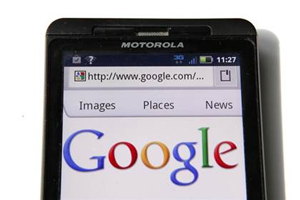 In my previous post, I had discussed the manner in which Samsung, the greatest smartphone warrior in the Android space, is making the life of Apple miserable in the courts and in the markets. But a discussion of the power struggles that have dominated smartphone dynamics in these past few years is obviously incomplete with a discussion on these two players alone. Their ascent has surprised one and all, but arguably, the greatest surprise for incumbents in the smartphone space was the rise of Google. The open source, device agnostic Android was a classic marketing masterstroke. Without getting into the big bad and dirty world of mobile handsets and tablets, Google was milking the space quite well, competing with Apple head on and gaining a huge headstart over Microsoft.
The $12.5 billion Motorola deal, therefore, makes one wonder, “Why this Kolaveri di?” It makes Google earn 17000 odd patents which shields the search engine giant considerably from its ongoing and potential patent litigation issues. That's a great idea, but obviously, a valuation of $0.73 million per patent is outrageously profligate by any standards. It wouldn't require any specialised course in M&A to predict that Google was also looking at throwing its hat into the hardware ring. In the press release yesterday announcing the consummation of the deal, the new CEO of Motorola Mobility Dennis Woodside (with Sanjay Jha only staying on only to ensure a smooth transition) commented, “Our aim is simple: to focus Motorola Mobility’s remarkable talent on fewer, bigger bets, and create wonderful devices that are used by people around the world.” A third bird that Google could potentially kill is with Motorola's presence in set top boxes, which is a viable route for Google TV to be a reality.
There are a number of obvious issues that come to mind with respect to this deal. Firstly, it's quite evident that Google will be looking to impose a lot of its own culture onto the acquired company. Woodside is himself a Google veteran and formerly the company's ad sales chief in North America. And then, he is bringing his own team into senior positions at Motorola. All those who have done any studies on M&As would know that one key reason for failure is cultural mismatch. Think Daimler Chrysler, AOL-Time Warner, Ford-Volvo and Alcatel Lucent. Or even the struggling Bank of America-Merrill Lynch combination. It's a phenomenon that's proven statistically. Around 75% of executives involved in M&A deals said that “harmonising culture and communicating with employees” is the most important ingredient for successful M&A, as per the Mercer Transatlantic Survey, 2004. If Google tends to impose its own culture into Motorola, it may end up stifling the innovation capabilities that it so eagerly seeks to leverage. Marrying the capabilities of Google and Motorola and also leveraging them as desired will need careful planning and execution. A report titled ‘Culture change for the analytical mind’ featured in Strategic Finance in 2006 rightly points out, “Merger integration is more than consolidating offices and changing the name on the door. Capturing the full (or even promised) value of a merger requires the careful integration of each element of both organizations’ DNA.”
Secondly, you will not be the recipient of a dunce cap if you are wondering how Google can apply its 'software' capabilities into the hardware realm. It isn't about which business is harder to manage. It's really about organisational DNA. Over time organisations are built to do things in a specific way and their DNA gets tuned to a certain set of market conditions and how the company sets and executes its strategic priorities in the given set of conditions. There are rare examples like Apple that have the ability to do both, also since they have been at it for years. If it is relying too much on Motorola, well, then the performance of the latter in the smartphone space is far from inspiring. Thirdly, what happens to the promise that Android has been to smartphone vendors like Samsung, Sony, HTC, et al? They have reason to be suspicious of all of Google’s future moves with the Android and possible preferential treatment given to Motorola, despite Google’s claims to the contrary and promises of a virtual firewall between the Android division and Motorola Mobility and also of no favouritism to manufacturers in new OS updates. Industry experts are quite forthcoming in their stance that we should expect HTC, Samsung, et al pushing alternate mobile platforms quite aggressively now.
However, when you look at Google’s possible gameplan from hereon, there are potential gains in the deal that are hard to ignore. For all its hype and influence in the smartphone space, Android isn’t really creating any ripples in Google’s balance sheet. In 2011, Google still earned 96.37% of its revenues ($37.9 billion) from advertising. Mobile researcher Horace Dediu estimates that Google earns $2 from every Android device sold. By 2012 sales estimates of smartphones by Gartner of 310.1 million units, that amounts to a revenue of just over $600 million from the Android for the year (a consequence of Google’s strategic blooper of keeping it cheap). Clearly, Google knows that it can no longer revel in Android proliferation without a corresponding revenue upside. With all its flaws and weak market share, Motorola Mobility still posted a revenue of $13.1 billion in 2011, which means that even if Google were to lose on Android partners, it has much, much more to gain financially from Motorola Mobility! So actually speaking, my guess is Google’s ‘fair treatment’ promise is really a farce in the long term. And from the strategic perspective, that is how it should be.
Moreover, Motorola provides Google the platform for its most critical agenda going forward - cracking the mobile ad space - which has eluded all the players so far. It is really the sweet spot that Google should be aiming at as far as synergies between the two units are concerned, especially with Woodside’s expertise in that area. For the rest, it’s apt that Google provides the maximum possible support to Motorola’s business and its famed innovation culture – and the minimum possible interference!

 Issue Dated: Feb 5, 2017
