



- Article
- Comments (0)
Into The Mind of The Writer
Have today's writers become performers, wonders Monojit Lahiri…
Tags : JAVED AKHTAR | GULZAR | MARK TWAIN |
First, the questions: In today's market-driven world, have the soul, spirit and persona of the writer undergone a change? Is he more a marketer than writer, keeping his eyes firmly on market-forces and hot-wiring his talent to tango with themes that are reader-friendly? Is he (cleverly) exploring and exploiting the public space accessible, via new technology and forums, to ensure and maximise mass-connect? Does the interaction – finally – not diminish the very mystique that defines the sacred relationship between the writer and the reader?
Actually, it was the hugely acclaimed author, Amitav Ghosh, who recently offered this thought-provoking response to the poser in his blog: Are writers also performers? "Writers and readers have not always stared each other in the face, until quite recently, most writers shrank from the notion of publicly embracing their readership.” He went on to mention some celebrated names – Gaddis and Coetzee – who apparently refused to even read from their work and suggested that this is largely a 21st century phenomenon. Ghosh believes that "through the last century the relationship between the readers and writers was largely impersonal… writers did not confront the audience in the manner of musicians, singers, actors and so on". The author goes on to finally make the point that, in his view, reading out aloud to audiences and inserting themselves between the reader and the text, diminishes the autonomy and integrity of their work.
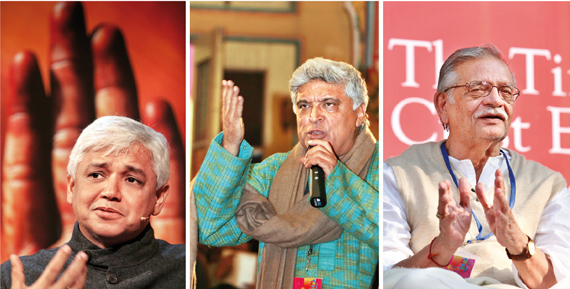
Poet and lyricist Javed Akhtar begs to differ. "Urdu poets, down centuries have always recited, even sung their verse to their constituency. Once it was the court due to royal patronage. Later it was mushairas. This tradition, in its own way, remains and it has never ever come in the way of their creativity or genius." Akhtar believes that a writer creates in private to exhibit in public. "It is, indeed, a lonely and solitary calling but the end product surely is about reaching out, popular-connect and feedback."
For too long – in Bollywood and most places – have literary creatures been overlooked and encouraged to stay in the shadows, unsung. Their work may have been lauded, but poorly rewarded and individually, they remained 'nowhere men'. New platforms thus provide them the much-needed and long-overdue social, cultural, emotional and financial compensation. The other acknowledged Poet Laureate of B-town, Gulzar, agrees and brings his own spin to the table, "Writers, authors and poets who choose to reside in their private space and believe that any physical connect with their readers will marginalise their sense of elusiveness and exclusivity are welcome to do so. But increasingly, even the most reclusive among them seem to be coming out to sample the real world and are enjoying the rewards!" He cites the example of gifted Marathi poet Arun Sheute who for years put together a bunch of 40 poems to receive a paltry Rs 2,000 from his publishers! Frustrated, one day, he brought them out himself in a magazine form during Diwali, attracting many advertisers and ended up netting at least Rs 20,000!
Gulzar also reminds us to keep track of the diverse, spectacular new-age communication avenues available for any writer to connect with his target group for they "only help to enlighten and empower both reader and writer". He believes that this ivory-tower approach appeals possibly to one kind of cultural intellectual, but "overall, isn't pluralism and inclusiveness a large part of the creative agenda and impulse?"
While ad filmmaker Prahlad Kakkar confesses his huge admiration for Ghosh as a brilliantly insightful writer, he disagrees totally on his rooting for anonymity. "What's the big deal in remaining hidden in today's let-it-all-hang-out world? If an opportunity to interact with the public comes along, it's fantastic, because feedback is critical. Also, from the readers' perspective, if the writer is impressive – in the way he fields questions and tackles them in a warm and witty fashion – then the brand equity of the writer goes up and influences the reader to buy the book." Ex-director of NFDC and someone hugely connected with book-launches, Sunit Tandon, finds it odd however that Ghosh, who is so dismissive about exposure, has no problems going on book tours at home and abroad.
Celebrated communication guru Alyque Padamsee offers his take. He sees all new-age interactive platforms as a huge boon "because the writer is then seen as a person one can relate to and make tangible contact with, and not some vague, esoteric figure residing in imagination. Also, a peep into his mind and thinking process makes for an engaging experience. Remember, all human beings at heart are performers, and the translation from the page to public space can be truly amazing".
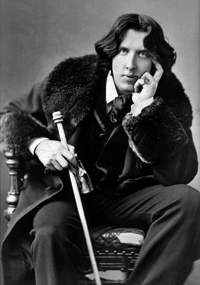
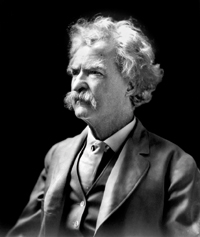
The last word must be reserved for author/columnist Palash Krishna Mehrotra (The Butterfly Generation), whose recent article prompted this debate. He disagrees totally with Ghosh too – like the rest – and cites examples of not only 20th but 19th century writers too who "performed week after week, and enthusiastically, across cities and continents, much like what mega rock bands do now. They did it because they loved doing so, as also to make money." He throws up examples of such literary giants as Hazlitt, Coleridge, Mark Twain, Carlyle, Oscar Wilde and, of course, Charles Dickens "who frequently performed in his room, playing out characters, before writing them and later performing them on the stage as well. The power and versatility of his genius was such that at his final performance in 1870, around 6,000 people were turned away from the door!"
So what's the conclusion? It's really a personal and individual call, but in a communication-driven world with technology unleashing newer tools and triggers every day, and creative audience/reader/viewer-friendly platforms popping up every minute, the symbolism and magic of anonymity – so seductive in earlier times – seems to be losing ground. In its place, the world is a stage, there's no business like show business, along with similar anthems celebrating the spirit of connection appears to be moving centre-stage, casting the writer in a whole new double-role: Writer Performer!


 Issue Dated: Feb 5, 2017

