



- Article
- Comments (0)
Indie cinema hits a new 'Peak'
The culturally diverse and eclectic ambience of McLeodganj has received a major boost with the first Dharamshala International Film Festival putting the hill town on the world cinema map, writes saibal chatterjee
Tags : Dharamshala International Film Festival | McLeodganj | Tibetan Institute of Performing Arts |Himachal Pradesh Tourism |
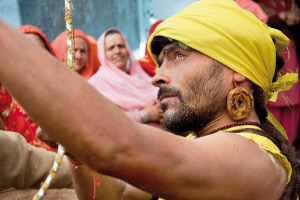 As the site of an international film festival, McLeodganj is as quaint as any the world has to offer. In the final weeks before the onset of winter, this pretty hill enclave is a perfect retreat from the madding crowds of the big cities. But those that congregated here for the four-day Dharamshala International Film Festival (DIFF) in the first week of November obviously had more on their minds than merely the uniqueness of the venue.
In their welcome note published in the festival brochure, the directors of DIFF asserted that “there are other DIFFs in the world but none, as far as we know, that compares with the beauty of our location, the unusual ethnic mix of our residents and the rich diversity of our many cultures”. How right!
But even as one took in the unique sights and sounds of this lively part of Dharamshala, it was quality independent cinema from around the world that held centrestage at the festival. DIFF showcased several globally acclaimed feature-length documentaries, besides a host of fiction films that underlined the vibrancy of the new voices that have emerged of late in India.
Filmmakers and cinema enthusiasts came together under the shade of the Hanuman Ka Tibba, a peak in the imposing Dhauladhar range glistening with a hint of snow, to celebrate the spirit of creative liberty that both the medium and the place represent. Everything else was an agreeable add-on.
As filmmaker Hansal Mehta put it, “A small festival allows you time and space to enjoy yourself without having to worry about the pressures of the networking, promotional and media whirligig that usually dominate the bigger events.”
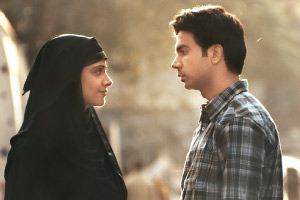 Mehta’s latest film, Shahid, a gutsy account of the life and death of human rights lawyer Shahid Azmi, was DIFF’s opening night film. The director of such films as Chhal and Dil Pe Mat Le Yaar had reason to be pleased with the warm response to his latest work – Shahid marks his return to filmmaking after a four-year hiatus.
The brainchild of Dharamshala-based filmmaking couple Ritu Sarin and Tenzing Sonam, DIFF screened nearly 30 fiction, documentary and short films in the auditorium of the Tibetan Institute of Performing Arts (TIPA) and Himachal Pradesh Tourism’s Club House in the heart of McLeodganj.
Says Tenzing: “The idea from the very outset was to put together a film festival that would be small and intimate in order to facilitate a free exchange of ideas in an informal setting.” In that respect, DIFF got it just right.
The temperatures would dip after sundown, but the warmth of the people of McLeodganj never did. One lolled around on the grounds of TIPA, consuming endless cups of tea, devouring samosas and momos, making new friends and discussing cinema late into the evening.
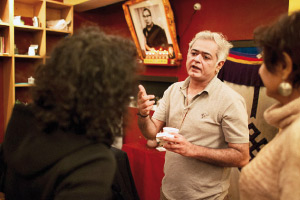 Visiting Malaysian filmmaker Dain Said (here with the fine Bunohan) said it all when he quipped that this was not a film festival but “a love affair with cinema”. No question, the first edition of DIFF was a labour of love that promises to translate into a steady relationship between Dharamshala and cinema. McLeodganj often hosts musicians and litterateurs, but cinema was hitherto a neglected medium. Dharamshala still does not have any film screening facilities.
Both Ritu Sarin and Tenzing Sonam are aware of the limitations that particular lacuna places on the conduct of the festival. The technical glitches were all too evident, but every problem that cropped up was dealt with without breaking into a sweat. “We will definitely learn from this experience,” says Sarin. “Hopefully, we will have much better infrastructure in place next year onwards.”
What were the films that struck a chord? Well, virtually every title that played here aroused instant enthusiasm – a testimony to the meticulous selection done by the DIFF curators. In the programme were two remarkable documentaries about Tibetan Buddhism and the concept of reincarnation – Jennifer Fox’s My Reincarnation and Mark Elliott’s Yangsi.
My Reincarnation, filmed over a period of 20 years, peeps into the lives of Tibetan high master Chogyal Namkhai Norbu and his Italian-born son Yeshi. The latter is a recognised reincarnation of his father’s spiritual teacher in Tibet but he has turned his back on the family legacy. Fox focuses on the conflict between father and son as one carries on his work as a great Buddhist teacher in the West and the other grapples with doubts over the responsibility that his destiny has imposed on him.
My Reincarnation has travelled around the world but this was its first-ever screening in India. “I am really keen to receive feedback from the audience here,” Fox said ahead of the show, “because this is the first time the film is playing before a mixed Tibetan audience.”
Also on show were three first-rate biographical documentaries – BAFTA award-winning director Asif Kapadia’s Senna, German master Wim Wenders’ Pina and Portuguese director Miguel Goncalves Mendes’ Jose and Pilar. Two other well-received films were Emad Burnat and Guy Davidi’s 5 Broken Cameras and Ritu Sarin and Tenzing Sonam’s When Hari Got Married.
Among the fiction films screened at DIFF were the National Award-winning Marathi film Deool, directed by Umesh Vinayak Kulkarni, and Ashim Ahluwalia’s Miss Lovely. Kulkarni was in Dharamshala to present the film but Ahluwalia could not make the trip, stranded as he was in New York in the wake of Superstorm Sandy.
“This festival is special because of the location,” Kulkarni told this writer. “In the bigger cities, film festivals tend to draw even those that are not serious about cinema. In a place like Dharamshala, only those that are genuinely passionate will make the effort to participate.”
So there we are. DIFF is bound to be a festival where the dynamics of the event cannot be delinked from the socio-cultural nuances associated with the venue. Going forward, McLeodganj can grow into an annual celebratory hub for independent cinema where the boys will be separated from the men, where the best will be recognised in the purest sort of way possible, only for the love of moving images, free from extraneous marketing considerations.
saibal.chatterjee@gmail.com


 Issue Dated: Feb 5, 2017

