


- Article
- Comments (0)
How liberalization transformed cement sector
Tags : cement sector | liberalisation | cement manufacturing in india | decontrolling of cement sector |
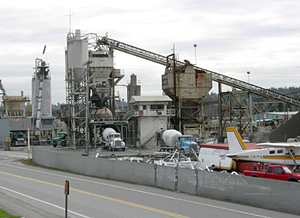 From just around 28 million tonnes installed production before 1982, India’s cement sector has gone a long way to reach to a level where production capacity is much more than the country of more than 120 crore people can actually consume.
However, it is not just the quantity of production, where the country stands only second to China in the world; Indian cement industry is inferior to none when it comes to quality and the technology it uses for making cement. Thanks to liberalization, India has around 300 million tonnes per annum cement manufacturing capacity now.
The cement sector came out of the clutch of government-control in two phases. It was in 1982 when the sector was liberalized partially and from 1989-onwards, it became fully decontrolled. During the partial-control phase, cement makers were to sell two-thirds of their produce to the government as “levy cement”. The rest they could sell in the open market at the price they determined themselves.
“The Dark Age of the grey product ended on February 28, 1982. That date represents a milestone in the history of cement. The industry had writhed for four decades under the crushing burden of wholly irrational price control. Politicians and bureaucrats in public administration, and racketeers and buccaneers in private deals, made fortunes at the expense of the common man and the exchequer, while the honest manufacturer was left with no resources even to maintain his plant,” said Nani Palkhivala, Chairman, the Associated Cement Company (now ACC Ltd.) in his address to the shareholders on November 12, 1982.
The wheel of fortune for the sector changed drastically in just one year. Palkhivala, in his address at the company’s Annual General Meeting in 1983, said: “In March 1982 came partial decontrol. The spectacular performance of the cement industry during 1982-83 bears eloquent testimony to the truism that government policies can make or unmake an industry and that in economics there are no miracles but only consequences.
The cement industry has left behind the decades when it was festooned with red tape and awash with black money. It has started its arduous march on the road to growth”.
However, the scenario was just the reverse in the pre-liberalization era. Though a Kolkata-based company started production of cement as early as 1889, India started cement production in an organized way since 1914 with 1,000 tonnes capacity. In the next ten years, production capacity reached just over 2.5 lakh tonnes. A lot of ups and downs later, India’s production capacity touched 3.2 million tones in 1951. In the next thirty one years, capacity grew to 28 million tonnes. India added a little over 7.5 million tonnes in that year itself. In the next three years, another 10 million tonne capacity brought into operating, bringing the total installed capacity to about 45 million tonnes.
“The industry's capacity grew five-fold in the first two decades after controls were partially lifted. Today after three decades of liberalization, the industry has multiplied its capacity to 290 million tonnes — a ten-fold increase. India's cement industry has completely transformed from being an inefficient, shortage ridden one to the world's second largest cement industry in size and best in terms of technology, quality, energy efficiency and carbon footprint,” R Nandkumar of ACC said.
An industry insider said that sans the liberalization of the sector, India would have been nowhere in the global cement map. Before liberalization, India used to import cement to meet its domestic need. Had it continued till now, India’s pace of overall growth in general and infrastructure in particular would still have remained inferior. Thus the liberalisation was much-needed to give the sector the real fillip for growth.
Incidentally, Aditya Birla Group’s flagship, Grasim Industries, now the single largest cement maker in the country forayed into the cement sector in 1985 with the commissioning of its first plant at Jawad in Madhya Pradesh. Aditya Birla Group had in 2010 consolidated its cement business under UltraTech. Now, it is one of the top 10 cement makers in the world with over 50 million tonnes per annum cement making capacity.
“While the decontrol of cement ensured better profitability, the economic liberalization ensured steady rising demand for this core infrastructure product. The demand generation was also aided by the free availability of cement. The result is there for all of us to see. While it took 82 years for 100 million tonne to materialize the next 100 million tonne came in just 10 years between 1997-98 to 2007-08. What is more, the second 100 million tonne capacity has come only in three years, i.e. during the year 2008 to 2011,” said Shailendra Chouksey, Whole Time Director, JK Lakshmi Cement.
The continuous capacity addition, though resulting in sporadic surplus situation, is a reflection of the expectation of the industry that notwithstanding the cyclical fall in demand the general tenor would that be of a high trajectory growth in cement demand arising out of the huge infrastructure gap that Indian economy has and which needs to be addressed in the coming years. If we ignore FY 10-11 and 11-12 the four years prior to that the industry achieved an average growth of about 9 to 10 per cent while prior to that the demand growth has been in the range of 8 to 8.5 per cent.
Irrespective of the political party in the governance, it is expected that construction activity would get the desired focus, be it that of the infrastructure or that of houses and as such one can reasonably expect that the cement industry would clock demand growth in double digit for at least next two decades.


 Issue Dated: Feb 5, 2017

