

Saturday, October 10, 2026


- Article
- Comments (0)
Frankly my dear, they do not give a Damn
China’s declining GDP growth has started showing its impact on neighbouring Asian economies. However, if China is to play a significant role in balancing the global economy, then this slowdown should be invited instead of being dreaded, argues Amir Moin
AMIR MOIN | Issue Dated: September 17, 2012, New Delhi
Tags : china's gdp | asian economics | ussr.... growth rate | global economy |
Tags : china's gdp | asian economics | ussr.... growth rate | global economy |
.jpg) If you are someone who has a taste for foreign policy and all that it entails, then you must have realised by now that the world has developed an enormous capacity for obsessing over the phenomenal rise of China. And why not? In a democratic world where growth for almost half a century has been fuelled by capitalism (an era which also witnessed the downfall of USSR), a communist China was least expected to thrive.
If you are someone who has a taste for foreign policy and all that it entails, then you must have realised by now that the world has developed an enormous capacity for obsessing over the phenomenal rise of China. And why not? In a democratic world where growth for almost half a century has been fuelled by capitalism (an era which also witnessed the downfall of USSR), a communist China was least expected to thrive.
In fact, the country has grown by defying contemporary US geo-political doctrine. Even today, when conventional wisdom would ask for pursuing GDP boosting practices to balance the effects of a global economic downturn, the mandarins in Beijing, pulling the strings of monetary and fiscal policies, are relentlessly executing a soft landing. Reason: Hu Jintao knows far too well what is good for his country.
The mainland’s soft landing efforts come into perspective once you appreciate that continuous growth would result in an economy too big and over heated for the communist regime to tame, resulting in an increased gap between the rich and poor of China, putting sustainability in a state of limbo. And as expected, the monetary tightening has yielded the desired results.
Statistics released by China’s Ministry of Commerce reveal that GDP has been on a decline since 2010. In the second quarter of 2011, it grew at a rate of 9.5 per cent. By the end of 2011, economic output was hovering around 9.2 per cent (compared to 10.4 per cent in 2010). GDP eventually decelerated to 8.1 per cent in the beginning of 2012 and slide down to 7.6 per cent for the quarter ending June 2012.
Let us consider some data compiled by China’s National Bureau of Statistics to understand where China stands as of now. For August 2012, value added industrial production experienced a growth of 8.9 per cent, down from July’s 9.2 per cent. This is the lowest growth rate so far since May 2009. Further, investment growth in fixed assets declined to 18.8 per cent from 20.4 per cent in July.
 The Chinese strategy has the global economy worrying. Markets reacted negatively to deteriorating GDP growth. Quite clearly, this shows how dependent economies have become on China in the wake of a worldwide financial crisis which was triggered by the US in 2008 and later compounded by the Eurozone beginning mid-2010. At the height of the crisis, China accounted for roughly half of the rise in global demand. In fact, the country was instrumental in insulating Western economies from damage to some extent. But now that growth is declining with every passing quarter, equity markets are panicking because there is no one to fill the void China is leaving. However, if integrated economies across the world expect Beijing to continue cushioning markets like it earlier did, then they would have to settle down for a hair cut in the near future.
China’s persistence with slowing down becomes clear by picturing a few macro economic realities. A good place to start from would be inventories which have been building up for the past few quarters. A slew of commodities ranging from iron ore and coal to copper and rubber are stacking up in the mainland. Even finished products like cars and furniture are piled up across Chinese warehouses. As a result, a lot of companies are looking at selling part of their inventories in neighbouring East Asian markets.
Iron ore claims the largest share of this pile up amounting to 100 million tonnes scattered around ports. As a result, the Qingdao iron ore benchmark has declined to $ 90 per tonne – $ 30 short of the $120 per tonne reservation price. This is a clear indication that the erstwhile GDP growth rate of 10 per cent, which analysts now long for, had led to unrealistic demand projections. Not taking the painful corrective actions would have resulted in a nightmare of a consumer demand bubble.
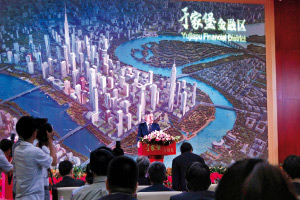
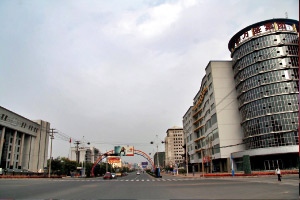 The second reason which makes China’s actions seem as if it was oblivious to global economic chaos is the real estate bubble. Tianjin, China’s sixth most populous city, which grew at an overwhelming 16.4 per cent in 2011 is a reflection of how the Chinese real estate landscape is evolving. In the wake of the sub prime mortgage crisis, Beijing had pumped $ 585 billion into the economy. This led to a rapid development of high speed railway infrastructure, hotels et al – virtually anything that would bolster short term economic growth.National Audit Office data shows that within two years, local governments had amassed a debt of $ 1.7 trillion. In 2010, this amounted to almost 27 per cent of China’s GDP. And Tianjin had borrowed the most. What is more disturbing is how the stimulus trickled down. Instead of taking to a more conventional route, these local governments borrowed through shady financing outfits to avoid regulatory hassles. The city is now half way through its development. If developers do not find enough stakeholders, then defaults will follow, converting the area into a ghost city with partially constructed skyscrapers shimmering in the sun.
This is not an alarmist view. The Kangbashi district is evidence enough. Built to provide commercial and residential grandeur to a million people in Ordos – a coal mining town in Inner Mongolia, the district stands empty after more than five years of completion. Alaistair Chan, an economist at Moody’s Analytics says, “China's June data dump gives us virtually all the data for the first half of the year. What it tells us is that the soft landing is still on track largely as expected.”
In fact, the country is still doing its bit to ensure that the vagaries of monetary tightening can be off set with controlled fiscal easing. The government has announced infrastructure investments worth $157 billion. This includes 25 subway systems, 13 highways, five ports and two waterways. “One reason to expect a rebound in the third quarter is that the increase in investment approvals should start boosting production soon,” explains Chan. Contrary to popular belief, a sustainable China in the future is far more valuable to the global economy than a roaring dragonwhich will eventually run out of steam. If equity markets still want to fret, then it is their choice. Because frankly my dear, right now, China doesn’t give a damn.
amir.moin@thesundayindian.com


 Issue Dated: Feb 5, 2017

