



- Article
- Comments (0)
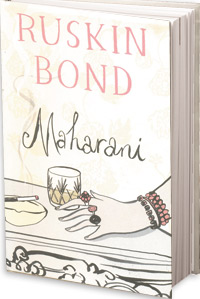
Book Review: Maharani
A Carnival of Rust
Tags : maHArani book review |k ruskin bond |
 There is something about Ruskin Bond’s writing that reminds one of Mussoorie. True, many of his stories are set there, but it is not that. The cobbled streets of the sleepy little hill station seem to be holding on to an era gone by for all it is worth. The lonely bandstand and wrought iron street lamps seem to stand in silent defiance to the juggernaut of modernisation.
Bond too is a man of times gone by, a dying species. A creature weaned on perfectly brewed teas and private schools that were the “Eaton of the East”. And that is reflected beautifully in his writing. An old world charm oozes out of every word that Bond deigns to write. Dry and unmistakably British, Bond’s writing smacks of the stiff upper lip of a PG Wodehouse. His latest work, Maharani is no different.
As the title suggests, the protagonist is a queen, Her Highness the Maharani of Mastipur, Neena to friends. The charming novella traces the friendship between her and the narrator (Bond is quite adamant in the introduction – though the narrator bears his name and reminds the reader of him in more ways than one, it is not him). It chronicles the Maharani’s life as she goes through crates of premium liquor and one lover after another with Ruskin the narrator playing the silent observer. “As our relationship had never been a physical one, she found it easy to confide in me – knowing I would not make any overt demands – demands on her money... or demands on her emotions...”
Through the narrative, a number of characters come and go. There is Ricardo Montbalan, the South American diplomat, his wife and two children; Mr Lobo, the Goanese pianist; her sons Princes Karan and Kartik; the strict German nun Sister Clarissa who might as well have been Mata Hari; Hans, Neena’s massive Swiss handyman and a large assortment of snarling, snapping pekes.
Bond does not bother with specifics. He does not waste time describing faces and figures. There is one character he merely describes as “large bosomed and ample bottomed”.
There is no strict plotline either. Instead, Bond strolls down the narrative as if he were taking a leisurely stroll down his beloved Dehra Dun. There are chapters where Neena vanishes all together. He explores the beautiful bond that blooms between Ricardo’s son Pablo and Ruskin. He meanders into the history of Neena’s family, the death of her husband’s first wife and later on her husband himself. The result is a beautiful and poignant tapestry of decadent decay, showing the slow crumbling of royalty in post- colonial India.
Neena herself is a tribute to Bond’s craft. While she is physically absent from quite a few passages of the novella, she is never really gone. Her aura pervades throughout. She is a perfect embodiment of the Indian elite – rich beyond bounds, utterly selfish and fashionably callous. She is what F Scott Fitzgerald might have called a Flapper. Indeed, her repeated “I think I am Dying, Ruskin” reminds one of Gatsby’s “Old sport” more than anything. When she finally does die, she is totally unprepared for it. “Life for Neena had been one long party, and so she had been frightened at the very end,” writes Bond. Fantastically put as always.
The book itself reminds one of the great American classic. The sense of slow decay, the absolute lack of direction and the destructive nonchalance of the characters are significant features of both books. Bond, however, goes about it with a cutting wit and dry humour. In fact, his nonchalance is often shocking and can be a little discomfiting at times.
Ruskin too resembles Nick Carraway. Like the latter, he is not too successful. He has no illusions about the Maharani, and is alive to her many faults. Yet, he is somehow attracted to her and cannot seem to free himself from her influence. His own idiosyncrasies, his desires and lacunae shape the story as much as the actions of the other characters.
Those who have read Bond before will identify a large number of recurrent themes. There is the young boy, a dreamer, lost and friendless who strikes up a deep friendship with another boy, in this case a man, Ruskin. There is the callous, rich, vivacious and utterly ruthless woman at the centre. Most of the other characters too, we have met once or twice before in the walks we have taken with Bond.
But these form more a part of the charm than deterrents. As he himself has argued before, if Mozart can use the same motifs and it is called his style, why cannot a writer. Point taken Mr Bond.
For lovers of Ruskin Bond, Maharani is everything they love about their favourite Anglo-Indian. For the uninitiated, it will be a rather good initiation.
Edition: Hardcover
ISBN: 978-0-670-08555-2
Pages: 180
Price: Rs. 299
Publisher: Penguin


 Issue Dated: Feb 5, 2017

