

Saturday, October 31, 2026


- Article
- Comments (0)
Things fall apart
Book Review: Between Clay And Dust
MOHD ASIM KHAN | New Delhi, May 12, 2012 15:04
Tags : Book Review: Between Clay And Dust | Musharraf Ali Farooqi’s new novel |
Tags : Book Review: Between Clay And Dust | Musharraf Ali Farooqi’s new novel |
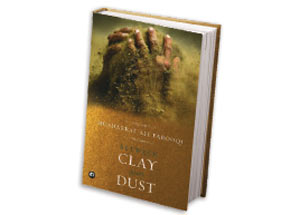 Musharraf Ali Farooqi
Aleph Book Company
Edition: Paperback
ISBN: 9788192328010
Pages:213
Price: Rs 450
“The disfigured architecture and worn, paved stones of the inner city still intoned its past splendour in broken whispers. There were a few enclaves where the last of its remnants were yet visible. Unconcerned and out of step with the currents of time, even after the recent changeful decade, these enclaves and those who inhabited them had continued to exist by exercising some power to resist change, or perhaps because no one found it worthwhile to remove them”. These first few lines set the tone and tenor of Musharraf Ali Farooqi’s new novel, Between Clay and Dust.
Set in the 1950s, when the wounds of Partition were still fresh and a new order was shooting out its furious tongue like a poisonous cobra at the old order, coercing it to make way for itself, the novel revolves around the lives of Ustad Ramzi – a renowned wrestler – and Gohar Jan – a beauteous courtesan whose charms had enthralled a world – as both of them watch the old values disintegrate and their cherished world collapse before their eyes. Extraordinary people though they are, neither of them could do much against ‘time’s proclivity for change’.
For Ustad Ramzi, who loves his title of ‘Ustad-e-Zaman’ more than his life and more than anything else in the world, the be-all and end-all of life is to preserve the glory of his clan and of his dead forefathers. His passion turns into a fixation when he sees a lack of similar interest in his younger brother Tamami, who loves to bask in the glory of the title and covets it too, but does little to retain the same after Ustad Ramzi would decide to call it quits. As Ustad Ramzi’s celebrated strength ebbs and he finds it increasingly difficult to perform his daily routines in his akhara, and as Tamami fails to live upto his expectations, his fear of losing the title forever to the rival clan of Ustad Imama grows stronger. Tamami fails to understand that for Ustad Ramzi, the title of Ustad-e-Zaman is not merely a title, it’s a strong connection with the dead and with the glory of the past.
In another part of the same old city where Ustad Ramzi’s akhara is situated, there is Gohar Jan’s kotha. Gohar Jan’s beautiful face has started showing signs of age and so has the building of her kotha. The number of guests is declining fast. Although Gohar Jan has an ace up her sleeve in the form of gorgeous Malka, a nayika whom she has duly trained in the art of music and dance, she does not allow her to perform before the guests even once, much against Malka’s wishes. When the brothel’s caretaker, Banday Ali, confronts Gohar Jan on this issue she calmly replies, “How could I impose a destiny on her, or tie her to the kotha with any bonds? Don’t you realise she was given to me in trust?”
The author makes good use of parallelism. As is the case with Tamami who is not just a pupil of Ustad Ramzi, Gohar Jan’s relationship with Malka is ‘an unusual one’ because unlike other nayikas, ‘Malka had arrived at Gohar Jan’s kotha as a foundling’. But while Malka is a devout disciple of Gohar Jan’s, and learns with utmost eagerness what is taught to her, Tamami cares little for his training. But neither Malka nor Tamami ever question their respective mentors’ decisions, not even when the latter is thrown out of the akhara – that belonged to him as much as it belonged to Ustad Ramzi – and the former is married off to a real-estate developer and in a way ousted from the tinsel world where she had grown up and where her aspirations lay. For a tawaif, the future outside the kotha was as uncertain as it could be.
And then there is the unusual relationship between Ustad Ramzi and Gohar Jan. They develop a strange fondness for each other so much so that Gohar Jan keeps singing for Ustad Ramzi long after she has shut the doors on others. Their unusual relationship culminates in Gohar Jan getting buried in the private cemetery of Ustad Ramzi when the municipal graveyard shut its doors on the tawaif. Ustad Ramzi had earlier refused to give Tamami a place in the same cemetery when he died because Ustad considered the soil of the cemetery too scared – almost at par with the scented and oiled clay of his akhara – to be touched by anyone who brings a bad name to his clan. And this is Between Clay and Dust, plain yet intriguing, simple yet deep, unpretentious yet elegant – a poignant exploration of love, honour, redemption and the strength of character.
For those who have read Ahmed Ali’s Twilight in Delhi, Musharraf Farooqi’s book is yet another treat.


 Issue Dated: Feb 5, 2017

