



- Article
- Comments (0)
Arab Spring comes alive at Jaipur fest
Tags : Arab Spring | enters | winter |
When Arab uprising started last spring, it came as a shock even to some of the most experienced voices of the region. The pundits were left for dead naturally. But as it unfolded in the coming months, the initial shock first gave way to euphoria, then measured skepticism, and finally a mixture of pessimism, frustration, horror and a little bit of optimism.
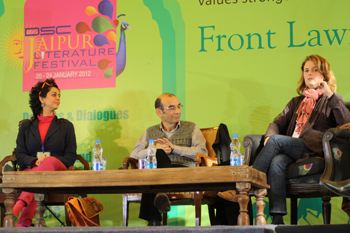 In the opening Day of Jaipur Literature Festival, the session on Arab Spring expressed some similar emotions. As it happens with most of the journalists form in India, the unfolding initial views were also formed by what people hear in the western press. Typically, concerns about Muslim Brotherhood, Salafists, the possible ushering of Sharia in nations where dictatorships had been demolished, and the rise of ethnic and inter-religious violence were raised. It elicited some brilliant response.
The question about the issue pertaining to attacks on Coptic Christians in Egypt post revolution was dealt by Egyptian journalist and lens women Karima Khalil. Khalil was of the opinion that although it would appear that there are social biases that exist, both the groups have lived peacefully for ages and there is no simmering tension between the two. Many of the attacks, Karima argued, were masterminded by security agencies that have roots in the previous regime and it was these incidents that triggered the cascading effect.
Max Rodenbeck, Middle East correspondent of The Economist, agreed that it was in the interest of the beleaguered regime of Mubarak to do something like that. He also maintained that all the hue and cries about the prospect of a Muslim Brotherhood were overhyped as Brotherhood has time and again shown the tendency to bring in change.
“If you look at it that ways, Brotherhood is sort of centrist. It were Salafists who we were really concerned about initially. However, in the unfolding months, even they have changed their stance a bit. They have participated in the electoral process and that is heartening,” he added.
There was a Palestinian view of the events too. Raja Shehadeh, Palestinian activist and writer, believed that the events unfolding in the region was good for the Palestinian cause, as it could not have been worse than what it was during the reign of dictators. “These dictators sold us short. It is this status quo that Israel wants. Unless it fears about the turmoil, it will never take the Palestinian question seriously.”
There were serious questions raised on the compatibility between secularism and democracy to which most of the speakers agreed that one should not push any particular brand of secularism as different societies have different perception of it and pushing an American brand of it would be disastrous.
India’s role in the entire episode was summarised by Ambassador Navdeep Suri who believed that India has remained in the margins and has avoided taking clear cut positions as it is a logistical nightmare for the government to evacuate Indians working in these countries where revolution took place. He observed that India’s position on the issue became much clearer when every Indian in the territory was safely back home.
Audience was in for a surprise when Iranian author and activist Kamin Mohammadi busted a few myths about the country and the people. She left the mostly preconceived audiences shell shocked by differentiating the condition and status of women in Iran from that of Saudi Arabia. Needless to say, the Think Tank pundits were left for dead naturally. But as it unfolded in the coming months, the initial shock first gave way to euphoria, then measured skepticism, and finally a mixture of pessimism, frustration, horror and a little bit of optimism.
The session on Arab Spring expressed some similar emotions. As it happens with most of the journalists form in India, the unfolding initial views were also formed by what people hear in the western press. Typically, concerns about Muslim Brotherhood, Salafists, the possible ushering of Sharia in nations where dictatorships had been demolished, and the rise of ethnic and inter-religious violence were raised. It elicited some brilliant response.
The question about the issue pertaining to attacks on Coptic Christians in Egypt post revolution was dealt by Egyptian journalist and lens women Karima Khalil. Khalil was of the opinion that although it would appear that there are social biases that exist, both the groups have lived peacefully for ages and there is no simmering tension between the two. Many of the attacks, Karima argued, were masterminded by security agencies that have roots in the previous regime and it was these incidents that triggered the cascading effect.
Max Rodenbeck, Middle East correspondent of The Economist, agreed that it was in the interest of the beleaguered regime of Mubarak to do something like that. He also maintained that all the hue and cries about the prospect of a Muslim Brotherhood were overhyped as Brotherhood has time and again shown the tendency to bring in change.
“If you look at it that ways, Brotherhood is sort of centrist. It were Salafists who we were really concerned about initially. However, in the unfolding months, even they have changed their stance a bit. They have participated in the electoral process and that is heartening,” he added.
There was a Palestinian view of the events too. Raja Shehadeh, Palestinian activist and writer, believed that the events unfolding in the region was good for the Palestinian cause, as it could not have been worse than what it was during the reign of dictators. “These dictators sold us short. It is this status quo that Israel wants. Unless it fears about the turmoil, it will never take the Palestinian question seriously.”
There were serious questions raised on the compatibility between secularism and democracy to which most of the speakers agreed that one should not push any particular brand of secularism as different societies have different perception of it and pushing an American brand of it would be disastrous.
India’s role in the entire episode was summarised by Ambassador Navdeep Suri who believed that India has remained in the margins and has avoided taking clear cut positions as it is a logistical nightmare for the government to evacuate Indians working in these countries where revolution took place. He observed that India’s position on the issue became much clearer when every Indian in the territory was safely back home.
Audience was in for a surprise when Iranian author and activist Kamin Mohammadi busted a few myths about the country and the people. She left the mostly preconceived audiences shell shocked by differentiating the condition and status of women in Iran from that of Saudi Arabia.


 Issue Dated: Feb 5, 2017

