

Monday, October 26, 2026


- Article
- Comments (0)
...And the twain did meet
ANGSHUMAN PAUL | Issue Dated: May 13, 2012, New Delhi
Tags : lives of sister Nivedita | Irish-born Indophile |
Tags : lives of sister Nivedita | Irish-born Indophile |
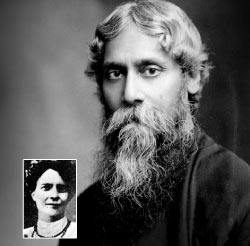 The lives of sister Nivedita – an Irish-born Indophile, and disciple of Swami Vivekananda – and that of gora, the irish protagonist of Tagore’s classic by the same name, sound remarkably parallel. Angshuman Paul throws light on the linkages…
Gora, a seminal creation of Tagore’s, highlighted the existentialist, religious and nationalist dilemmas of an India entering 20th century through the life and times of its eponymous protagonist. Irish by birth, Gouramohan Babu (Gora) was brought up in a time-honoured conservative Hindu family, leading to the inevitable face-off between nature andnurture and ultimately the realisation: “Today I am Bharatiya. Within me there is no conflict between communities, whether Hindu, Muslim or Krishtan.”
Gora is one of Gurudev’s epics, one that discusses issues and concerns that seem contemporary even today; his deconstruction of patriotism is easily applicable to the current times. This book is a reflection and analysis of the complex social life in colonial India. After being brought up in the eternity called India, Gora’s notions of patriotism were obviously turned on their head on gaining knowledge of his Irish blood. It is here one discerns a parallel of sorts between this character and the presence of Margaret Elizabeth Noble in the Bengal of then. Margaret, like Gora, was not only Irish but also a social worker and teacher, who entered India in 1898 as a disciple of Swami Vivekananda and later became famous as Sister Nivedita.
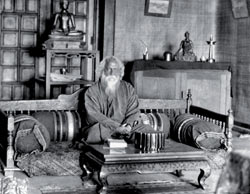
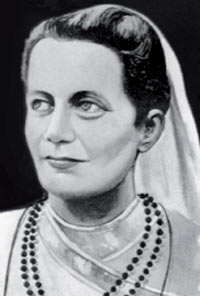 Tagore’s Gora, fascinated by and dedicated to Hinduism, oblivious to his true Christian lineage, falls in love with Sucharita (who was a Brahmo – an alternate reform movement to Hinduism initiated by Raja Rammohan Roy) and gradually the story follows the transition of a traditional right-winger character into a broad-minded true Indian who reconciles to the idea of tolerance of all cultures equally. Nivedita, on the other hand, was a Christian by birth who also refused to be bound by the diktats of religion, and chose to be a humanist instead. Tagore, in fact, lamented that India’s ethnic and casteist obsession was a possible reason to the country’s stymied intellectual progress. This and other avant-garde thoughts routinely originated in the camaraderie and festivals at Shantiniketan, an epicentre of spiritual and educational deliberations for globally eminent personalities of the time. Nivedita, with her particular penchant for all things Indian, its arts and sciences, was not to remain restricted to Swami Vivekananda and his mission at Belur Math (West Bengal).
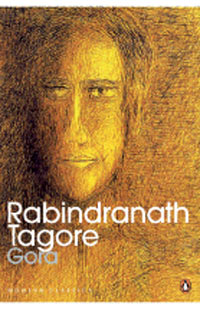 In July 1902 – in the wake of Swami Vivekananda’s death – Nivedita was invited by Tagore to be a teacher for his daughter. There have been countless fans of the Nobel laureate’s views on teaching, but few probably know that Tagore himself was touched by Nivedita’s concepts of teaching. “Both Tagore and Nivedita can be best connected to humanity and I believe that when it came to girl education, he was more convinced by a European lady teacher rather than the conservative pundits of those days,” reasons Prof. Udaya Narayana Singh, Tagore Professor, Rabindra Bhavana. But strangely, Nivedita turned down the request, the reason to which may be traced to her biography, written by Lizelle Reymond, where the author states that Nivedita believed in an education that makes holistic human beings rather than specifically creating so-called ‘modern women’ in European-style templates.
Rabindranath was also taken by Sister Nivedita’s efforts towards education in her school in Bagbazar (located in Kolkata). Echoes Prof Singh, “These two leaders guided each other through their respective persona as both of them interacted with each other frequently between 1902 and 1904.” During the aforementioned two years, Nivedita and Tagore travelled the length and breadth of the country and it is believed that the number of excursions Nivedita undertook during these years were higher than what she accomplished in the four years’ stay in India (before being introduced to Tagore). Both Tagore and Nivedita, authors, teachers and nature-lovers (with a particular affinity for the rivers), were possibly at their creative zeniths during this phase, and it’s little wonder that their association continued over many letters too.
Another common point of interest for the two was Indian mythology. Rabindranath Tagore was fascinated by the good and evil dimensions of human nature in Ramayana and Mahabharata. And Nivedita was bowled over by the liberal and ahead-of-its-time details of adoption, paternity and motherhood in Mahabharata. Such open minded philosophy was, both of them believed, the foundation stone for India’s ethnic diversity and any threat to it was a cause of grave concern. The character Gora also seemed to imbibe his creator’s love of Indian myth. But when did Nivedita come to know about Gora? “On 30th December, 1930, Nivedita, along with Jagadish Chandra Bose, were guests of Rabindranath Tagore in his Shilaidaha house (now in Bangladesh). It was probably then that Tagore discussed Gora with Nivedita,” feels Suranjan Ghosh, Deputy Public Relations Officer, Visva Bharati. It’s also evident from one of Tagore’s letters to WW Pearson (who later translated Gora in English), "She (Nivedita) was our guest in Shilaidaha and in trying to tell her a story as per her request, I gave her something which came very near to the plot of Gora." Nivedita, however, was not happy with the tragic ending that Gurudev had in his mind – of Gora and Sucharita’s unfulfilled love. As a passionate Indophile, who rubbed shoulders with many others in the path of the cause called India, Nivedita and her suggestion were difficult to turn down. And so Gora ended up according to the wish of this Irish lady so that the Irish-born Gora walked away with his lady love.


 Issue Dated: Feb 5, 2017

