

Sunday, October 4, 2026


- Article
- Comments (0)
'Media more keen on Fashion Weeks than Farmers Suicides'
P Sainath, the Magsaysay Award winning veteran rural journalist on the reasons behind the poor coverage of rural issues in the Indian media in an exclusive interview to Chandran Iyer.
CHANDAN IYER | New Delhi, September 7, 2012 21:37
Tags : p sainath | farmer's suicides | media coverage... |
Tags : p sainath | farmer's suicides | media coverage... |
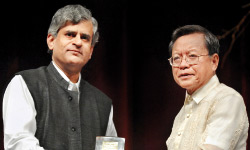 How serious is the Indian media in covering issues like drought, poverty and farmers suicide?
That this is your first question suggests the answer. Among the three issues, drought is more likely to get some coverage because of the sensation any calamity causes. All the studies we have, from the Centre for Media Studies in Delhi show us that serious coverage of the farm crisis is minimal. As for poverty, the media celebrates the great ‘decline’ in poverty based on official definitions and numbers, which are quite pathetic. The Planning Commission is presently defending a ‘poverty line’ in court that, calculated or broken down on a daily basis, would mean that a rural Indian with a daily consumer expenditure of Rs 23 is not poor; and Rs 29 is the figure for urban India. The gentlemen presiding over this insane exercise, live very differently. Planning Commission Deputy Chairperson Montek Singh Ahluwalia, as RTI data shows, has made over 40 trips abroad during his seven-year tenure. His daily expenditure, based available data, saw him spend $ 4,500 (almost Rs 2.5 lakhs) a day on an average. That is a great deal more than what his counterparts in France, Germany, the US or Scandinavia are allowed daily – and we are supposed to be living in a period of great austerity!
Whom do you blame for this apathy – the editors in the mainstream media driven by consumerism or the current crop of young reporters ?
Blaming the young generation of reporters is an evasion, a cop-out. The media are now a big business, with concentration of ownership in corporate hands growing by the day. The fundamental feature of the media in our times is a growing disconnect between mass media on the one hand and corporatised media on the other. For a corporatised media and the corporate world that owns it, journalism merely becomes one more revenue stream, not the art of a society talking to itself, discussing things amongst its members. Corporatised media robs journalism of its soul. Hence today we have two streams: journalism and stenography. The latter actually accounts for the overwhelming share of what we politely call journalism. True, there are journalists – both young and old, with the middle aged being greater in numbers in this school – for whom this is okay. My own experience as a journalism teacher and trainer is that there are large number of young reporters full of idealism and energy wanting to practice a meaningful journalism. The apathy proves our inability to properly guide them.
What difference do you find in the approach of urban and rural media while tackling these issues?
There are obvious differences in that the latter tend to cater to more basic social groups and is better clued in on fundamental issues like hunger or scarcity. However, do not make too much of this. The gap is narrowing. When more and more of ‘rural media’ comes under the same owners as the ‘urban media’, journalism becomes more and more a McDonalds phenomenon – it tastes the same everywhere. Having said that, there are still differences and the rural media is somewhat more rooted in reality.
Is it not a paradox that the Indian media finds it more exciting to cover a token fast of Anna Hazare and Ramdev Baba rather than the starvation of millions of farmers?
Token is indeed the right word, but I would not like to juxtapose these phenomena as the main problem. There are far greater ironies. Indeed, the Ramdev-Hazare events generated far greater media coverage than they should have. Certainly, in the tone of coverage. But one can hardly say they should not have been covered. The blindness to the crisis in the countryside has its roots elsewhere. Again, if you look at reporters’ beats within corporate media you will find many reporters in mainstream, non-financial dailies covering aspects of business, industry and commerce within the same newspaper. But you will not find a single full-time labour or agriculture correspondent within the same papers. That is a cold business decision, not the making of a Ramdev or Hazare.
Chairman of Press Council of India, Justice Markandey Katju was critical of the media coverage that was given to Dev Anand’s death, saying “putting the news of an actor’s death on the front page when farmers were committing suicide only showed a lack of sense of priority.” What is your take?
Dev Anand was a legend and certainly deserved to be properly covered. I have made no study of the quality of coverage, so I have no comment on that. But the great man deserved to be covered. My issue is with many other daily, vital matters not making even the inside pages. A general newspaper should be a hold-all. I understand, though, that Justice Katju is venting his frustration at how imbalanced a coverage our media produces.
A section of the intelligentsia feel that too much coverage to farmers suicide increases the chances of ‘copycat’ suicides. What is your opinion?
It betrays a level of intellect that is nothing short of pathetic. Where is the “too much coverage”? The CMS studies show us that agriculture as a whole gets only 1.7 per cent of coverage in prime time on TV or the front page of newspapers in the best of years. The farm crisis is a negligible part within that – and the suicides are just an outcome, a fallout. Secondly, take the example of The Hindu which has covered the farm crisis (much more than just the farm suicides) steadily. It gave more space to the crisis in Maharashtra than any Marathi newspaper ever did. The Hindu has no Marathi edition – so where are the farmers of Maharashtra, who make up the largest number of suicide victims, gaining their propensities from? The copycat phenomenon comes up from within the village. A farmer has seen his neighbour take his life and begins to think: “At least he ended all his problems.” The number of farmers who have expressed such views to me is frightening. Hence you will also find that if a village has two farm suicides, it is likely to have several more. If you want to stop the copycats, then stop the suicides – not the media! At the time of the Lakme Fashion Week in Mumbai in 2006, one of the worst years ever for the farmers’ suicides, there were six journalists covering Vidarbha, all outsiders, while 512 accredited journalists covered the Fashion Week for the full seven days and another 100 did it on daily passes. So what copycat effect are we talking about?
In your book Everybody Loves a Good Drought you have brought out the misery of the millions of Indians who are living below the poverty line but not made much attempts to offer solutions. Why?
It would be exceedingly pompous because it would mean I have a ready made blueprint of solutions exclusive to myself, all you have to do is to listen to me, rather than aspire to collective action. This is precisely the problem with the cult-movements: the claim to have all solutions in a single answer. It is over-simplistic, foolish and dangerous. My job is to focus on the story. I have spoken quite a lot about the basis for solutions. Almost every story in the book speaks of how people struggle against their circumstances, fight them, revolt against hierarchy and authority and exploitation. Unfortunately, the elite cannot see the struggles of ordinary people as a way forward to a solution. Please also see the concluding chapters of the book: With their own weapons and the essay on poverty, development and the press which speaks of the need for land reforms and better resource redistribution. Because the elite cannot see this as a way forward does not mean they are not a basis for solutions.
Do you see yourself as a development journalist or dissident journalist?
I see myself as a reporter, a rural reporter. I never call myself a development journalist – that is a label others give me. I am not about to cry out in protest about the other label, but it is not what I call myself. All journalism that challenges the established order, that refuses to reduce itself to stenography to the powerful – that will always be seen as the journalism of dissent. I welcome that.


 Issue Dated: Feb 5, 2017

