



- Article
- Comments (0)
The maestro and his swansong
Tags : Pandit Ravi Shanker | Sitar maestro | cardiac arrest | obituary | the sunday indian |
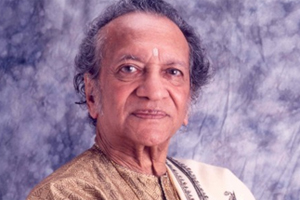 The sitar will ring out no more, the maestro is gone. Struggling as he was with heart and lung issues over the past year, sitar legend Pandit Ravi Shankar left for his heavenly abode on Tuesday at Scripps Memorial Hospital in La Jolla, California. His death marks the end of the great Indian string triumvirate, Ustad Ali Akbar Khan and Ustad Vilayat Khan having passed on earlier.
Born to a Bengali Bramhin family in Varanasi as Rabindro Shaunker Chowdhury on April 7, 1920, his exposure to the arts began at a very young age as he began touring the world with brother Uday. He would become a full member of the troupe as a musician and dance by the time he was 13. At a later interview, the maestro had said that perhaps his experiences in the bohemian art circles of cities like Paris, had robbed him of the innocence of his childhood.
With the Second World War looming large and touring becoming increasingly difficult, he put his dancing career to rest and came under the tutelage of another legendary musician – Baba Allauddin Khan of Maihar. Here he trained with Khan’s son Ali Akbar Khan, who would remain a collaborator throughout his life, and daughter Annapurna Devi, who he later married. In fact, his first public performance was a jugalbandi with Ali Akbar on the sarod. Of his life under Khan’s tutelage, Shankar had said, “We had no distraction – no TV, no entertainment. We would either learn, or help out with the daily chores.”
He would go on to become one of the most celebrated sitarists of the 20th century. He developed his own style of playing, with his quick deviation from the main melody during the alaap and his endless experimentation with unconventional rhythm cycles. He also was a master of the sawal-jawab a rhythmic interplay between him and the tabla.
However, his contributions to Hindustani classical music notwithstanding, what he will probably be most remembered for is how he took the sitar and Indian classical music to a global audience. His collaborations with international artists like iconic violinist Yehudi Menuhin and his experimentations with the younger batch of musicians, most notably George Harrison, were revolutionary in his times. Javed Akhtar’s comment that he had “introduced Indian classical music to the world” is spot on. In fact, Shankar was a part of one of the most iconic moments of Western popular music – Woodstock. He performed through the rain at the festival, but had later expressed his dissatisfaction with the way the crowd had behaved. He was also a part of the Monterrey Pop Festival.
An interesting part of his international contributions has been the fact that he has never allowed the dilution of his art in the name of “fusion”. He distanced himself from the hippy movement after Woodstock because he felt that it was not giving the proper respect the classical art form demanded. In fact, he was known to have a temper and tolerating no misbehaviour during his concerts. At a later interview, he had said that in his international tours, he often found it very difficult to maintain the gravity of the concert. “I would often have to pick up my instrument and leave the hall. I told them “This is a classical music concert. You have to behave the way you would have at an opera” he had said.
Yet, sticking to the purity of his art, Ravi Shankar managed to touch the international audience in a great way. "Ravi Shankar has brought me a precious gift and through him I have added a new dimension to my experience of music. To me, his genius and his humanity can only be compared to that of Mozart's," Yehudi Menuhin had said of him. His death is indeed, a great loss to the nation and to lovers of music across the world.


 Issue Dated: Feb 5, 2017

