


- Article
- Comments (0)
Will RBI cut rates?
Tags : RBI | CRR | Repo rate | |
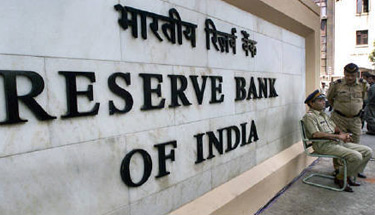 In less than two hours, the Reserve Bank of India (RBI) will unveil its credit policy.
All eyes are on apex bank's move wherther it will go for rate cut or will it maintain status quo even as the apex bank is focussed on prime objective in battling the inflation.
RBI Governor D Subbarao will announces Mid Year Monetary Policy on today. In the first quarter review of monetary policy on July 31 all the key interest rates were left unchanged.
Currently the Cash Reserve Ratio is 4.75 per cent, Reverse Repo rate is 8 per cent and Repo Rate is 7 per cent.
Cash Reserve Ratio (CRR) is the amount of funds that the banks have to keep with the RBI. If the central bank decides to increase the CRR, the available amount with the banks comes down. The RBI uses the CRR to drain out excessive money from the system.
Reverse Repo rate is the rate at which the RBI borrows money from commercial banks. Banks are always happy to lend money to the RBI since their money are in safe hands with a good interest.
An increase in reverse repo rate can prompt banks to park more funds with the RBI to earn higher returns on idle cash. It is also a tool which can be used by the RBI to drain excess money out of the banking system.
Repo Rate is the rate at which the RBI lends money to commercial banks. It is an instrument of monetary policy. Whenever banks have any shortage of funds they can borrow from the RBI. A reduction in the repo rate helps banks get money at a cheaper rate and vice versa. The repo rate in India is similar to the discount rate in the US
Hopes for speculators that apex bank may soften its monetary stance later today, springs from reform measures announced by the UPA II last week that included opening up of supermarkets and airlines to foreign direct investment, raised the price of subsidised diesel and announced planned share sales in four state-run companies after a long period of policy and decision parlysis.
Several economists and experts across the board do not expect RBI to soften its stand as it is involved protracted battle against inflation.
The latest wholesale price index (WPI) inflation numbers on higher food and energy prices for August, at 7.55 per cent, do not really make a case for any cut in interest rates now.
In a major step forward towards rationalising subsidies on petroleum products, the government had hiked the sharpest ever Rs.5 a litre or nearly 12 percent increase in diesel price. The move is aimed at controlling galloping fiscal deficit and improve Indian economy's ratings.
Unlike price hike in petrol, diesel prices have a huge cascading effect and it is likely to put further pressure on inflation in the coming months.
Secondly no doubt the UPA II has announced reform measures. But RBI Governor D Subbarao also understands that there is a gap between announcements and implementation. So it would be too much to expect Subbarao to take the cue and start cutting rates immediately.
However, the India Inc is as usual clamouring for cuts in interest rates citing sluggish industrial growth.
It is time the Reserve Bank of India got rid of its obsession with the inflation numbers while completely ignoring grave situation thrown in by constantly decelerating industrial growth, ASSOCHAM President Rajkumar Venugopal Dhoot said on the eve of the central bank reviewing its credit policy.
“While there could be expectations of a small rate cut in certain quarters of economists, the ASSOCHAM , for one, would urge the RBI to stop taking the baby steps, if at all, and go in for calculated risks to revive the industrial output,” Dhoot said.
The ASSOCHAM chief also said it is no more a question of trade-off between growth and inflation. “It has become an issue of sustaining jobs. As the industrial data released on September 12 screamingly pointed to a situation where between April and July this year, the capital goods sector has declined by a worring 16.8 per cent.What does it mean? It simply means no fresh investment is taking place. Whereare the jobs going to come from?,” asked the ASSOCHAM President.
The government has already taken some decision, it is merely not enough to pass the blame on the government suggesting that the central bank has run out of the monetary toolsin the wake of a large fiscal deficit and the rising current account deficit.
“As the industry is putting pressure on the RBI, we will do the same thing when it comes to the government. After all, the economy is on the precipice. We would certainly not like to see a situation of a stagflation, we will urge the RBI,the government and the political leadership to realize the gravity of thesituation and help the economy bring back to revival,” Dhoot said.
The annual industrial production grew merely by 0.1 per cent in July, though there was no contractionas in June. Most of the economists are now pegging the overall GDP growth atabout five per cent or even less.
According to the latest Central Statistical Organisation (CSO) data Indian economy grew at a sluggish 5.5 percent in April-June 2012 period as compared to 8 percent in the corresponding quarter of previous year.
In fact, industrial production has declined. Factory output, measured in terms of the Index of Industrial Production (IIP) declined by 0.1 percent in April-July 2012 period, according to official data released last week.
"While monetary intervention in the form of repo rate cut has been due for a while, the economy is in need of sentiment boosters," said Chandrajit Banerjee, director general, Confederation of Indian Industry (CII).


 Issue Dated: Feb 5, 2017

