



- Article
- Comments (1)
The higher education dilemma
Who will teach the teachers?
India aspires to be a knowledge economy but there is no Indian university ranked among the top 200 globally. ANIL PANDEY finds that poor teaching faculties are the bane of higher education system in the country
Tags : National Institute of Technology bhopal | education in india | teacher training | nasscom | umenployment in india |
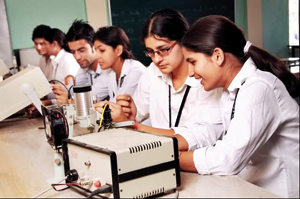 When Patna boy Subhash Kumar got a letter of acceptance from the prestigious National Institute of Technology (NIT) in Bhopal his joy knew no bounds. It was a dream come true for the 22-year-old to be enrolled into the MCA program at one of the top few NITs of the country. But the happiness was short lived, especially when he began coping with the grueling curriculum on-campus with less-than-satisfactory teachers. His two year stint at the top ranking engineering institute eventually turned into an exasperating marathon between institute professors and private coaching classes.
“The intelligence level of most ad hoc teachers at NIT was even lower than that of students. Many of us had to shell out thousands for private coaching to make up for the vacuum,” says Subhash, who is now employed in a Noida-based IT company. Subhash's diatribe on the teaching methodologies adopted by his learned teachers on-campus is longer.
"Even in such a reputed institution, all the focus seems to be on theory rather than the practical aspects of the subject. This is when it is now recognised globally that the practical aspect is more crucial in teaching of technical subjects. Our teachers simply had no idea about the industry,” he finishes with a bitter sigh.
A recent NASSCOM study laments that nearly 85% general graduates and 75% technical graduates in India are unemployable in India's high growth industries for lack of the required skills. The study also recounts the spurt in engineering colleges which accommodate 1.5 million students today - four times higher than the seats available a decade ago. Do the math, and you realise that there is a quantum jump in the number of graduates produced every year, but quality remains abysmal.
The unavailability of skilled teachers and low drive among existing teachers to upgrade their knowledge and teaching methodologies is a key reason for the alarming situation. At stake is India's ability to sustain its high growth trajectory, build human capital and reap the demographic dividend, and hone its knowledge economy status in the 21st century.
That the problem is acquiring epic proportions is manifest in the fact that most top corporate houses and MNCs have to train new hires for at least 8 to 12 weeks before the candidate is ready for the job. Obviously, companies shell out large sums of money for this exercise. Alok Mukherjee, Director of Smart Chip Limited, a leading chip solution company in India, says, “Students who come to us are bright and extra-intelligent but their teachers are clearly unable to impart the kind of education required for a professional environment. That's why they need on-job training even in professions where it should not be required.”
E. Balagurusamy, Member (Edu), State Planning Commission, Tamil Nadu, summed up the situation succinctly while addressing a seminar in Chennai recently. “When teachers themselves are lacking employability skills, how can we expect their students to be employable?” he questioned. He added that the correction has to begin from the level of teachers. “It is time to have a serious look at the quality of teachers employed in various engineering colleges and arts and science colleges,” he said.
That is the bitter truth facing the higher education system today. India boasts of one of the largest education systems in the world. At last count, India had over 560 universities including 44 central universities, 285 state universities, 130 deemed universities and 106 private universities. There are also 26,500 higher education institutes dotting the country.
The number is several times more the US and China which have 7,000 and 4,000 higher education institutes respectively. Despite India’s quantitative superiority, the US and China steal the show in terms of the sheer quality of graduates being churned out thanks to a superior education infrastructure and robust teaching methodologies.
Industry watchers are of the opinion that the problem is compounded by the lack of the ‘continual learning’ ethos among teachers in the system. They neither engage in voluntary research nor feel the need to update themselves frequently with the rapidly changing industry environment. A PhD has merely become a means to the end of getting a promotion in most cases and genuine interest in new research is minimal.
A 2011 Ernst & Young report paints the gloomy picture. It ascribes poor levels of research in India's higher education system to the quantity and quality of PhDs. Shockingly, less than 1% of the total higher education students complete a PhD and these numbers are declining even as you read this piece. Globally, India stands 13th in the number of research papers published. The US spins out fifteen times more research papers with a far lesser number of teachers in its system.
The situation is worse when it comes to professional and technical education. For lack of practical or field experience, a majority of teachers rely solely on textbook teaching. Shubhendu, a mass communication student from Delhi University and currently working in a national news channel explains the dilemma. “Most of our teachers were from the Hindi department. They were never exposed to journalism. They stuck to whatever was written in the textbooks. Later, we got to know that we were not trained enough in the real skills required,” he recounts.
The emphasis on rote learning rather than critical thinking and comprehension is a scourge that has long afflicted India's education system. Many blame the system itself for breeding incompetence. The UGC for instance has established Academic Staff Colleges (ASCs) across the country. But there is hardly any serious impact on teacher training. There are just 66 ASCs for millions of teachers and more often than not, without any infrastructure of their own. Prof. B.K. Kuthiyala, Vice-Chancellor of the Bhopal based Makhanlal Chaturvedi National University of Journalism says, “Refresher courses and orientation programs run by ASCs have become formalities. Instead, teachers must be sent to work in related fields after every two years of teaching. This will equip them better to teach students.”
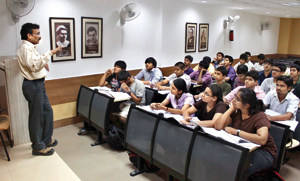
Increasing appointments of ad hoc teachers is another reason for the lowering of standards. Many say that such ad hoc appointments are breeding grounds for nepotism and favouritism. Former Director of NCERT Prof. J.S. Rajput believes that "most teachers appointed on ad hoc basis are not qualified to teach in higher education institutes.” He reasons that it is futile to expect high levels of commitment and dedication from young persons getting a pittance of an honorarium and remaining ever-unsure of their job.
Forget effective teaching, India does not even have enough teachers in its higher education system. According to a report by University Grants Commission (UGC), higher education institutes in India presently have only half of the required strength of teachers. The report points out that India presently needs 6 lakh teachers in its higher education system but is making do with just half the requisite number. There is a need for 3 lakh more teachers. The situation is likely to worsen over the next decade as there would be a need to add nearly 1 lakh additional teachers every year into the ever-growing higher education system. The report adds that even elite institutions such as the Indian Institutes of Technology (IITs) and National Institutes of Technology (NITs) face an acute faculty shortage of over 30-35% at any given time. While faculty strength is constrained, student count in higher education institutes is rapidly rising. By 2020 for instance, the number of students pursuing higher education is likely to surge to 40 million from 16 million students today.
There was a time when many did not prefer teaching as a profession mainly because of the low remuneration levels. But the sixth Pay Commission has corrected that anomaly. Entry level salaries for lecturers are now Rs 35-40 thousand per month as opposed to Rs 20 thousand before. Professors meanwhile take home a package of anywhere between Rs.9-12 lakhs per annum. This is a step in the right direction and will attract better talent into the field of education eventually.
The bad news is that grants for research in India continue to be abysmally low. As per the Ernst & Young report, it stands at just $ 0.25 billion – about 5% of what Harvard University spent on research in 2008. Clearly, there is need for a massive increase in investment and efficacy of public spending in education. Educationists reason that a part of the solution could be offering incentives to research-active faculty. Says Dr Jasbinder Singh, Principal, SGTB Khalsa College (DU), "Teachers must also be given facilities to do research along with teaching. This requires government facilitation." A host of expert committees, including the National Knowledge Commission, and the Yashpal Committee have recommended bringing research back to universities. The recommendations mostly remain on paper.
Eminent sociologist and Nobel Prize winner Gunnar Myrdal says, “Education institutes are like power plants for developing nations.” A power plant in the hands of a skilled operator can energise an entire nation. But in the hands of unskilled operators, the same plant can burn down even the tallest of towers.
India needs to act now before it burns down its demographic advantage.
With inputs from Mushahid M. Khan & Nikhil Srivastava


 Post Comments Post Comments
|
Posted By: Navneeth | Chennai | April 20th 2012 | 19:04 Can you please provide an authentic citation for the NASSCOM statement regarding un-employability? You mentioned it is a 'recent' study.
|

 Issue Dated: Feb 5, 2017

