


- Article
- Comments (0)
Who to blame: Aedes Aegypti or Sheila Dikshit?
Tags : Sheila Dikshit | dengu | mosquito | Aedes Aegypti | NCR |
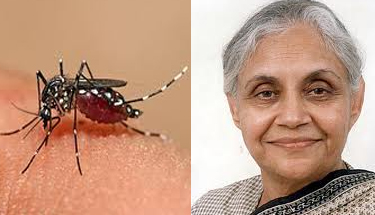 The shortage of water supply, unhygienic water storage habits and misplaced priorities of civic authorities are responsible for the rampant spread of dengue in the city. The Delhi NCR has so far reported two deaths and more than 600 dengue infection cases in the city during this monsoon cycle. The recent death of legendary filmmaker Yash Chopra, allegedly because of dengue, has further panicked the residents. All they know about the endemic is that an Aedes Aegypti mosquito is responsible for spreding the infection and that Shiela Dikshit is at the helm of affairs to counter the mosquito with killer traits.
Why these mosquitos flourish in the nation's Capital region? For the last several years, as soon as the monsoon gets over, cases of dengue begins to pour in the city hospitals. Soon the number of patients getting admitted to hospital for suspected dengue rises to alarming figures. Surprisingly, the civic authorities initially get into denial mode. Government departments like municipal corporation, health ministry, urban development ministry, labour ministry and few others refuse to admit callousness in carrying out cleanliness drive in the Capital. However, dengue takes its toll with some deaths and thousands of patients in hospitals are forced to incur inexhorbitant cost of fighting the endemic.
The premier Medical Council of India says there is no medicine or clinical procedure to prevent dengue. The only way to minimise the threat from the killer mosquito is to disinfect the places where they lay eggs and multiply their capacity to spread the venemous infection. And, this is where the state authorities come into picture.
The civic authorities in the Capital region have misplaced priorities, largely because of the pace at which the Capital is expanding. During the last five years, the National Capital Region including Delhi has grown out of proportion as a result of massive migration, large scale construction, insufficient water supply and poor health infrastructure. All these factors have foiled the civic authorities' plans of ensuring basic amenities like potable water, electricity and health services.
During the last one decade, the water supply in the region has worsened. The lack of water for daily consumption has forced people to adopt water storage tendencies. In the post-monsoon period, people store water for the next 24-48 hours as the water supply is often erratic. The artificially stored water is not sanitised and is the main reason why mosquitoes get free breeding ground to lay eggs.
With swelling population, the region has also witnessed large scale construction for residential and commercial usage. As the construction activities are water and labour intensive, every construction site has numerous water storage pits and artificial containers, which invite mosquitoes for laying eggs. The labourers, mostly residing in the kuchcha dwellings around these construction sites also depend on the stored water. Their pursuit to collect water for consumption also compounds the risk of breeding mosquitoes.
Adding to the above challenges is the poor preparedness and infrastructural amenities. The state hospitals have inadequate or virtually no surveillence system. It is only after the early warning fails and large number of patients are admitted in the hospitals, the health and civic officials spur into action. At this stage, preventive measures like fogging becomes helpless as civic authories fail to cover the vast exapnse of NCR territory. The problem is further compounded by the misplaced priorities of the authorities as they get busy disinfecting the VIP areas instead of targeting the breeding grounds in suburban areas which are the epicentre of Aedes mosquitoes.


 Issue Dated: Feb 5, 2017
