

Tuesday, October 27, 2026


- Article
- Comments (0)
United Kingdom of Miracles!
The London Olympics have given the world media enough to toast about, says Soumitra Bose, back from his trip to London, covering the Games
SOUMITRA BOSE | New Delhi, September 8, 2012 15:07
Tags : roger federer | Olympic coverage | |
Tags : roger federer | Olympic coverage | |
 Roger Federer amplified the spirit of the Olympics movement when he replied to a question on whether he would become the greatest athlete of London 2012. The world No 1 Swiss legend said: “I am certainly not going to be the greatest…the Olympics are not about me or an individual. Every athlete is special… everyone here has a story. It’s about the Games, it’s about the 17000 athletes from all over the world.”
Federer’s candid acknowledgment of the magnitude of the quadrennial games had a strong message. Unlike the tennis Grand Slam or a Formula One Grand Prix, the Olympics were not about a single athlete but the cumulative impact of sports on mankind. The success of Michael Phelps or Usain Bolt not only defined their superhuman skills but also the quest of their respective nations that pride themselves in producing champions.
It was perhaps poetic justice that Great Britain celebrated their biggest ever achievement in the history of Olympics. This was the third time London was hosting the Games. At a time when Europe was gripped by recession, the Games blew away all the gloom and the highs of the Olympiad left its indelible mark across Old Blighty.
The British media has often been dubbed as whiners and professional pessimists. However, it went overboard celebrating every medal with clinical descriptions of the events and with stories that depicted the pains and struggles of achieving Olympic glory. Sporting success is easy to measure and the world media appreciated London’s effort. In the words of London Games organiser and former Olympian Sebastian Coe: “We lit the flame. We lit up the world.”
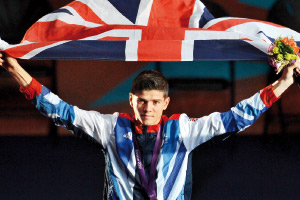
The 65 medals, 29 of which were gold and 17 silver, were Britain’s best ever returns since 1908. This haul placed them third behind sporting powerhouses United States (104 medals, including 46 golds) and China (88 medals, including 38 gold).
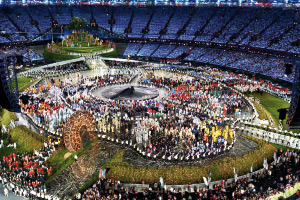 “These Olympics had Sydney’s vibrancy, Athens’s panache, Beijing’s efficiency and added British know-how and drollery,” wrote Greg Baum, in the Sydney Morning Herald. Britain basked in glory as the super show
on the field that was equally matched by London’s organisation and single-mindedness to make the London Games the greatest ever. A blog by David Segal in the New York Times noted: “Even the weather played nice. This was an astoundingly seamless production, given the size of this city and the scale of the endeavour.”
Perhaps for the first time after the Great War, Britain came together as a nation. Double Olympic gold medallist Mo Farah is a classic example. UK’s finest distance runner was born in Mogadishu, Somalia in 1983. He moved from his humble roots to Britain at the age of eight, speaking barely a word of English. Not only an Olympic champion, Mo now runs a foundation in Somalia and is a crusader of the Olympic hunger summit.
The German media made an interesting observation: “Britons, who for years have become used to their own failings, have amazed themselves at the Olympic Games. In the Olympic frenzy that captured the nation and turned cynics into a happy throng, Britain celebrated itself not only as a country of immigration, but after years of growing separatist tendencies, once again as a United kingdom.”
In a nation where the royalty seldom comes in close proximity of the commoner, the London Games were a great leveller. Prince Harry, Prince William and his wife Kate were constant spectators at the Games. The royal trio – often separately – watched everything from tennis to swimming, water polo and equestrian events. Far from being stoical in the face of tight races and athletic prowess, Harry, Kate and William have mirrored the drama in their expressions. On the eve of the Games, William kicked a soccer ball around, Harry shot hoops in the gym and Kate tried her hand at table tennis.
But it was the athletes who stole the show. Not only with their compelling and ruthless performances but with their stories, as Federer told the media, that touched hearts and highlighted undying passion and conviction for the country. The story of Heather Stanning speaks volumes. The 27-year- old captain, who won Britain’s first female rowing gold, is preparing for her deployment in her unit’s next tour of war-torn Afghanistan. Her story underlines the fine balance and understanding between priority and target between the establishment and a talent, something the Indian media have to learn and practice.
The Media rightly called it the “Fortnight of Miracles.” But the marvels of London were well planned and it was a vision that saw Britain rise from the depths of despair to unmatched Olympic glory. Bill Dwyre of LA Times captures the mood brilliantly saying: “Every four years, some of us who type for a living lose about three weeks of our lives to gain a lifetime of experiences. It is called the Olympic Games.” London 2012 was worth every breath of life!


 Issue Dated: Feb 5, 2017

