



- Article
- Comments (0)
UNFPA to focus on adolescents and youths in MP
Tags : UNFPA | ADOLESCENTS | Frederika Meijer |
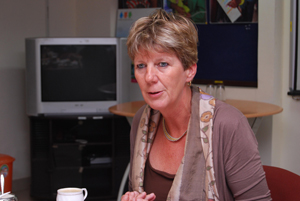 The United Nations Population Fund (UNFPA), IndiaCountry Representative, Frederika Meijer on Monday met with high level dignitaries in Madhya Pradesh and discussed the UNFPA’s support to Madhya Pradesh during next 5 years from 2013-2017.
She informed that UNFPA’s focus will be on adolescents and young people for their life skillsenhancement. UNFPA will also provide support and will work closely with the Department of Health and Family Welfare to improve maternal health, to promotemulti-sectoral response for promoting the dignity of girl child includingaddressing the problem of declining child sex ratio and to promote voluntaryfamily planning among young people. The UNFPA would also focus on improving the reproductive health outcomes of tribal population in the state.
She appreciated the Beti Bachao Abhiyan run by theGovernment of Madhya Pradesh under the leadership of Chief Minister Shivraj Singh Chauhan. She said that this campaign shows strong commitment andpolitical will of the state government. It will raise awareness among society on discrimination against daughters. It will also contribute towards changingmindset of people towards girl child which will help in addressing the problem ofdeclining child sex ratio in the state. Meijer said that India has started experiencingrapid demographic transition since the last two decades.
Sighting the ‘World Population Prospects 2010 Revision’ she said that by 2015 India will haveestimated around 363 million adolescents and young people in the age group of10-24 years and nearly half of them would be girls. We will need to adoptcomprehensive set of policies for addressing reproductive health needs of thispopulation. Although the mean age at marriage for female in Madhya Pradesh is20.6 years which is better than the national average of 19.7, there are variations between rural and urban areas. Early marriage, early pregnancy andmultiple pregnancies affect the reproductive health of women and also resultsinto higher maternal mortality. Around 45 per cent of maternal deaths occur inthe age group of 15-24 years.
Meijer says, "Unmet need for family planningmethods by proper implementation of voluntary family planning programme canreduce the maternal mortality by one-third. The need is to expand method choicefor spacing methods, information and counseling on spacing methods. The UNFPA has been working with the Government of Madhya Pradesh and we would like to dofar more in order to ensure that we reach every woman and every girl with the appropriate sexual and reproductive health information, education and services that can help them make better choices."
She said that UNFPA is also working closely with the State Planning Commission for enhancing the capacities of district levelstatistical officers and data managers in the use of data for planning andmonitoring of development programmes. The availability of quality data willenhance planning and monitoring of these programmes and will also be utilizedin articulating the cross-cutting thematic linkages between population dynamics, health, gender, and other areas pertinent to adolescents and youth.


 Issue Dated: Feb 5, 2017

