


- Article
- Comments (0)
Toxic industrial waste killing Noyyal river
Tags : Noyyal river |Coimbatore and Tirupur | toxic waste |
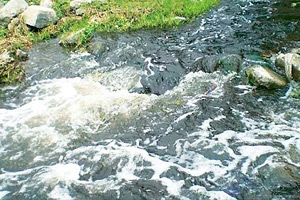 It was in 1970s when the two cities of Tamil Nadu-Coimbatore and Tirupur- saw new opportunities in garment exports as their soil was cotton friendly. Also manpower availability was cheap. These developments led to an increase in garment factories in the two cities which became the main reason for the pollution in Noyyal river, a tributary of Cauvery river.
Today Tirupur contributes significantly in overall Indian garment exports. But unfortunately the development of the garment industry has led to the slow death of Noyyal river. The Toxic effluents released from these garment dye units have caused an unprecedented damage to the river and its surroundings.
Some thirty years ago, people of the area used to irrigate their fields with the water from the river. They also used the water for drinking. But their fortunes changed as the water turned poisonous with the industrial toxic released from the nearby factories.
Environmentalists say that even wildlife refrains from drinking the river water as they know the water is not suitable for them.
“The river has become a drain full of polluted water. Solid waste and debris of demolished buildings are being released into the river. The river is the only source of water for surrounding villages. Now it has become a dustbin for Coimbatore and Tirupur Corparations,” said Mohanraj of The Save Foundation, an NGO.
Even the Orathapaylam reservoir, built by the then chief minister MG Ramachandran for irrigating 25,000 acre of agriculture land, has now been reduced to a toxic tank.
However, efforts by a local NGO Siruthuli to save the river have borne some fruits. After several petitions from 2003 to 2011, many dying and bleaching units were ordered to close down as zero liquid discharge status was issued. But soon the court orders fell on deaf ears as factories failed to adhere to court orders.


 Issue Dated: Feb 5, 2017

