



- Article
- Comments (0)
The Raging bulls
It’s a throwback to the 1970s with added dollops of swagger and attitude. Saibal Chatterjee looks at how the new age bollywood blockbusters have ditched their candy floss fixation.
Tags : Salman khan | Dabang | Ajay Devgan | Aamir Khan |
 Anger is all the rage again. With the heat soaring on the big screen, ‘being Dabangg’ pays at the turnstiles. No wonder kickass cop Chulbul Pandey, the nemesis of all crooks and cretins that are hiding in small-town crevices, is on the prowl a second time. His mean streak isn’t just intact; it has been significantly enhanced.
Rs 100-crore box office grossers are passé. Salman has already topped the Rs 200-crore mark with Ek That Tiger, the tale of an unstoppable secret agent who scours the world in search of enemies of the nation. The industry is now talking in terms of Rs 300 crores for Dabangg 2. Breathing fire is big business today.
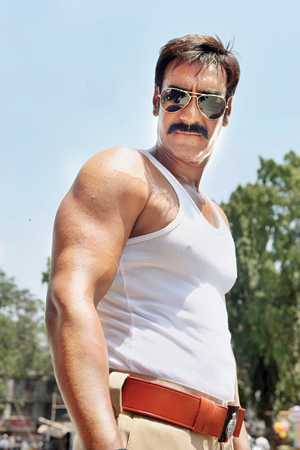
It isn’t just the wisecracking, swaggering Pandey who is hitting the high notes of fury with his duniya jaaye bhaad mein (to hell with the world) brand of dialogues. He has the likes of Bajirao Singham (Ajay Devgan in Singham), ACP Vikram Rathore (Akshay Kumar in Rowdy Rathore), bodyguard Lovely Singh (Salman Khan in Bodyguard) and Sanjay Singhania (Aamir Khan in Ghajini), to name only a few, for company.
It certainly isn’t lonely out there, and these motor-mouth men, flaunting six-pack abs and using their guns with as much felicity as their wits, are outdoing each other in the scramble to grab a piece of the action pie. And no one is complaining. When Bajirao Singham growls Aata majhi satakli (Enough is enough, I’ve blown my fuse) every time he squares off against an adversary, the applause from the audience is instantaneous.
He is an upright police officer who brooks no opposition, be it netas, goons or fellow cops. They are all fair game as he gives explosive vent to his spleen. A rotten system calls for rough and ready methods in order to be cleaned up.
Reminiscent of the heady heydays of Amitabh Bachchan’s legendary angry young man persona, the rage that is thundering in the hearts of Hindi movie protagonists of Singham’s ilk is, pretty much like it was way back in Deewar and Trishul in the 1970s, a reflection of the dark and vengeful mood prevalent in the streets of the nation.
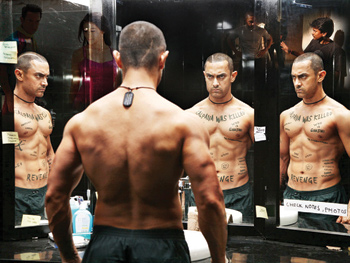 The scenario is set: the common man is a hopelessly harried creature, at the receiving end of the machinations of corrupt politicians, venal criminals and unctuous policemen. Enter the Enforcer. From the lanky Big B with bloodshot eyes to the hunky Hrithik Roshan with his my-way-or-the-highway method of dispensing justice, Vijay Dinanath Chauhan has come full circle.
In the 1990s – those were the years that immediately followed India’s economic liberalization and the consequent process of globalization and heightened consumerism – glitzy NRI romances and big fat Punjabi wedding flicks held sway over the masses. Love was in the air and it manifested itself in songs sung blue on the streets of New York and London or in the picturesque vales of the Swiss Alps.
It was a colour-spangled, languorous dreamscape in which anger and violence had no place. Minor setbacks in matters of the heart did. But no problem was ever big enough to push the hero over the precipice. He strummed the guitar, hummed a ditty, and serenaded his girl with all the charm at his disposal and all was well again!
Shahrukh Khan, despite early box office successes as an anti- hero in films like Baazigar and Darr, switched tracks to emerge as the soft-at-heart romantic. He was Rahul or Raj, a lover boy who launched many feminine fantasies. Dilwale Dulhaniya Le Jayenge and Kuch Kuch Hota Hai defined the era.
What’s more, even Salman Khan thrived in this new ambience of collective well being, appearing in romances like Hum Aapke Hain Koun and Hum Dil De Chuke Sanam, films in which everybody sang and danced till the cows came home. Cut to the 2010s. The music may not have gone out of the lives of the Dabanggs and Singhams, but the guns are out and the fists are flying like never before.
 Two decades and a bit after the Indian economy opened up to the world, the nation still seems to be groping in the dark. It has been overrun by overambitious politicians who peddle hate in the quest for power, ministers who wield authority only to line their own pockets, entrepreneurs who cannot see beyond their noses and anti-corruption activists who are a divided lot. Understandably, anger and frustration among the people are rife.
Big screen heroes who follow no service rules or respect no social norms in their single-minded pursuit of wrongdoers of all hues are today’s natural born messiahs, if only on the big screen. They represent a way out for people too powerless, if not too enervated, to shake up the system in the real world.
The widescreen canvas has again become an outlet for a range of pent-up emotions – hurt, resentment, helplessness, frustration – when an invincible male protagonist launches a rampage that delivers comeuppance to the self-serving men in power.
The romantic ideal embodied by Shahrukh in the Yash Chopra and Karan Johar designer films of the 1990s has given way to the vengeance motive. The roar of the Singham has never been louder. It’s in Dolby surround sound after all.


 Issue Dated: Feb 5, 2017
