

Thursday, November 5, 2026


- Article
- Comments (0)
The Greek Tragedy of Indian politics
AGNIBESH DAS | New Delhi, September 22, 2012 13:13
Tags : Trinamool chief | Mamata Banerjee | Mulayam Singh | Kolkata |
Tags : Trinamool chief | Mamata Banerjee | Mulayam Singh | Kolkata |
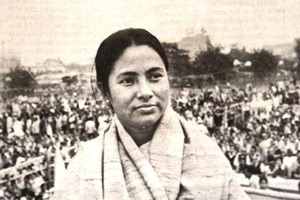
Trinamool Congress (TMC) MPs Mukul Roy, Saugata Ray, Sisir Adhikari, Mohan Jatua, Sultan Ahmed and Sudip Bandopadhyay submitted their resignations to the Prime Minister and then the President on Friday evening. It was finally official: Mamata Banerjee had, yet again, left a government in a huff.
Indeed, a perusal of her political career makes Mamata look almost like a Greek tragic hero – the hero leaves on a quest deemed absolutely impossible, pulls it off against all odds, comes back to fame and glory, cannot adjust to the life of the hearth and finally does something ill advised to ruin himself. Only with Mamata, this has been happening over and over again.
Her giant killing act began way back in 1984 when she, as a Congress youth leader, became the youngest parliamentarian, upsetting the veteran Somnath Chatterjee in south Kolkata’s Jadavpur constituency. She already had a reputation of being something of an enfant terrible, having danced atop Jayaprakash Narayan’s car. But no one expected her to take on Chatterjee, yet she did.
Though she lost the seat in an anti-Congress wave in 1989, she would return in 1991 as the Union Minister of State for Human Resources Development, Youth Affairs and Sports, and Women and Child Development in PV Narsimha Rao’s government. Quite a feat in itself. But then came the anti-climax. In 1993, she protested against her own party. Reason: her plans to turn around sports in the country were not being paid heed to. She was summarily stripped of all her portfolios.
Fast forward to 1999. Mamata has broken off from the Congress and floated her own party, TMC. She supported the NDA coalition which came into power with Atal Bihari Vajpayee at the helm. She got the Railways portfolio and began doing some earnest work there. The bi-weekly Rajdhani Express she started from Sealdah Junction in Kolkata to New Delhi has since become dailies and retain their popularity. All was going well before the first wobble came in 2000: she submitted her resignation and then withdrew it over hike in petrol prices. The crash would come later, in 2001, when she would walk out over the Tehelka expose. She returned to the NDA in 2004 as the Coal and Mines Minister.
When the NDA lost power, she displayed her massive political resilience and won the only seat in the Parliament from her party. Consistent to her history of histrionics however, on 4 August 2006, Banerjee hurled her resignation papers at the deputy speaker Charanjit Singh Atwal in Lok Sabha. The provocation was the speaker (Somnath Catterjee)'s rejection of her adjournment motion on illegal infiltration by Bangladeshis in West Bengal. The motion was turned down by the speaker on the ground that it was not in the proper format.
The cycle began again when she joined the UPA II in 2009 as the Railway Minister. Once again she killed a Goliath, toppling the 34 year long Left rule in West Bengal in 2011. One year and quite a number of controversies (sacking a party MP for making inevitable price hikes of railway fares, imprisoning a cartoonist, trying to curb popular protests with police action et al) later, history has repeated itself.

Is it not the time that she learnt her lesson? Her huffing and puffing will not bring the house down. It did not in any of the previous cases, it will not do today. The only thing it does is to leave her without a seat and erode her political credibility. Her shock and awe tactics have paid dividends from time to time. But as time goes by, most people are begining to think that while she is quite useful in the opposition, she does not have what it takes to successfully rule. That she is a fighter is beyond doubt. The woman has survived cracked ribs, has had her skull cracked by opposition goons and been roughed up by police forces. If only this was accompanied by a level political head that could calmly strategise once the power had been rested, it would have been a potent political force.


 Issue Dated: Feb 5, 2017

