

Monday, October 26, 2026


- Article
- Comments (0)
The gift of life
SATYA PRASAD MOVVA | Issue Dated: May 27, 2012, New Delhi
Tags : organ donation | the gift of life |
Tags : organ donation | the gift of life |
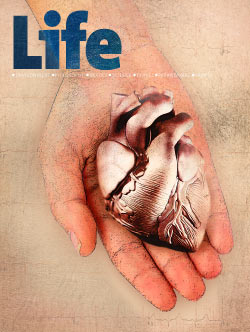 Man has always been fascinated by the thought of playing God. Organ donation comes really close, swears Satya Prasad Movva
About a year and a half ago, a young doctor-in-training called Sarath played cricket in the dusty bylanes of Rajamundhry, Andhra Pradesh. Tall and dark with intense, brooding eyes, he drew admiring glances from most girls in college. Quiet to a fault, he believed in speaking only when asked to. And even then, he chose his words carefully, relying more on a polite smile to decline invitations to converse. This did not mean that he was a loner. Always ready to lend a helping hand, he was highly respected as a person and trusted as a friend, a man in whose hands we could have gladly put our lives. All this changed the day he sat in a car with four other friends, on his way to a cricket match. Probably slightly groggy from little sleep the night before, the driver of the car faltered, crashing headfirst into an oncoming truck. Sarath passed away before help arrived. Distraught friends and family rushed to the scene to take one last look at the body that once contained a soul they loved. Though crushed by grief, Sarath’s father retained enough heart to donate his younger son’s eyes. None of us would ever see Sarath again. He would never write out a prescription for anyone. And yet, he had served his destiny. Even in death, he had given life to others. In a way, he had passed through death the way he had lived his life – quietly, with dignity and a ready helping hand.
 Mankind has just begun to realise that the earth is given to us as a responsibility. We can revel in its aesthetic riches but we also have a duty to protect it from destruction and then pass it on to the next generation. Maybe it’s time to look at our body the same way. Every body that we cremate or bury carries within it a treasure that could give the gift of life, limb or sight to a needy soul. And yet, the apathy towards an act as noble as organ donation is mind numbing to say the least , with a few even wondering if their donation will be taken advantage of commercially. “Life revolves around trust. Donate with a pure heart and it shall never go in vain,” says Acharya Sri Rakum, a former karate champion who now runs schools for the blind.
Take a look at these figures. India is currently home to over 15 million blind, about 1,00,000 awaiting a kidney transplant, and another 10,000 per year looking for a liver donor. There are scores of others waiting for organs like a heart, bone marrow etc. However, for want of donors, only around 2500 kidney transplants and 700-800 liver transplants are registered per year. It is easy to look at them as just numbers on a piece of paper. But try and imagine the number of bumps that a blind man takes every day. Take a look at the tears of those who wonder why their father wastes away for want of a kidney. Should we let our hubris-stoned notions of a ‘decent funeral’ come in the way of a respectable chance at life and happiness for many others? Are we so blinded by our narrow definition of life that we fail to see the suffering that surrounds us? Lalitha Raghuram, Country Director, Multi Organ Harvesting Aid Network (MOHAN), rubs it in. “Organ donation, which is popular in the west, is yet to catch on in India. What makes it even more heart-rending is that in most cases those who die while waiting for organs are youth and children,” she says.
It is amazing to know how many prayers can be answered by donating a single cadaver. Frightful conditions like heart failure, terminal lung illness, kidney failure, diabetes and valvular diseases can be cured with the gift of an organ. However it is to be noted that signing an organ donor card is merely the start of the process. What is equally important is to convey our wishes to family members who will be ultimately responsible for taking the initiative to ensure that our ideals are fulfilled. A majority of people hesitate to talk of the possibility of death to their family members. Here it is important to remember that a little resistance and squeamishness is a small price to pay for the chance to save an individual, if not a family. The NGOs dedicated to the cause ensure that, once they make the call, the family is not disturbed in their moment of grief. “We have counselling sessions with families to assure them that there would be no disfigurement and that incisions would be as neat as in the case of an open heart surgery,” said Raghuram. There are instances of a mother seeing her child in the eyes of a complete stranger who benefitted from her generosity or a son finding comfort in the gratitude of a family whose patriarch was revived thanks to his own father’s largesse.
Surfing through the internet, I recently came across a video that caught my attention. A young man with his face buried in a book sits next to a blind boy on a bench at a railway station. Hearing a chuckle, the boy asks the young man the reason for his amusement. Slightly awkward, he reads out the joke, leaving the little boy in splits. After the laughter subsides and the young man returns to his book, the visually impaired boy asks, “When you are done with it, can you give it to me “? Completely bewildered, the man musters a query embarrassedly, “The book?” “No, the eyes,” came the response. The camera lingers on the man struck by epiphany – counting his blessings at the same time as chastising himself for being blind to the plight of the world around him. Are you waiting for such an ironic encounter? The next time you feel happy about seeing your parents or friends, think of the power you have to grant a similar joy to another set of folks. While scientists toil on trying to grow artificial blood and organs in laboratories, you can do your bit by pledging organs today. Go ahead, make that call. As they say, accha lagta hain.


 Issue Dated: Feb 5, 2017

