


- Article
- Comments (0)
India: Waste Management
The dustbin economy
The country needs to master waste management technology
Tags : Waste management | UNECA | Solid waste | Pollution |
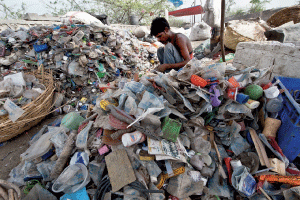 A recent statement regarding waste management by senior regional advisor of UN Economic Commission for Africa (UNECA) that "the conditions of African countries and India are alike" aptly describes the dismal state of India’s waste management. Several reports have shown the horrific issue since long time but hardly anything has been implemented across the country. Ignoring a grave concern like waste management, the nation is gradually becoming the world’s largest wasteland and endangering its sustainability in the long term.
A 2012 World Bank report on solid waste issues estimated that 160,000 million tonnes of waste is generated everyday in urban India with a per capita of 0.34 kg a day. Sadly, per capita waste generation is going to double (0.7 kg) by 2025. While the nation is not able to manage its own waste, it is now even importing waste from Western countries. A report released a few years ago confirmed that a huge quantity of household waste was being collected every week from UK (under the veil of recycling and waste treatment) but was eventually shipped and dumped into India. Under the ‘go green and improve the environment’ campaign, the UK Council was exporting its garbage to India at a hefty price. The garbage export made more economic sense as it just cost them 40 pounds (to export) compared to 150 pounds if they were to process and re-cycle the same.
The Solid Waste Policy 2000 has been around for more than a decade but this has largely remained on paper. This is not to deny that some municipal corporations across India's cities have put some effort to beautify their cities. Additionally, it's estimated that around Rs 3,000 crore is spent every year by different municipal bodies on disposal of garbage. Given the size of india, this figure actually sounds miserly. Moreover, till date, municipal corporations have taken short term solutions of landfilling rather than adopting a sustainable system of waste disposal.
Even if some projects get initiated, they either have to face resistance or get indefinitely delayed. For instance, the 16 megawatts (MW) waste-to-energy plant at Okhla in Delhi faced opposition and resistance from the local population. Similarly, the Rourkela Municipality had received Rs 4 crore under the 12th Finance Commission in the last four years but the Solid Waste Management project is still pending. Even Mumbai had planned to set up a 11 MW methane gas generation power plant but the project still needs to be operational. India needs to deal with this ever increasing waste and needs to develop a holistic policy of sustainable waste management and disposal system. Or else, heaps of waste would continue to pollute the society!


 Issue Dated: Feb 5, 2017

