

Saturday, October 24, 2026


- Article
- Comments (1)
Healthcare
Rope in private players
Public-private partnership can inject new blood into the ailing healthcare sector of India
ONKARESHWAR PANDEY | Issue Dated: May 6, 2012, New Delhi
Tags : rear window | healthcare in West |
Tags : rear window | healthcare in West |

Dr Mukesh Hariawala
Renowned Indian American Heart Surgeon based in Boston
India is fortunate that practising professionals here believe in the concept of “human care” as opposed to just “healthcare” in the West. Perhaps this warmth comes from the rich cultural background of our people, which is a major distinguishing factor. The infrastructure and the facilities in most of the corporate hospitals in India are at par with hospitals in the developed countries. The surgical results are verifiable and the success rate is excellent. A number of doctors practising in India have been educated and trained abroad.
However, the outreach of good healthcare provisions is unfortunately restricted to the major metropolitan cities only and the rural India is largely deprived of these facilities. There is large scale deprivation of quality healthcare to a sizeable portion of our population which must be immediately addressed for us to progress like most of the developed
countries globally.
countries globally.
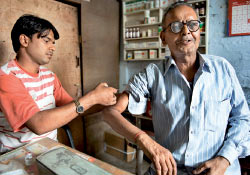 There are media reports that Indian government is mulling a free medicine scheme for all, especially for the rural poor who rely heavily on public health services. This policy can be a landmark step in improving the health of the poor. It is a step in the right direction and a healthy India will be a stronger India. A small section of Indian population dies prematurely due to lack of access to medicines in a timely manner. Quality medical assistance in the form of medicines when provided to the masses at the grass root level will keep them healthy and make them more productive. This will add to the positive output of the country raising the overall GDP and the fiscal health of
the country.
This healthy workforce will play a significant role in moving our country forward and inspire the rural population across the whole country to take advantage of this new scheme which will help achieve a better quality of life for most Indians.
If we compare health services in India with other developed countries, we find that India follows a model of dual system of healthcare with 70 per cent in the private sector and 30 per cent in government institutions. Unfortunately, the quality of healthcare differs significantly in these two sectors. Thus the rich and affluent Indians get the best healthcare and live a longer and more fulfilling life as opposed to the under privileged ones.
In the developed countries across Europe and in the USA and Australia, the configuration of healthcare varies with not much disparity in government and private sectors. Here, the major difference lies in the time to access quality doctors and hospitals due to long waiting periods. For example, National Health System (NHS) in the UK is a government run programme from the taxes collected at source of income which provides excellent quality healthcare to its citizens. But there are long queues as opposed to the insurance based private healthcare sector where there is almost no waiting period and access to doctors is immediate.
Now, the question is how to improve the public health services provided by the government in India. The Indian government is short of funds and healthcare, unfortunately, is a low priority. In spite of this shortcoming, a more productive approach would be to consider partnership programmes with the private and corporate healthcare sector in the country.
This can be achieved by offering tax and land acquisition incentives to build quality hospitals in exchange for providing free or subsidised healthcare to the poor patients. This will help ease the burden on the government hospitals and also ensure business profitability to the private players who will then consider a larger investment in healthcare.
If the Indian government introduces its new policy, it will have a great impact on society. The WHO will view India very favourably and may even give supplementary grants to support the programme.
( As told to Onkareshwar Pandey)


 Post Comments |
Posted By: Dakshay Jakhia | Mumbai | May 16th 2012 | 23:05 An article by Boston based Indian origin Dr. Mukesh Hariawala gives very deep insight to the blue print of Indian Rural healthcare. In today's time we need Doctor Administrators like Dr.Hariawala to rein in the vast potential of private public partnership to uplift the poor healthcare in Rural india.
|

 Issue Dated: Feb 5, 2017

