

Tuesday, October 20, 2026


- Article
- Comments (0)
Regulator Raj
Retired civil servants with no specialisation preside as ombudsmen of key economic ministries and the results are scams, chaos and mismanagement, writes Ranjit Bhushan
RANJIT BHUSHAN | Issue Dated: September 16, 2012, New Delhi
Tags : CAG | CAG REPORTS | IAS OFFICERS | |
Tags : CAG | CAG REPORTS | IAS OFFICERS | |
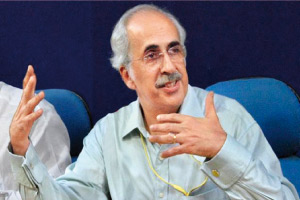 In June this year, when Rajiv Nayan Choubey, a 1981 batch Indian Administrative Service (IAS) officer of the Tamil Nadu cadre, was appointed to head the Directorate General of Hydrocarbons (DGH), the Union Petroleum Ministry’s regulatory arm for exploration firms, new ground was being broken.
For the first time since DGH came into existence in 1993, a generalist bureaucrat was named to head this highly technical body. This complex department has traditionally been run by senior oil technocrats belonging to state-run exploration firms, who are posted on deputation.
Now consider the following:
- Two of the nine-member National Disaster Management Authority headed by the Prime Minister are former Union Secretaries: Nand Kumar, Food, and VK Duggal, Home Ministry.
- The Chairman of the Competition Commission of India Ashok Chawla and three others of the six-member panel are former IAS officers.
- Five of the eight members of the National Consumers Disputes Redressal Commission are former top civil servants.
- The Central Electricity Regulatory Commission (CERC) has two ex-IAS officers, Pramod Deo and M Deena Dayalam.
- Former IAS officer J Hariharan has been appointed to the Insurance Regulatory and Development Authority.
The list is virtually endless – and quite seamless. Former civil servant Raman Abhishek heads the Forward Market Commission and is regarded close to Union Agriculture Minister Sharad Pawar while Yashwant Bhave heads the Airport Economic Regulatory Authority (AERA). In a career spanning over three decades, Bhave has never served in the aviation sector.
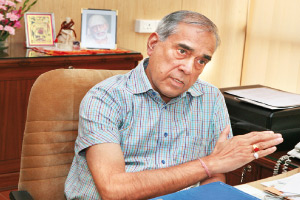 Ex-Health Secretary K Chandramouli, a Uttar Pradesh batch IAS officer, is the boss of the Food Safety and Standards Authority and no one can quite say what his specialisation is.
Such is the overarching dominance of the IAS that they now even head government departments linked to the judicial structure and appointments in the country. The Revenue Department, for instance, should have ideally been with the Income Tax, but there too it is the Union Expenditure Secretary, an IAS officer who calls the shots, much to the chagrin of tax officials and specialists.
Major constitutional bodies like the Comptroller and Auditor General (Vinod Rai), the Election Commission (VS Sampath) and the Securities and Exchange Board of India (SEBI) (UK Sinha) have former and serving civil servants at their helms. The ensemble of the steel frame and their domination of sectors that were traditionally in the hands of technical specialists are complete.
Three key CAG reports tabled recently in Parliament have severely indicted the government of causing enormous losses.
- The CAG report on coal block allotment said private firms are likely to gain Rs 1.86 lakh crore from coal blocks that were allocated to them on nomination basis instead of competitive bidding.
- The CAG report on Delhi airport slams the levy of development fee on passengers and says the Civil Aviation Ministry violated the bid conditions to benefit GMR-led Delhi International Airport Limited (DIAL) to the tune of over Rs 3,415 crore. Concluding that "the concept of upfront fee was used to lease out an additional land of 190.19 acres for a paltry one-time payment of Rs 6.19 crore", the report said that the "Ministry of Civil Aviation and later Airports Economic Regulatory Authority of India (AERA) allowed DIAL to collect development fees amounting to Rs 3415.35 crore. The order of the ministry in February 2009 allowing that was in contravention of the Operation Management and Development Agreement (OMDA), Airports Authority of India Act and the AERA Act. Contrary to the provisions of OMDA, DIAL was allowed to use the amount collected as development fees to meet the project costs'.'
- The third CAG report flays post-bid concessions to Reliance Power and says that the Anil Ambani-led firm got undue benefit of Rs 29,033 crore when the government allowed use of surplus coal from blocks allotted to the Sasan power plant for its other projects.
In all these three instances, the roles of government-appointed regulators have come under sharp scrutiny.
So what is it that keeps the stranglehold of serving or retired IAS officers on regulatory jobs that come under the government’s ambit going? Even more importantly, are IAS officers qualified to deal with the intensely technical subjects that a regulator is contracted to bring upon?
The near-domination by IAS officers of regulatory posts as compared to equally qualified and able candidates from non-IAS cadres has led the government to mouth periodical concerns but the problem has remained largely unresolved.
"Generalists versus specialists is an old issue. It depends on individuals. I have seen specialists make a complete hash of things while a capable generalist IAS officer can make a difference. I have known technical regulators on the take from private companies. So it is difficult to generalise," says former Cabinet Secretary TSR Subramaniam, who was instrumental in setting up the first Telecom Regulatory Authority of India (TRAI) in 1996-97.
But is an IAS officer equipped to influence a technical decision about which he or she may not know anything? Counters Subramaniam, "The DGH has hundreds of experts to call upon to tender advice. And what is technical? There are 100 solutions in telecom. Is it possible that one expert knows all? The same applies to petroleum and other sectors. I would rather have a sensible administrator. It is always best to keep a team of generalists and specialists of equal strength. That is the best way
to get results."
But most experts believe that the growing clout of the IAS lobby is merely a demonstration that the pledge taken by Prime Minister Manmohan Singh in 2004 to carry out large scale administrative reforms has come up a cropper.
Ironically, at a crucial 2007 meeting of chief ministers called to address the power sector, the Prime Minister had categorically stated: "Regulators are not supermen and have to function strictly within the legal framework. They should regulate but not over-regulate."
His call for "regulating the regulators" was then well articulated by the Planning Commission which prepared a consultation paper Approach to Regulations: Issues and Options.
The paper had sparked off a full blown row between the Planning Commission and the regulators with the latter claiming that the existing guidelines on accountability were more than adequate and that there was no question of any more reforms.
Some say that if the Civil Service has succeeded in retaining its grip over key administrative positions, it is largely because they have not allowed any other cadre to grow or acquire equal prominence in administration of ministries
or even professional bodies under the government.
The critical missing link here is the lack of political will. Take the multi-crore 2G scam as a case in point. Nripendra Misra, former IAS officer and then Chairman of TRAI is a crucial witness in the case when 2G licences were allotted during former telecom minister A Raja's tenure.
Misra told the Joint Parliamentary Committee (JPC) probing the 2G scam that as licence and spectrum came together, he suggested that the two would be better treated in an unbundled fashion. "This was, however, not a recommendation and the observations did not find much resonance with the government," Misra told members of the committee.
The 2G scandal was over alleged below-market-price sale of lucrative telecom permits bundled with airwaves, which the CAG estimated to have cost the state exchequer about $34 billion in lost revenue. A smart regulator – if he also had the backing of the politician – would have imposed curbs, which he is entitled to under law.
This week amidst the uproar over the CAG's reports on coal block allotment and ultra mega power projects, an important audit report has refocused on the role of regulators.
In its report submitted to Parliament’s Public Account Committee (PAC) on August 22, CAG has criticised the Atomic Energy Regulatory Board (AERB) for not being independent in its working. “The legal status of AERB can be seen to be more of a subordinate authority with powers delegated to it by the Central government than of a statutory body with independent powers. AERB has, thus, not been created by any specific legislation,” the CAG said.
The CAG also criticised India’s atomic energy regulator for not having a radiation safety policy and being lax in monitoring the proliferation of unregistered medical X-ray facilities in the country. This is the first time ever that the performance of the 29-year-old AERB was under review by the CAG. The move followed criticism of the safety of nuclear plants both in India and abroad.
Sample some other instances.
- This year, the Parliamentary Standing Committee on Health and Family Welfare has alleged a "nexus between drug companies and regulatory officials" in clearing new drugs. It said the Drug Controller General of India (DCGI) approved 31 new drugs between January 2008 and October 2010 despite mandatory clinical trials on patients in India not being conducted. The panel further alleged that medical opinions on the drugs were written by the "invisible hands of manufacturers and experts merely signed them".
- Medical Council of India (MCI), 2010: The CBI arrested MCI president Ketan Desai (not an IAS officer) who was alleged to have run the MCI like a cartel, extorting money from private colleges to grant them permission. The MCI bent rules for money and severely compromised the quality of medical education, the CBI alleged. Later, in the course of the investigations, the Health Ministry sacked MCI secretary Sangeeta Sharma for blocking investigations into the Medical Council scam. The MCI was subsequently dissolved.
- The Satyam fraud was perpetuated to a large measure by chartered accounting firms, who operated under the aegis of regulator Institute Chartered Accountants of India (ICAI).
It was not always like this. The fact thattechnical experts need to be in charge
of economic decision making, is not new. The idea of the Industrial Management Pool, a cadre of professional managers picked up from the private sector, was aimed at creating a pool of talent within the government that could be more effective and efficient than the generalist bureaucrat.
Analysts aver that as a result, some of the finest civil servants in the 1960s and 70s belonged to the Industrial Management Pool with arch professionals like DV Kapur and Lovraj Kumar heading economic ministries with élan. Such were the times that even an Indian Economic Service (IES) officer IG Patel could head the Department of Economic Affairs.
Says an official, "IAS officers then had strong competition. An Indian Audit and Accounts Service (IAAS) officer like R Ganapathy could become Expenditure Secretary while a non-IAS officer V Krishnamurthy rose to head the Industry Ministry. Two things led to the gradual disappearance of the competent non-IAS officer. One, the IAS network became stronger ensuring that no other all India service got the same booster dose. Two, the non-IAS cadres failed to attract the right kind of talent. ''
Says former CBI Director Joginder Singh, "Regulators are a hoax. If they have to be made effective, they should be accorded constitutional status so that their advice is binding. Today, it is a sinecure for chamcha officers who have not done a thing during their careers.'' According to Singh, if a regulator starts playing by the rules, he is most likely to be eased out because no one wants guys following the book. As a veteran investigator, he should know.


 Issue Dated: Feb 5, 2017

