

Monday, October 12, 2026


- Article
- Comments (0)
My Terrorists: Good or Bad
By delisting MEK from the list of foreign terrorist organisations, the policymakers in DC have chosen political brinkmanship over policy calibration, says Saurabh Kumar Shahi
SAURABH KUMAR SHAHI | Issue Dated: November 30, -0001, New Delhi
Tags : foreign terrorist groups | iraq war | obama | people's mujahedin-e-khalg.... |
Tags : foreign terrorist groups | iraq war | obama | people's mujahedin-e-khalg.... |
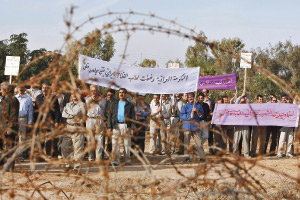 In the early 90s, a harmless looking fellow called Ahmed Abdel Hadi Chalabi and his group, the Iraqi National Council (INC), suddenly started making news amidst the lobby groups at Capitol Hill.Here was West educated, suave, claimed to have contacts within the Saddam regime and promised to “help” the US and its allies, who had just come out of Gulf War I. After decades of supporting Saddam with money and weapons against the nascent Islamic Republic in Iran, the West received a rude shock in the form of the Kuwait invasion. Saddam had to go. No questions.
The Department of State footed the bill. Ahmed Chalabi and his INC started parading the so-called defectors who claimed to have either worked for or know about the Iraqi WMD program. The Clinton administration used him as a strategic asset and it was because of his heavy duty lobbying that the Bush administration took the decision to invade Iraq. After the fall of Saddam, it became apparent that all his so called intelligence inputswere just hoax. However, the man achieved what he wanted. He was briefly the oil minister as well asw the deputy PM of Iraq. His exploits were remarkably exposed by journalist Aram Roston in The Man Who Pushed America to War.
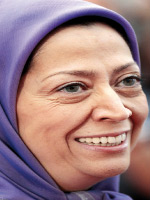
.jpg) This month, the Obama administration, in an appalling sense of deja vu, found their Chalabi for Iran: the husband-wife duo of Maryam and Massoud Rajavi and their dangerous cult of People's Mujahedin of Iran (PMOI) popularly known as Mojahedin-e Khalgh (MEK). In what will go down as the single biggest policy blunder in the years to come, the US Department of State notified Congress that the Obama administration intends to remove MEK from the State Department’s list of Foreign Terrorist Organisations (FTOs).
This month, the Obama administration, in an appalling sense of deja vu, found their Chalabi for Iran: the husband-wife duo of Maryam and Massoud Rajavi and their dangerous cult of People's Mujahedin of Iran (PMOI) popularly known as Mojahedin-e Khalgh (MEK). In what will go down as the single biggest policy blunder in the years to come, the US Department of State notified Congress that the Obama administration intends to remove MEK from the State Department’s list of Foreign Terrorist Organisations (FTOs).
The step will have serious consequence and prove to be detrimental to the US-Iranian relationship. MEK, that was started decades ago to oppose the rule of Raza Pehlavi and the Western governments, especially US that supported him, turned against the Islamic Republic after the revolution in 1979. Known for its gruesome execution of regime loyalists and its wanton killings, the group was given base and logistical help by Saddam Hussain. In lieu, MEK helped Saddam during the Iraq-Iran war through intelligence gathering, assassination of regime big-shots in Tehran as well as helping him massacre the Kurds. No doubt Iranians, even those with the opposition Green Movement, hate the group.
After the fall of Saddam, the group lost its clout in Iraq and its base, Camp Ashraf, was cleared. Therefore, it started lobbying in Washington to become a strategic asset of the US in its dealings with Iran.
“The decision to delist the MEK is all the more grievous when one considers the fact that just recently, several media reports indicated that the MEK was still active in carrying out acts of terrorism in Iran, as well as against its own members, including the assassinations of Iranian nuclear scientists. But aside from all that, it was obvious from the start that the FTO designation was purely a legal myth which was never fully enforced,” explains Cyrus Safdari, a US based Iranian political expert.
 foreign terrorist organisation, Indeed, the ban was never seriously enforced and the US administration was more than tolerant in letting MEK carry out its activities in the US. For example, technically speaking, its status in the US is same as al-Qaeda. However, MEK's supporters openly indulge in Congressional and Senatorial lobbying, appear on US channels and broadsheets as “Iranian experts” and can openly visit and leave US on a whim. Al-Qaeda can not think of similar status even in Kabul, let alone Washington.
This decision is detrimental in more ways than one. “First, it will be easier for the group to now directly take funds from the State Department and organisations like National Endowment for Democracy. It can now use US satellites to beam its propaganda channels. Also, there is a genuine concern that it will push the US towards a war as INC did in the case of Iraq,” says Abbas Maleki, an expert on US-Iranian relationship.
It is surprising how Secretary of State Hillary Clinton maintained that the group has renounced violence. Only in March this year, several senior officers from different US intelligence agencies leaked snippets of intelligence suggesting collaboration between cadres of MEK and Mossad in the assassination of Iranian scientists. Quite a few of them, off the records, suggested a certain level of synergy developing between the two where MEK helps the Israeli external intelligence agency with recruits inside Iran.
The move is in line with several knee-jerk reactions that the Obama administration has taken vis-a-vis Iran in the last few years. It is becoming evident that the US policymakers, once known for their long-term strategic planning, have resorted to political brinkmanship to achieve short term goals. The point that the US misses here is that Iranians' distaste for MEK is total and complete. Even people who oppose the Iranian regime sitting in the West, including a substantial section of exiles, are seeing this move as a massive policy blunder. Experts within the exile groups told this reporter that by aligning with MEK, the US administration has sent the wrong signal to Iranian organisations in the West that want the change to come through political means.
How this signal manifests itself in days to come will determine the US' capability to influence future events in the region.
saurabhshahi@thesundayindian.com


 Issue Dated: Feb 5, 2017
