ADITI PRASAD/CHANDRAN IYER | Issue Dated: April 27, 2012, New Delhi
Tags :
second marriage | more Indians marrying again |
Someone once joked that a second marriage is the triumph of hope over experience. TSI finds that experiences can indeed change and hopes are not always dashed.
More Indians are marrying again for another shot at contentment and companionship. Aditi Prasad and Chandran Iyer join this second wave of band, baaja and baraatis...
She has a book and a brand behind her, has conducted many workshops on science and spirituality and handled the roles of a wife, mother and entrepreneur with aplomb over the last five decades. But Chandigarh-based Renee Singh is no traditionalist. She 'opted out' of an unhappy marriage some ten years ago and now wants to give herself a second chance. “One day I just woke up with the realisation that life is just passing me by. If my first marriage went wrong, it was certainly not my fault. Now I want to get married again because I have a right to be happy,” says the 50-plus lady brimming with life.
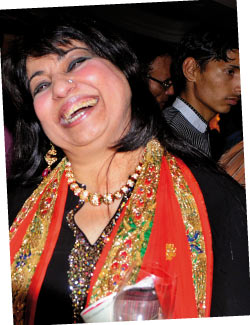
A Ph.D in psychological philosophy, Renee belongs to a Jat family. Her house in Chandigarh shares a wall with chief minister Prakash Singh Badal's home. But Renee says that despite her privileged background, the feudal mentality of her family was one of the many things that had pulled her back all this while from exploring a second marriage. “But now it is time to move on. I crave companionship. I have been known to be tomboyish all my life. Now I want to be a woman and am looking for a man who makes me feel like one,” avers the lady who has a daughter aged 30 and a 14-year-old son.
Renee is just one amidst a flood of people across India either scouting for a second chance at marital bliss or already into their second marriage. This growing breed of Indians have turned the adage 'once bitten, twice shy' on its head. Instead they seem to be crying ‘once bitten, let's give it a second try’ from the rooftops. And while they all may not be as outspoken as Renee about their personal life, the proof is all over this marital pudding.
Divorce rates in India have been climbing northwards in recent times. Just the last one year saw 43,000 divorce cases across the country. Lawyers say that the number of divorces have doubled just over the past five years. Guess then it was only a matter of time that remarriages became more the norm than exceptions. What’s surprising, however, is how swiftly urban India has cottoned on and is changing its moral, social and cultural attitude towards second marriages. The Sunday Indian national survey across tier I and tier II cities is a startling affirmation of the trend sweeping the country. An overwhelming 83 per cent of metro-based respondents feel remarriages have gained more acceptance in society today compared to five years ago. Over 79 per cent in non-metro India hold a similar view (see page 34 for
survey details).
Information overload in the age of 24X7 media blitzkrieg may be giving sleepless nights to a few high and mighty, but the awareness and openness it has lent to urban India needs applauding. Coupled with education and economic independence for women, it has done away with many blemishes on Indian society, among them the strength to carve their lives in a mold that they prefer. Although many did balk at the thought, men marrying again after getting rid of an unwanted wife or because their kids needed looking after due to the untimely death of their first wife was always accepted. But now the winds have started blowing in the other direction too. “Divorced women got remarried earlier also but it was always a furtive, hurriedly arranged match. Awareness, education and economic independence are thankfully changing that equation in urban India,” says clinical psychologist Dr Aruna Broota.
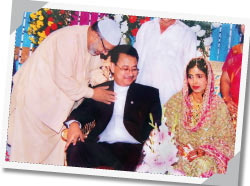
A visit to journalist and writer Habib Akhtar’s third floor home overlooking the Masjid Beri Wali in Old Delhi’s Chawri Bazaar is an eye-opener of another kind. The steep stairs are an ordeal to climb but the glow in his eyes as he fondly flips the pages of his colourful and resplendent wedding ceremony with second wife Shaista is unmistakably ‘love’ of the lasting kind.
Akhtar’s first marriage with long time classmate and ideological partner (they were both SFI activists in college) Meghna (name changed) was a disaster and ended in an acrimonious divorce. “Although ours was a love marriage, things changed afterwards. She was a Hindu and I was a Muslim. Deep-rooted prejudices and cultural perceptions surfaced a few years after we tied the knot,” he recalls. The duo even had a daughter who now lives with the first wife. “Both of us also had strong egos and clashes were frequent and fiery,” Akhtar reminisces bitterly.
But when the loneliness pangs hit, Akhtar realised that spending the rest of his life alone was not an option. “I wanted a second chance and got it in my second wife. But I took care to marry someone from similar religious background and socio-economic status this time,” he says. That Shaista – a doctor by profession – blushes almost like a newlywed even two years after marriage, is testimony to the success of this second love story.
The mushrooming of websites such as secondmarriage.com, marryagain.in, secondshadi.com, phirvivah.com, divorceematrimony.com, and a dozen others of their ilk is a corroboration of the growing trend. Murugavel Janakiraman, founder and CEO of Consim Info says that he started divorceematrimony.com when he realised that a sizable portion of the traffic on his popular website bharatmatrimony.com came from divorcees and widowers looking for a second marriage.
Today, the niche site catering to those who want to marry again, has grown phenomenally and gets more than five lakh page views every day. “Now there are over two lakh profiles in the divorceematrimony.com database,” Janakiraman told TSI from Chennai. Till some years back, a divorcee or widow status or even a girl on the wrong side of 30 would have parents shying away from ever advertising the fact. Cut to today and you have people brazenly displaying not only their marital status but openly soliciting prospective suitors on the World Wide Web.
The rush for a second matrimonial inning is not confined to any particular age group. Janakiraman says that the average age of users of his website is 36 years for males and 32 years for females. But he adds that there are a host of people in their 50s, 60s and even 70s who are just waiting to give wings to their lonely lives again. Some feel the need for a partner for mere companionship, while others look for the added benefit of completing their family.
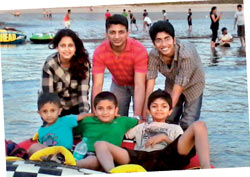
Rupa and Harshad for instance met through an online portal and gave a second lease of life to their happiness quotient. Rupa, a Pune-based writer, was once happily wedded to television journalist Venkatesh. Their home was full of laughter thanks to the antics of their two kids. But the bliss was short lived. Venkatesh was killed in a ghastly road accident in 2009. Rupa’s life was shattered. She went through all the emotions of anger, denial and anguish. A year later, she decided to pick up the threads of her life and give herself a second chance. She married Harshad whom she met through an online portal. Harshad himself had ironically gone through a similar trauma. Having lost his wife, he was living alone with his two young sons.
Unfazed by criticism, the only persons that Rupa and Harshad tried hard to convince were their respective kids. Once the kids gave the thumbs up, they tied the knot and seem to have a happily ever after on their hands. “Many times, we have cried together for our respective losses. So, I guess that says it all,” points out Rupa, perhaps explaining the companionship she was craving and has evidently got.
But things are never as simple as they appear. Second marriages are a complex labyrinth to navigate at best and can conclude in even more bitterness at worst. TSI brings you a potpourri of the best and worst scenarios.
KNOW YOUR SPOUSE
Loneliness, financial insecurity, family pressure or societal compulsions – whatever the reasons, it’s easy to throw caution to the winds and jump into a second marriage in haste. Many even take the plunge without asking too many questions, thinking that the opportunity may not present itself again. This is especially true for divorced women who often may have to bear the cross of ‘damaged/ discarded goods’ in many sections of society.
Whatever may be the compulsion, there is no need to press the ‘urgency’ button. Says Supreme Court lawyer and former member of the Law Commission Kirti Singh: “Both men and women should take the trouble to find out as much about their future spouse as possible before marrying again. It is important for them to know the person, and his/ her background. This can only happen if people ensure that they have a sufficient courtship period before they get married.”
Rupa and Harshad for instance may have lent each other their shoulders and had a great understanding right from day one, but it seems that it is better to wipe the slate clean of past emotional baggage or one may risk their marital union. Constant comparisons with ex-spouses or frequent mentions of their names might put undue pressures on those new and relatively untested marriage vows.

LEARN FROM MISTAKES
Psychologists believe that divorced couples can learn from previous mistakes and enjoy a much happier and stable second marriage. This is despite conflicts due to 'baggage' brought into a second relationship and/or step-children leading to higher stress levels and adjustments in the marriage. “But by the time second marriages come about, people are more mature. As a result adjustments can be made wisely and without causing heartaches to one another,” espouses Dr Broota.
Parul Khona, a Pune-based marriage counsellor, agrees: “When people go in for a second marriage they learn to be tolerant and not take each other for granted. Therefore they are more likely to make a success of their marriage.”
Point is, having burnt their fingers once, people going in for a second shaadi normally take extra care to not make mountains out of molehills and wisely give ample space to one another. This invariably allows the relationship to breathe and acquire a life of its own.
NO KIDDING THIS
When Pooja’s (name changed to protect identity) husband left her with two small kids to look after, the Hapur-based girl was crushed. A year later, her parents got her married to a widower Neel who had three kids from his first marriage. Now while Neel pays the school fees and looks after the financial needs of Pooja’s children, he rarely bothers to play father to them. “So we are in the same house, but his children are everybody’s pet in our joint family, my children feel neglected,” laments Pooja.
Experts believe that such situations can be best avoided if one takes the trouble to sound out the family before hand on respective children. Dr Broota, who is counselling the family, says if not handled with care, such situations have a tendency to spiral out of control in no time. “These are things that one should negotiate on/ talk about before marriage. But girls or their families often take remarriages as a compulsion and don’t really ask these things and later regret.”
Worse, in case the person thinking of remarrying is over 50 or 60, his or her grown-up children object to their decision tossing the age old lame duck ‘what will people say?’ “This kind of attitude on the part of children shows their utter failure to understand their parents as human beings,” says Dr Hemant Devasthali, retired Principal of Pune’s Ness Wadia College and founder of a first of its kind support group for aged singles called Anand Yatra (Journey of Happiness). He adds that there is an underlying fear of economic insecurity behind this attitude since children resent an additional family member legally sharing and claiming a part of family resources.
MONEY MATTERS
This one may come as a dampener for Cupid’s arrow, but it’s always better to be safe than sorry.
Divorcees Nandini and Harish (names changed to protect identity) – both in their late 40s – got married two years ago and have been at each other’s throat ever since. The bone of contention is money. A CA by profession, Harish is stingy by nature. Nandini, who left her job as a college professor when she married Harish, resents being asked to account for every penny. “He is evasive when I enquire about his income and there are these huge showdowns every time I ask for any money to spend on myself or even to buy a gift for my mother,” complains Nandini.
Kirti Singh cautions women to walk into a second marriage with eyes open. “A key consideration should be financial security. Ensure that if a house or any other asset is being bought, it is a joint property. Also, have your own account, where you can save and spend for yourself. Before marriage, one should be upfront and have a full enquiry and disclosure about earnings,” she advises.
After all, second chances can be as tantalising as the proverbial apple in the Garden of Eden. Until the snake rears its ugly head again that is. �




 Issue Dated: Feb 5, 2017

