



- Article
- Comments (1)
Is direct cash transfer the answer to cut subsidies?
Tags : india economic growth | indian gdp | direct cash transfer | subsidy bill |
 Speculations are rife that in the current fiscal year the subsidy bill will see an upsurge at 2.4 percent of the Gross Domestic Product (GDP), whereas in the budget it was expected to be 1.9 percent. As per some industry estimates, major subsidies in 2012-13 would be around 2.4 per cent of the GDP. Food, fertilizers and fuel are the major contributors to the government's subsidy bill.
According to a calculation made by Food Corporation of India, India's food subsidy bill in 2012-13 has posted a steep rise with Rs 101,879 crore in the first 6 months itself. This amounts to 36 per cent more than the budget estimate. It can negatively impact the government's plans to bring in control the current 5.1 per cent fiscal deficit of the GDP.
The government plans to buy 15 per cent more rice from farmers this fiscal than the last year. Nearly 38.14 million tonnes of wheat has been bought by Food Corporation of India this year, which makes it 35 per cent more as compared to the last year. Food Corporation of India has attributed the inflation in the subsidy bill to the arrear food subsidy - Rs 22,008 crore, carried over from 2011-12, rise in acquisition cost, and increase in the amount of procurement.
Reportedly, on the other hand, rise in the LPG subsidy accounted for 10 per cent fall in the net profit of GAIL India to Rs 985.38 crore in July-September 2012 from Rs 1094.41 in the corresponding period last year. The company attributes the losses primarily to a 39 per cent outgo towards LPG subsidy. Furthermore, petrol and diesel prices have already been raised and the number of subsidized cooking gas cylinders has been restricted to 6 a year in a bid to slash down the subsidy bill.
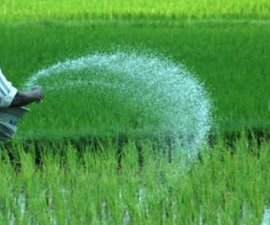
In order to put the economy back on track and to control the ballooning subsidy bill, the government also plans to raise fertilizers prices. It is also believed that the Fertilizers Association of India is also lobbying hard in order to see a 70 per cent rise in the prices of fertilizers. Officials estimate the hike to be a little over Rs 500 a tonne - which could help slash down the subsidy bill to a near Rs 5000 crore thereby discouraging farmers to use less urea.
Some pilot studies in the states of Delhi, Jharkhand and Karnataka have given a little assurance to the government to fully switch over to cash transfer system to millions of beneficiaries by 2017 in order to cut subsidy bill. The government, by implementing this cash transfer system of subsidies, aims at improving the efficiency of fiscal consolidation and its welfare schemes. The government hopes to bring down its subsidy burden to 1.5 per cent of the GDP by 2017 from 2.08 pc of the GDP (Rs 2,33,000 crore) in 2011-12. It believes that subsidies must be reduced as a percentage of the GDP and that too without hurting the poor.
While direct cash transfer system has been proved successful in a couple of states and the government finds it to be a way to fight monetary burdens due to subsidies, finance ministry on the other hand mulls raising petroleum and LPG prices. The ministry says that the current pricing level of petroleum and gas is neither sustainable nor conducive for economic decisions.


 Post Comments |
Posted By: vinaydixit | India | November 11th 2012 | 12:11 Provision of subsidized goods is any day better than cash subsidies . Until Defunct and corrupt system is not corrected, which requires lot of firmness and will power at all level. Active people's participation a must for success of all govt schemes.
|

 Issue Dated: Feb 5, 2017

