



- Blog Post
- Comments (1)
How Sachin killed cricket for me
 As a schoolboy cricketer growing up in the 1970s in Nagpur, the city of the legendary CK Nayudu, I was a Garfield Sobers fan. My cricket scrapbook said it all: it was dominated overwhelmingly by newspaper clippings pertaining to the rousing exploits of the Barbadian all-rounder.
It was an era when pure joy meant watching Salim Durrani swagger on to the cricket field, his collar upturned, and his gait suggesting that he was out in the middle to have a blast. It also meant being held in thrall by Rajasthan skipper and middle-order batsman Hanumant Singh’s cool and calculated finesse.
My admiration for the duo had nothing to do with the volume of runs they scored or the number of scalps that Durrani captured. It stemmed solely from the unmitigated pleasure one derived from the uncluttered manner in which they went about their jobs.
But there was nobody like Sobers. One memory that remains etched in my mind is of watching, a few years after the event, a longish newsreel of Sir Garry (he was knighted in 1975) scoring a monumental 254 in a World XI versus Australia ‘Test’ in early 1972.
Sobers was a true cricket genius if ever there was one. He could bat like a champion, and bowl both medium fast and spin (he had a tally of 235 Test wickets to go with an aggregate of 8032 runs at an average of nearly 58). And he was a brilliant fielder, close-in and in the outfield. The world has never seen a more complete cricketer.
Sobers was 36 years old in 1971-72 and was nearing the end of his career. Facing the fiery pair of Dennis Lillee and Bob Massie and the spin of Terry Jenner, he pulled out all the stops as only he could. A cocky Lillee hurled bouncers at him and the world’s greatest all-rounder pulled and punched his way to an epic double century, blending sheer power with sublime beauty.
The Sobers special was the finest exhibition of batting ever seen in Australia – that was the view of no less a person than Sir Donald Bradman. But nobody in the world dared to put Sobers on par as a batsman with the man who had scored four shy of 7000 runs in only 80 Test knocks with an average of 99.94.
The times were saner. The cricket world wasn’t fuelled by the sort of media frenzy that is whipped up these days every time the name of Sachin Tendulkar is mentioned in the same breath as Bradman.
Let’s be logical: how can anybody be compared with a batsman who scored 29 Test centuries in just 52 Test matches in an era where pitches were left uncovered and protective gear was at best rudimentary, even if the cricketer who is being granted the singular honour happens to be sitting on the largest pile of runs ever accumulated by an individual batter?
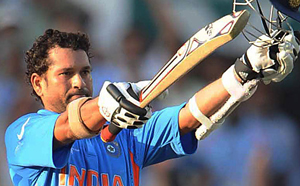
Doubtless, Tendulkar’s batting achievements are awe-inspiring and will probably never be replicated. But I have a grouse: he and his battery of brand smiths and spin doctors are the people who’ve been instrumental in drastically reducing the game’s appeal for me.
I’ll explain how. They have yanked cricket away from the innocence of the 1970s and 1980s (when numbers were a necessary but only incidental part of the business) and let the game surrender its soul to the tyranny of statistical details.
They stole the game’s pristine spirit and turned it into a parade of numbers, aided by a new breed of superficial cricket fans who could only count… 38th, 39th, 40th, 41st, 42nd …. On and on they went until one day, rather inexplicably, Sachin’s Test hundreds merged with his ODI tons. It was like putting potatoes and tomatoes in the same basket and counting them together. They look and smell different, for God's sake!
They are now waiting for the 100th century. It’s an agonizing obsession that has gone too far.
Cricket is life, I was told as a boy. So, among other delights, I swayed to the magic of Gundappa Vishwanath’s wrists, the awesome savagery of Sandeep Patil’s strokeplay and of course, the sheer perfection of even a defensive straight bat presented by Sunil Gavaskar to an in-swinging delivery. That was batting for me. The statistics did matter but they were of secondary importance.
In the early years of his career, Sachin too was a joy to behold: he was a free-flowing stroke-maker unencumbered by the obsession with personal milestones. But a decade down the line, everything changed: he became a brand as the market appropriated him.
Huge sums of money rode on him – the cricket board, the sponsors of the game, the brands he endorsed, and the holders of television rights needed him just as much as he needed them. He became a slave to an industry and the focal point of an entire nation’s expectations.
He became bigger than the game and the country. The spontaneity went out of his game. For me, the romance of the game died the day a Tendulkar ton and the resultant statistical milestone assumed greater importance than an India win.
I sought refuge in the natural élan of Brian Lara. His free-spirited approach to batting and the ability to get huge scores have been well beyond the reach of the latter-day Sachin Tendulkar.
So, let me ask the question again: should Sachin hang up his boots and make way for younger legs? Unfortunately for us, this is India, not Australia. So Sachin has the sole authority to decide when he must go. And that’s anything but cricket.
 Post Comments Post Comments
|
Posted By: jyoti | Ca | October 1st 2012 | 11:10 Well articulated what I intuitively feel about modern day cricket, being a peripheral observer since the days of Viv Richards and Kapil Dev ended. Still I would think more than Sachin it is the media and the corporates/individuals responsible for commoditizing cricket at the risk of being risque, I would even call it pimping of cricket.
|

 Issue Dated: Feb 5, 2017
