



- Article
- Comments (0)
History lies heavy on Sino-Japan relationship
Tags : sino-japan relationship | East China Sea |
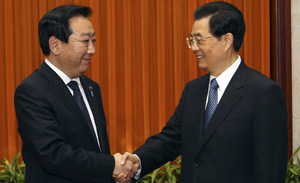 Like almost every diplomatic showdown in Asia, the Sino-Japan relationship is a byproduct of historical mistrust and colonial mess. It has turned a tad fashionable these days to put the onus of conflict merely on the mess created during colonial era, but it is just a part of the reality. The truth is, the historical mistrust between two nations, or more importantly peoples, have been exploited during colonial era to advance the goals. China and Japan is no different.
There are several texts that prove beyond a reasonable doubt that there has been continuous contact between Chinese and Japanese people since 3000 years. One of such historical text is a book named "Lunheng" penned by Chinese traveler Wang Chong in as early as first century A.D. The book maintains that the “Wa” people (Japan’s historical name) used to offer presents to Zhou Cheng-King of the Western Zhou Dynasty, who ruled in and around 1100 BC. But it was mere the starting. China has historically exported its culture, literature and most importantly philosophy to Japan and thus the relationship between the two countries remain entwined.
Even during China’s long and Japan’s comparatively short years of isolation, the trade and other relationships between the two peoples remained vibrant. Once in a while this relationship also had limited military dimensions, especially during the days of Meiji Restoration and after, but more or less, the relationship remained cordial.
However, something changed in late 19h century. Coming out of the humiliating defeats on the hands of colonial powers and determined to put the days of isolation behind, Japan decided to adopt the western model of amalgamating an industrialized economy with belligerent foreign policy. The policy got its first patron in the form of King Ming Zhi, who after his accession in 1868, pushed Japan towards the ideology of militarism the basis of which was an idea maintained that territorial expansion was Japan’s historical right. Under this policy Japan started invading its neighbours. It started with the invasion of Taiwan in 1874.
In the two decades that followed, Japan further industrialized itself and restructured into a modern nation-state, but the one with a deeply flawed feudal frame and mindset. While this was happening in Japan, the deeply corrupt Qing Empire in China dithered under a mixture of almost stagnant economy, corrupt bureaucracy and defeats in the hands of colonial power. The Chinese “melon” was famously up for slicing. Naturally, Japan saw the situation potent.
And then something happened in the spring of 1894. In the Korean peninsula, a hitherto little known group called “Eastern Study” attempted a coup to upturn the ruling Korean regime. Unprepared, the regime panicked and asked China to intervene. Japan, waiting for an excuse, invaded the Korean peninsula. The Sino-Japan war was on. Japan vanquished China both on the land and the sea and forced it to sign the humiliating “Ma Guan Treaty“, that required the Qing Empire to pay in access of 230 million silver pieces to the Japanese government and cede Taiwan for good. The humiliation for China was total and complete. The terms of the treaty was as humiliating as that of the “treaty of Versailles” and it lies heavy on the Chinese soul even now. But more than anything else, it strengthened the Japanese belief that the model it adopted, the one that has the best and worst of the western model, was potent and the one to deliver.
It did have some short term benefits. For example its total defeat of Russian colonial forces in the beginning of 20th century inspired many nations that were under colonial subjugation. However, the ideology had a disastrous impact as well.
However, during the days of Chinese Father of the Nation, Dr Sun Yat-Sen, Chinese nationalists depended heavily on Japan and regularly sent its cadre to train there. However, this bonhomie was short-lived. Japanese war machine was ready to achieve what can be described the Eastern version of German concept of “lebensraum” or living space. Japan formally invaded China in July 1937. Prime Minister Tian Zhong Yi Yi of Japan had famously quipped in late 20s that “In order to conquer the whole world, we must conquer China first!” His generals did exactly that. The years of World War II were repressive and brutal. More than anything else, this brutal repression shapes the psyche of an average Chinese or Korean towards Japan. Interestingly, however, Japanese textbooks never teach their children about its repressive past and that shapes their world view.
After the defeat and destruction in the war, Japan rebuilt its economy and continued to grow. After the revolution in China, the Chiang Kai-Shek led government started ruling Taiwan and Japan overplayed its hand by supporting their call for independence. On the other hand, China under Mao was busy exporting its revolution unsuccessfully. In this period, China and Japan tolerated each other. However, the rapprochement during the Nixon days helped Japan to reignite its relationship with the mainland.
Nevertheless, because of its bigger economy and even bigger global influence, Japan dominated in its relationship with China. But something started changing in early 90s. As China grew, Japan started feeling uneasy. However, its economic relationship with China grew too. And today, the political and economic relationships are pulling in separate directions.
The dependency of both the country is mutual. While Japan remains second biggest investor in China after the US and provides most of the cutting edge technology to the Chinese, China provided Japanese people with cheap and affordable alternative to almost everything. Also, Japan’s technology drive economy is heavily dependent on China’s stock of Rare Earth Minerals. However, economists swear that the dependence of Japan over China is much more than China’s dependence over Japan. And that makes China’s role crucial.
As both nations clash over sovereignty of the uninhabited islands in the East China Sea known as Senkaku in Japan and Diaoyu in China, the role of economy in the relationship matrix becomes crucial. While both the countries believe that relationship should not be hampered, both of them cannot afford to appear weak. And that has put them in the bind. However, as a bigger nation and a bigger economy, the onus and responsibility to mend the deteriorating relationship lies on China. It must concede some grounds as the dominating partner in the relationship in order to reestablish trust. Especially, when a superpower lies waiting to fish in the troubled water, literally and otherwise.
Related Stories:


 Issue Dated: Feb 5, 2017

