


- Article
- Comments (0)
Heard of Koshal?
Ajit Nayak reports on how people of Western Odisha are outraged at how politicians and the media are indifferent to their demands for a new state. But that dream does look distant
Tags : Odisha | hirakund dam | Koshal | coastal odisha |
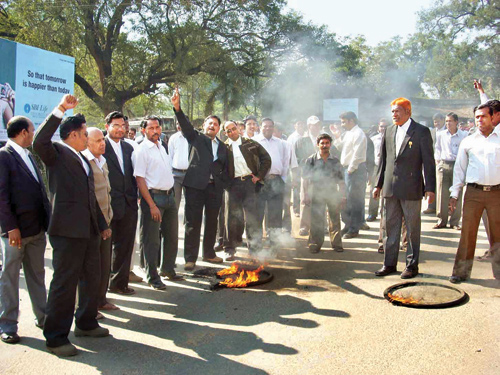 K C Panda is a retired professor settled in Sambalpur. He is what you can call a news junkie. He is well aware of the demand for Telengana that seems to have climaxed into a paroxysm of protests. He is also tracking the now on and now off demand for separate states of Vidharbha and Harit Pradesh to be carved out of Maharashtra and Uttar Pradesh respectively. But what gets his goat is the almost complete ignorance and indifference to persistent demands for a state of Koshal to be carved out of the western regions of Odisha. Mr Panda cannot hide his outrage and anger when he describes national level journalists who have no clue whatsoever of the movement for Koshal. His by your leave remark is indeed ominous: " It seems only violence, disruption or something outrageously newsworthy attracts the attention of Delhi-based media".
For Panda and his partners in the cause, the template for Koshal is ready and has precedents. They cite the examples of Chhattisgarh that was carved out of Madhya Pradesh and Jharkhand that was carved out of Bihar. In both cases, the two erstwhile regions of MP and Bihar were rich in minerals and natural resources, had large tribal populations and were victims of apathy and indifference from distant state administrations. Incidentally, Panda and his friends also point out another striking similarity between the regions that have been demanding separate statehood. They point out how the Naxalite movement traces its roots to Telengana. They point out how apathy and disdain led to a huge increase in Naxalite activity in Jharkhand. And they point out how Naxalites hold sway in large swathes of what could be Koshal and Vidharbha. But then, when even Telengana seems a distant reach despite the ruling UPA government in Delhi having publicly spoken in favour, what chance would a little known and debated movement have for Koshal?
The demand for a separate state in the name of Koshal has been brewing in the Kosalanchal (western part of Odisha) since a long time. But it has always been a relatively muted and unheard voice. The demand has become louder over the past one decade following the joining of intellectuals and bureaucrats who not only help to strengthen the agitations at various levels but also create public opinion by exposing the negative attitude of the state government towardd the development of the region. Several coastal leaders do admit the constant ‘apathetic attitude’ of the state government has become the prime reason behind the demand, but they do not want to spare the region as it is full of mineral and forest resources.
The Koshal area or Kosalanchal was not a part of Odisha as it was in the Central Province for a long time, but with the efforts of the few local intellectuals and broadminded people the land was included in Odisha to form a new state based in language in 1936.

Sources said western Odisha or Kosalanchal is made up of 10 districts of the state that include Sambalpur, Jharsuguda, Sundergarh, Balangir, Bargarh, Sonepur, Boudh, Nuapara, Kalahandi and Deogarh. There are also a few areas of Angul and Nabarangpur districts which are included in the separate state demand. Most of these districts are underdeveloped and lack basic amenities like health, education, drinking water and sanitation. Out of these districts, Balangir, Nuapara and Kalahandi are well known for starvation deaths, hunger and poverty. Migration for livelihood has become common in the area.
To facilitate speedy development of these underdeveloped areas, the central government constituted two projects, Western Odisha Development Council (WODC) and KBK (Kalahandi-Bolangir-Koraput) Project during the regime PV Narasima Rao. But it made no differences due to the lack of sincerity of the political leaders of the state. The displeasure and disenchantment of the people of the region started way back in 1950s during the construction of Hirakud Dam, the first big budget hydroelectrically project of the country’s post independence era. Thousands of families were forcefully evacuated from their native land without paying any type of compensation. The attitude of the state government can be well imagined from the fact that many families have not received their compensation till date.
“The dam was constructed by submerging thousands acres of fertile land and by evacuating several thousand families. The coastal leadership was rigid because they wanted to protect coastal Odisha from floods,” eminent social activist and founder of the Koshal movement Sapan Mishra says. “Despite the vehement protest, they finally did it by putting force on innocent farmers, but it never served the purpose of protecting coastal Odisha from floods. The only thing that happened was that it exposed the selfishness of the coastal politicians” adds Mishra.
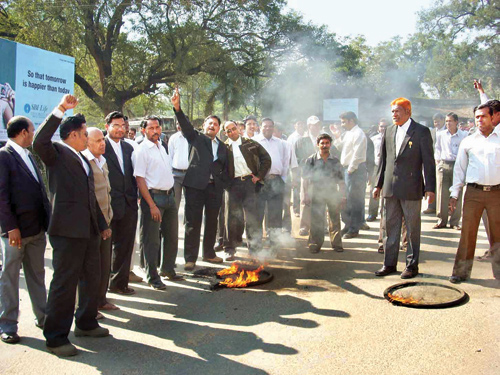
Sources said despite of the sharp distinction in language, culture, attitude and behaviour among the people of the two regions, some local eminent persons took bold steps to merge the region with the coastal region during the formation of the new state of Odisha in 1936. But the government never remembered the names of such persons during the celebration of Odisha Day. The contribution of the people of the region towards literature, culture and heritage was incredible. But government takes no step to highlight their contribution.
The eminent freedom fighter Veer Surendra Sai of Sambalpur was jailed for 37 long years for fighting with the British army during the first war of independence in 1857. The Ghess Zamindar Madho Singh and his four sons lost their lives fighting with the British Army in 1857. But the government never takes any step to give proper respect to these martyrs. “The anger that has taken shape in the mind of the people over the years got reflected in the form of a movement for a separate state,” eminent lawyer Sarat Nayak said.
Late Premram Dubey, a lawyer, is regarded as the founder of the separate Koshal movement ehich began in the early 1990s with limited resources. He formed the Koshal Party to contest the general election. Though he never won any election, he created awareness among the people about the injustice done to the region. After him, many social activists and retired bureaucrats have come forward to strengthen the separate state issue.
Dalit activist Sib Sankar Bag joined the movement by forming a forum called Koshal Mukti Morcha; retired engineer Karunakar Supakar started the Kosal Mahasabha. Eminent politician and former parliamentarian Bal Gopal Mishra of Balangir also made an attempt to espouse the cause of a separate statehood for Koshal.
Currently Koshal Kranti Dal (KKD) and Kosal Sanskrutik Samaj (KSS) are two prominent organisations functioning in the region and leaders of the two organisations are trying to rope the movement with the functionaries of Telengana and Vidarbha movement.
“A separate state for western Odisha is the only alternative as the people of the region are unlikely to ever receive justice in the present set-up of the government,” says Pramod Mishra of KKD.
Meanwhile, farmers and lawyers of the region are up in the arms due to the negligent attitude of the state government. While farmers are opposing sharing of dam water with the industrial houses, the lawyers are agitated over the establishment of a high court bench in Western Odisha. “When it is a question of AIIMS, or IIT, the government takes no time to take a decision regarding the location, but when it comes to the question of setting up of a high court bench, the government asks the lawyers to select the place," the president of the Sambalpur Bar Association, Pramod Rath said.
'The region was in the Central Province during the pre-Independence period and only in 1936, due to the efforts of our forefathers, was the Sambalpur region merged to form the new state of Orissa. Though we cannot say it was a mistake but the experience of the last 70 years is enough for us to realise that our future lies in statehood,” says social activist Dilip Padhi.
Of course, it remains to be seen if statehood would address the grievances of the local people. Analysts cite Jharkhand and Chattisgarh as two contrasting examples of what happens when local aspirations are ostensibly fulfilled. Chhattisgarh faces a severe Naxalite movement and is by no means a paradise for the people.
The Salwa Judum movement has indeed caused deep fissures in the society. Yet even critics will admit that there is a serious effort at providing basic good governance to the people of Chhattisgarh. In fact, the public distribution system of the state is considered a role model by many experts. In contrast, Jharkhand looks like a lost cause with chronic instability, monumental corruption and pathetic governance standards, making it a graveyard of dreams.
If it ever happens, which way would Koshal go?


 Issue Dated: Feb 5, 2017

