



- Article
- Comments (0)
Religious festival: economic development
Fairs can spell money!
Cultural and religious festivals in India are of immense importance
Tags : Maha Kumbh Mela | Indian festival | Sonepur mela | |
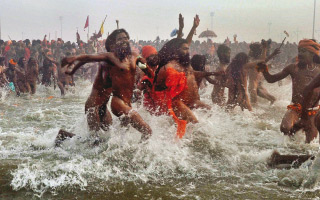 Truly, religious festivals have not been confined to religious activities. Their contributions extend to economic development, employment creation and tourism. Among all, Kumbh Mela is one of its kind, claiming to be the world’s largest religious festival. The mela, which occurs once in three years in four different places including Allahabad, Haridwar, Ujjain and Nashik alternatively, is happening currently in Allahabad. Around 100 million people are expected to join this 55-day festival. However, the economic contribution too is as gigantic as its crowd. A report by the Associated Chambers of Commerce and Industry of India estimated that the mela will generate about $2.2 billion of income for the city and create thousands of jobs. However, it is not the only religious festival generating revenue and employments for Indians; there are other melas including Sonepur Mela and Onam in the southern state of Kerala. The Sonepur mela brings good business to the local people. There were over 600 shops where sale of around 3,000 heads of cattle has been recorded. Onam, a festival of Kerala, has taken the international route, being celebrated in different places of the Middle-East including Dubai and Qatar.
Still, there are many lessons to learn from the way many countries have modified their festivals and marketed them at an international level. The Rio de Janeiro carnival has positioned itself as an international event, attracting an estimated 1.1 million visitors to the city in 2012 and with 5.3 million people taking part in street parties, an increase from 4.9 million people in 2011. Similarly, the Venice carnival attracts over three million tourists. Another classic example is that of the Mardi Gras carnival in the United States which generates a direct revenue of $ 144 million (more than $ 500 million by some other estimates) attracting more than five million visitors in New Orleans every year.
In order to match these international festivals, both in size and scope, India must focus on infrastructure and safety factors. Stampedes (did you know that the 1954 Kumbh Mela stampede took 500 lives?), water pollution and hygiene remain severe concerns. What can't be denied is that Indian festivals are increasingly getting global attention even without much effort from the government. If authorities take effective steps to market them properly and develop infrastructure to global standards, they can certainly boost the tier II and III cities and make them a catalyst for revenue and employment generation.


 Issue Dated: Feb 5, 2017

