



- Article
- Comments (0)
Celebrating 100 years of Indian Cinema
Faces of Eve
Tags : column | Shoma A. Chatterji | Film journalist | 100 years of Indian Cinema | cover story | the sunday indian | TSI |
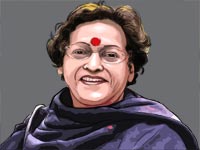 "Despite the constraints, they drew creative mileage from these portrayals, turning them into memorable milestones. They had beautiful faces and we were kept away from knowing whether they had brains to match"
Indian cinema has presented women as subsidiary to the action with which a man's soul is engaged. It must have been difficult for actresses like Shobhana Samarth, Meena Kumari, Nargis, Nimmi, Madhubala, Vyjayanthimala, Nalini Jaywant and Kamini Kaushal to remain trapped in roles where they were secondary, submissive and martyred, or were beautiful objects created for male desire or fantasy, or both.
But they drew creative mileage from these portrayals, turning them into memorable milestones. They were beautiful faces, and we were kept away from knowing whether they had brains to match. Sex appeal remained confined to the eyes, the lips, and a lock of hair falling over the face.
Devika Rani (1907-1994) attracted the tagline ‘the first lady of the Indian screen' and raised the status of then-stigmatised female stars, thanks to her background. She had won a scholarship to RADA in London. She was the costume designer for her first film with Himanshu Rai, who she later married. The film was A Throw of Dice (1929). In Karma (1933), Devika and Himanshu had a passionate, four-minute long kissing scene much before the censors in independent India banned kissing.
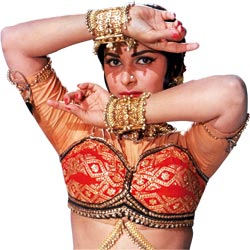 Devika won the Padma Shri (1958), Dadasaheb Phalke Award (1970) and the Soviet Land Award. At her funeral in 1994, she was given full state honours.
Meena Kumari evolved into a 'specialist' in playing the martyred wife. She wore a sad smile on her face, beautifully captured in close-up and soft focus, shot in black-and-white, in every film. Among the memorable ones were Sharda (1957), Sahib, Bibi aur Ghulam (1962) and Main Chup Rahoongi (1962). Interestingly, the tragediennes' oeuvre offers an insight into her great versatility in comedy (Shararat-1959; Azaad-1955).
Nutan, too, took the martyred wife role seriously. Her strong portrayals in Seema (1955), Bandini (1963) and Sujata (1959) entrenched her so deeply in the minds of the audience that it would not accept her as the docile wife. Gauri was a flop.
Geeta Bali portrayed off-beat characters in most of her films and was one of the most natural actresses of her time who could also dance well. Actresses from the South like Waheeda Rehman, Vyjayanthimala, Hema Malini, Sridevi and Jayapradha used dance as a solid support system that added to their charisma.
They stepped out of the box occasionally to make a strong celluloid statement. Vyjayanthimala portrayed a prostitute in Sadhana, did an unabashed item number in Sangam and rejected an award for her role in Devdas. Hema Malini performed two extremely polarised classic roles in Gulzar’s Meera and Ramesh Sippy’s Sholay. Sridevi’s rainwashed dance in Mr. India, the two-edged double role in Lamhe and the mentally challenged woman in Sadma are unforgettable. Waheeda Rehman, an extremely versatile performer, had a string of films like Guide, Kaagaz Ke Phool, Saheb Bibi aur Ghulam, Khamoshi and Abhijan.
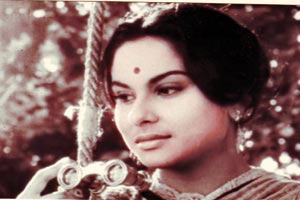 A succession of talented actresses from Nargis, “the woman of the Nehru era,” who Raj Kapoor moulded into a cross between Radha and Sita, to Suchitra Sen, Madhabi Mukherjee, Bhanumathi Ramakrishna, Sharmila Tagore, Savithri Ganesh, Rekha, Shabana Azmi and Smita Patil, besides many others, offered rays of hope by breaking out of the confines of gender stereotypes. They successfully walked the tightrope between the martyr and the willful woman, between being the glamorous foil to the dominating hero and the strong woman who refuses to compromise.
Each of them prepared the foundation for an edifice built for and by the strong woman who refuses martyrdom unless nemesis forces its diabolic hand. A classic example is the much celebrated The Dirty Picture, starring Vidya Balan.
Bhanumathi Ramakrishna (1925-2005) was a top actress of southern cinema. She was also a talented musician, writer and social worker, who stepped into direction in the later phase of her career. She made her debut in Telugu cinema in 1939 as Kalindi in Vara Vikrayam (Telugu), directed by C Pullaiah. She acted in around 200 films
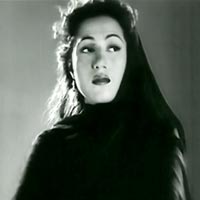 In 2000, Durga Khote (1905-1999) was listed by a magazine among "100 People Who Shaped India." She was one of the first women from respectable families to enter the film industry, thus breaking a social taboo. In her 200-odd films over 50 years, she ranks among top ten actresses in mother roles in Hindi cinema.
Kanan Devi (1916 – 1992) was among the early singing stars of Bengali cinema. Her singing style with a slightly nasal drawl that kept to the beats very well, was ideally utilised in many New Theatres hits. Her finest performance was in New Theatres’ Mukti directed by PC Barua noted for introducing technical innovations in films.
Hunterwali, played by a heavy-built actress with blue eyes and a blonde mop of hair, with the screen name Nadia, led to a whole lot of films from Wadia Movietone. She could mesmerise an entire male audience with her swashbuckling acts while, at the same time, her peers, other stars of social and mainstream films, continued to sway their spectators with their weepy, simpering acts.
The emphasis slowly shifted from the beautiful face to the ‘body’, from a mere shadow-like chattel to feed male fantasies to a person of flesh and blood. The seeds were sown by Shanta Apte (1916-1964). She was the first screen woman to rebel against a marriage. As Nirmala in V Shantaram's 1937 double-version film Duniya Na Mane (Kunku in Marathi), she raised her voice against a mismatched marriage. Nirmala's weapon is to withhold sex from a husband who is old enough to be her father.
 Through their screen images, Karisma Kapoor, Madhuri Dixit, Kajol, Urmila, et al. have portrayed a character who knows her mind, exercises her options and refuses to act as the perfect foil to the man she is in love with. She accepts the sensual paraphernalia of her sexy image - the oomph-filled dances, the seductive acts and the tantalising leg-and-cleavage show.
Madhuri Dixit in a string of films, Prem Pratigya, Beta, Khalnayak, Anjaam and Raja, in a chronologically graded scale of increasing frequency, stretched her image of a sensually aggressive female to its maximum.
Her triumph lies in that sole saviour, Prakash Jha’s Mrityudand. In most of her films, if she is an aggressor, she is so by male design and in male terms and is perceived by the male in highly subjective narratives.
Mrityudand is a powerful commentary on social and gender injustice in the Bihar heartland. The film traced the metamorphosis of three women played by Shabana Azmi, Madhuri Dixit and Shilpa Shirodkar from docile homemakers to women forced to pick up the gun to retain their rights.
Today, the scenario is changing. But is it only on the surface? The range of action, articulation and voice open to women has widened visibly to open up hitherto unexplored areas of action - from sexual aggression to practising a profession, from performing a sensual dance to wielding a gun, from hiding behind the hero as he fights single-handedly, the powerful forces of evil, to sharing the fight with him through a karate chop or through well-honed skills in kung fu.
Have these myths changed? To a certain extent, they have.
Films of actresses like Deepti Naval (Ek Baar Phir, memories of March), Seema Biswas (Bandit Queen), Kajol (Gupt, Fanaa), Bipasha Basu (Jism, Corporate), Tabu (Maqbool, Astitva), Rani Mukherjee (Black), Kareena Kapoor (Fida, Chameli), Konkona Sen (Luck by Chance, Omkara), and Vidya Balan (Dirty Picture, Kahaani, Ishqiya, No One Killed Jessica) are accepted as markers of this change.
(The writer has authored 17 books and won the National Award for Best Writing on Cinema twice - in 1991 and in 2003)


 Issue Dated: Feb 5, 2017

