

Saturday, October 10, 2026


- Article
- Comments (0)
Deforestation: The way forward
Ecological imbalances
Deforestation must be kept in check to save earth from nature's wrath
TSI | Issue Dated: November 11, 2012, New Delhi
Tags : deforestation... |
Tags : deforestation... |
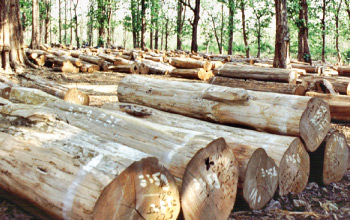 Over the last 30 years, researchers have found changes in the earth's climate with global warming, greenhouse gas emission, various forms of pollution, all taking its toll. The increase in average temperatures would affect water resources, ecosystems and biodiversity. If this trend continues, in the most densely populated areas on the planet, there will be a situation of drought resulting in large migration dynamics with serious consequences. The rapid deforestation has led to disruptions in the carbon cycle and the amount of oxygen in the air has also reduced significantly.
Since 1950s, deforestation is confined mostly in the tropical developing countries – it is not happening anymore in the developed countries, more than anything else because they have already been cleared in the 19th and 20th centuries. The most crucial deforesting nations of the world today, by CO2 emissions are Brazil, Malaysia, Indonesia, Myanmar, Democratic Republic of Congo and Zambia – all tropical nations that account for more than two thirds of global CO2 emissions.
The deforestation in the tropical countries requires emphatic policies from the respective governments as well as an intervention to stop commercial use of forest wood by the private parties. Governments’ direct investment in reforestation and to ensure the upkeep of the forests will go a long way in protecting forests from the illegal traders engaged in log trading by making it less profitable by banning log exports that will shape marketing aspect of deforestation more mundane to the private traders. For example, road construction is a sure shot step for deforestation as has been the case in Transamazon highway in Brazil, where 400 to 2000 hectares have been deforested by each kilometreof road. In Russia too, the experience of road construction – which bifurcates from primary roads to secondary and feeder roads – largely has been responsible for erosion of forest bases, especially in Russia's far east. And finally, the menace of corruption – as has been the case in most tropical countries – must be defeated in order to rein over the massive scale of deforestation. In Africa, the rising demand of food crops are leading to clearing of forests at a rapid scale, while in Latin America it is for cattle ranching and in South East Asia, deforestation is taking place because of palm oil and wood pulp production. These direct factors are further catalysed by speedy economic development, land ownership and poor governance.
Amid such sombre remarks is a silver lining – in most developing tropical countries, global bodies like World Bank and Transparency International are coming together in tie-ups with private enterprises interested in curbing deforestation and the concerned governments in erecting investigative bodies to deal with the enemies of forest preservation and merchants of deforestation.


 Issue Dated: Feb 5, 2017

