

Thursday, October 29, 2026


- Article
- Comments (0)
Crossing the line
TSI TEAM | New Delhi, April 26, 2012 18:57
Tags : Crossing the line | |
Tags : Crossing the line | |

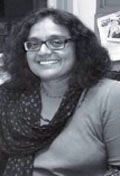 More and more journalists are turning authors delivering ‘quickies’ on topical subjects, fiction novels and even memoirs as they work to express themselves in a space far larger than provided by the media. Media Watch reports their motivations and experiences.
Is journalism just a stepping stone to becoming an author? Or are these two different professions requiring different skills? Given the seemingly easy transition of a phenomenally high number of journalists into ‘authorship’ it would seem as if the first was true. But in actual fact there are striking differences in the requirements of the two worlds, making it difficult for journalists to stay on the other side permanently with even those keen on churning out more than the occasional book, being episodic at best.
It must be made clear at the onset that this is about academic writing and not fiction, as in the last the journalist cannot claim any advantage with other authors, being out there with the rest with his or her ability to write and enchant the reader. This is more about researched books, or memoirs where the journalist draws from experience, to entice publishing houses with what many refer to as a ‘quickie. The success, or otherwise, of this effort lies in the ability of the journalist to match up to the skills required for a good book, namely good research, innovative perceptions, sound analysis, and writing skills that hold the attention of the reader for a good 200 to 250 pages as against the 500 word story that gives the scribe a living.
 Writing of course is common to both. And often just as journalists are seduced in the course of their work to join politics, the temptation to turn the gathering and writing of short news stories and at best 1,000 word analyses into a book ‘venture’ is often irresistible. Part of this comes from ignorance where the journalist does not realise that the two are separate professions requiring very different skills; and part of this comes from pressure from others who open these doors with what is often a persistent “why don’t you write a book, you must, you write so well.” And before he or she knows it the journalist has crossed the line, with many falling by the wayside, but any number going on to add the proud word ‘author’ to their burgeoning CVs.
Vivek Mehra, MD and CEO of Sage India points to this when he says that while his publishing house does not necessarily prefer journalist authors, “but yes, if there is a journalist the expectations are heightened.” And clearly referring to the more successful ones who have managed to master the art of writing books he says, “they have writing skills, their fundamentals are clear and their manuscripts are definitely better. But, and yes there is a but, “though journalists are more clear in their mind, they are also more rigid. Though they are great to work with, they take a stand that is not always required. And yes, they are more militant in selling their books.”
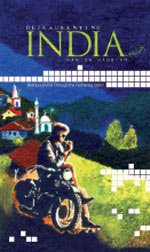
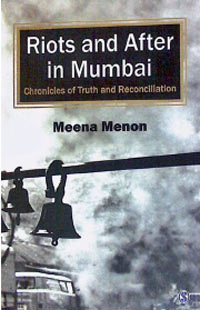
 Journalists do bring in their years in the field into their new profession. They do best when they turn this experience into a book, being more comfortable with the subject and hence able to deal with it better than with something that might make a good book but which they have not handled before. Meena Menon, Deputy Editor with The Hindu did well with her “Riots and After in Mumbai” using a historical perspective along with the journalistic skills of interviewing persons living in the city. Harish Nambair in “Defragmenting India” uses oral history, folklore, local legends, historical events, research and reportage to complete his narrative. For him, “books bring in a quality a report can never do. In reports and articles word limit is the biggest constraint.” And these books are lapped up by publishers, because they offer insightful commentary into a political or other issue that is in the news, and the book thus arrives with what in newspaper language is popularly referred to as the “news peg.” Scribes write fast, one because they are quick researchers and find interviews and field reports also rather easy to handle. And two, they do not have the patience for long never ending projects and like to get it “over and done with” as fast as possible.
Clearly journalists not satisfied with the limited space and looking to express themselves on a much larger scale opt for writing books. They have to be well versed in the language they wish to write in, having a visible flair for the written word as it were. As Mana, a senior journalist from Tamil Nadu who has so far published 21 books says, “unless you have love for the language in which you write you cannot become a good writer.”
Another attribute that many realise is necessary only after they begin a book is patience, and the ability to sit down for a long haul. This often comes as a surprise and as many successful authors confided, “one has to realise that this is not about writing the odd editorial or analysis, but actually sitting down to write reams of well researched pages. And after the initial shock it is all a matter of training one self to do this on a regular, and not on the spot, basis.”
Madhumoy Pal, Chief Sub Editor of Aajkal in West Bengal who has authored books on fiction and fact is clear, “my journalistic career did help in researching issues no doubt. But I have to come out of journalist views while portraying my characters or scripting narratives.” He points to long hours on the work, “I spent 12 hours a day for Marichjhanpi, apart from devoting six to eight hours to office work religiously.” He admits that the skills required for novels are different as “one has to sink within to gather blood-soaked words from the heart to pen a novel of stories. These books are not for a day or a week, but for life.”
And it is the last that is a major motivating factor as journalists realise that newspapers become garbage the moment they are read, the shelf life of news magazines is just a little more, and to be remembered in posterity they would like to see that book carrying their name as the author on the shelves of libraries across the country, if not the globe. This is a reason why senior journalists have after 40 to even 50 years in the profession sat down to write their “Memoirs” which sell as there is a certain fascination that the common man has about the journalist and his or her life and travels, particularly if the author has a recognisable news byline.
Despite the large number of journalists entering the field – as international publishing houses enter India as the new market still given to reading hard copies, at a time when the rest of the world is going digital – they are not particularly popular with the publishing houses. For one many have a low grasp of English, a preferred language for many journalists. Two, senior editors are often poor researchers. Three, there is an arrogance linked to the pecking order in the profession of course where the senior editor turned author does not like to take directions from a publishing company’s CEO. And four, there is a certain rigidity as pointed out earlier in accepting suggestions and changing the narrative accordingly.
But despite these reservations, journalists have arrived in the publishing world and the libraries now will not just have academics, historians and fiction writers adorning the shelves, but more and more bylines from the news world turning their skills into good use. From Memoirs, to Politics, to Crime, to Fiction, the journalists are moving into the world of authors and books, cajoling and as often trampling on the sensitivities of publishing houses in the process. The mission subsumes the irritation of tedious writing. As Meena Menon explains, “A book is a continuous engagement. The pain does not end with meeting people and writing the interviews... it is much more challenging than a journo’s job of reporting.” And those who can meet the challenge are those who will make it to posterity.
Inputs from Anuradha Preetam, Chandrashekhar Bhattacharya (Kolkata), Sundharabuddhan (Chennai)
‘Style is important’
Mana is one of the seniormost journalists in Tamil Nadu with over 32 years of experience. He has worked with reputed magazines like Thuglak and Kumudam. He has published 21 books, some of which are collection of essays. Excerpts from his interview:
Why did you become a writer?
I had been writing short stories and poetry in little-known magazines like Kollippaavai, Vaigai and Vizhigal. I started writing when I was 18 years old. I joined the literary field first and only then I became a journalist. My literary experience helped me in writing editorials in a different way from others. My interest in literature never diminished even after I became a journalist.
How do you feel about your experience as a journalist turned writer?
A unique style of writing and perception are hallmarks of a journalist. This unique style is very important and relevant in the field of writing too. Nowadays, journalists don’t show much interest in cultivating their writing skills. In fact most of them only focus on reporting the news. As a journalist I met a lot people from different walks of life and that helped me in writing non-fiction books. Moreover, a journalist always keeps in touch with the fast changing global scenario and that helps him when he becomes a story teller.
What are the main differences between a writer and a journalist?
A journalist reports facts as they are but a writer needs imagination and perception to put things in a particular framework. Unless you have love for the language in which you write you cannot become a good writer.
Is the transformation from being a journalist to becoming a writer a natural one? Is it possible for
all journalists?
all journalists?
It happened naturally in my case but I cannot generalise this. Because of my relentless search for aesthetics I wrote my news articles creatively. If a journalist does not have an idea of contemporary literature he cannot become a writer. Pa Singaram, one of the best novelists writing in Tamil, was an assistant editor in a daily newspaper.
By Sundharabuddhan


 Issue Dated: Feb 5, 2017

