



- Article
- Comments (0)
Jammu and kashmir: dress code
Cover up, says Jamaat
Islamists in the valley want tourists to "dress decently"
Tags : kashmir |
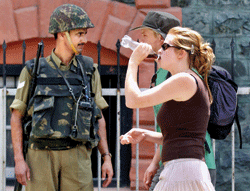 Even as the world steps ahead in an accommodative modern approach with different cultures coming together for a peaceful coexistence, in Kashmir, it’s an altogether different story. Enforcing a ban that clearly hampers the freedom to dress liberally, the Kashmir based Islamic group Jamaat-e-Islami has issued a statement asking tourists to refrain from wearing “short miniskirts” because it apparently does not go down well with a few self-styled religious spokespersons.
"Some tourists, mostly foreigners, are seen wandering in short mini-skirts and other objectionable dresses here openly, which is quite against the local ethos and culture and is not acceptable to the civil society at all," the Jamaat-e-Islami had said in a statement.
“Jamaat-e-Islami J&K (Jammu and Kashmir) cautions people against the well-designed vicious plans of the anti-Islamic forces who are working here tirelessly to deviate the Kashmiri Muslims from their religious ethos which are indispensable for their identity”, said Advocate Zahid Ali, a spokesperson of Jamaat.
On Twitter, Facebook and other social networking sites, the statement received immense criticism by Kashmiris and people in general from across India.
“Jamat-e-Islami in the valley wants tourists not to wear objectionable clothes – nazar teri gandi hain aur burka main pehnoon? (You have the dirty mind and it is me who has to wear a burqua?)” tweeted a Kashmiri, Rashneek Kher.
The warning, which received support from both the moderate and the hardline factions of the separatist group Hurriyat Conference was also challenged across the Indian media.
“Tourism encouraging the vulgarity, alcoholism, and drug-trafficking can not acceptable to the people of this Muslim majority state. India is using cultural aggression to continue its illegal hold over Jammu and Kashmir. They are promoting immorality, liquor and drugs to effect our young generation”, hardline separatist leader Syed Ali Shah Geelani told The Sunday Indian.
Clarifying its stand later, the Jamaat spokesperson retracted on his own words saying, “We have not issued any dictat or edict regarding any ‘dress code’ for the tourists. We have simply requested our guests to dress decently and to respect the local ethos and the culture. We believe that no Kashmiri whether a Muslim or a Non-Muslim, likes nudity or provocative exposure of female body which may even endanger her chastity, open alcoholism, drug trafficking and other immoral and immodest activities. How can we give up the divine values for the sake of economy? We have asked the authorities of the tourism department not to encourage this cultural aggression against Kashmiri Muslims.” When and how they became the sole spokespeople for the mentality of the whole of Jammu and Kashmir is a question that remains unanswered.
For now, contrary to the expectations of a few anti-social elements, the inflow of tourists in Kashmir has been on a rise and the warning may not impact it.
Aditya Raj Kaul


 Issue Dated: Feb 5, 2017
