


- Article
- Comments (0)
Attempts to dilute RTI provisions not new
Tags : right to information act | dilution of rti | manmohan singh |
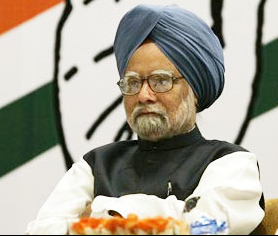 Prime Minister Manmohan Singh's comments on the occasion of the 7th annual convention of Information Commissioners in New Delhi on Tuesday came in for some harsh criticism from prominent Right To Information activists. Addressing the gathering of Information Commissioners Friday, Singh noted that there were some 'obvious areas of concerns' about the way the RTI Act is being used presently.
"There are concerns about frivolous and vexatious use of the Act in demanding information the disclosure of which cannot possibly serve any public purpose. Sometimes information covering a long time-span or a large number of cases is sought in an omnibus manner with the objective of discovering an inconsistency or mistake which can be criticised," Singh said, adding, "Such queries besides serving little productive social purpose are also a drain on the resources of the public authorities, diverting precious man-hours that could be put to better use."
Reacting to the PM's concerns, activist Subhash Chandra Agrawal said that these were attempts to 'kill the RTI Act'. "His (PM's) views about dangers of taking Public Private-Partnership Enterprises (PPP) under RTI Act are contrary to the Act which clearly mentions all bodies directly or indirectly funded and/or controlled by government are automatically covered under RTI Act. Most of the scams are possible by through an unholy alliance of private sector with public-authorities. Does the Prime minister wish to give an endorsement to such corrupt public-private partnerships by diluting RTI Act?" asked Agarwal.
Raising concerns regarding possible infringement of personal privacy while providing information under the Act, the PM had called for a balance between the RTI and the right to privacy. However, Agarwal says that the Right of privacy is already taken care of under exemption-cover of sections 8(1)(j) and 11 of RTI Act. "The problematic situation for wrong-doers arises out of section 8(2) which allows disclosure of information if public-interest overweighs harm protected by any exemption clause under various provisions of several sub-sections of section 8(1)," he argues.
While the recent display of intent to potentially dilute the RTI act may be a rude shock to many, demands to potentially dilute the provisions of the RTI existed even before it became legislation.
In July 2006, soon after being passed in Parliament, the government had decided that the RTI Act was not something worth handling. The cabinet secretariat had already passed amendments that they wanted to introduce in Parliament. However, the civil society began demonstrating and the government had to backtrack. At that time, three more exemption clauses were to be added to the existing list of 10.
File notings was one of the exemptions. In the definition of information, the government said that file notings was not information and the role of the commission was to be made recommendatory.
Again in 2009, there was a similar call by none other than the President in her first address to the parliament. The Department of Personnel and Training (DoPT) took it forward but as pressure mounted, the government again backtracked. Civil society activists readily point out how tough it has been to keep the provisions of the RTI Act intact in letter and spirit since the very beginning.
Related Stories:
RTI and right to privacy needs balance: PM


 Issue Dated: Feb 5, 2017

