

Wednesday, November 4, 2026


- Article
- Comments (0)
Eagle Eyes
Are You Being Fair, Your Honour?
Imposing curbs on media coverage of courts is not a great idea.
SUTANU GURU, MANAGING EDITOR,THE SUNDAY INDIAN | New Delhi, April 26, 2012 18:44
Tags : media coverage | eagle eyes |
Tags : media coverage | eagle eyes |
 I will quote from just a few articles and opinion pieces that have appeared in the American media recently. I hope the quotes will put things in perspective. They have to do with the American Supreme Court hearing arguments for and against ‘Obamacare’ – the health care legislation passed by the US Congress that is hugely controversial.
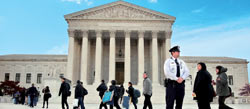
Here is what well known columnist Maureen Dowd writes about the American Supreme Court in New York Times, “This court, cosseted behind white marble pillars, out of reach of TV, accountable to no one once they give their last word, is well on its way to becoming one of the most divisive in modern American history. It has squandered even the semi-illusion that it is the unbiased, honest guardian of the Constitution. It is run by hacks dressed up in black robes.”
 Here is what columnist Kevin Drum writes in the liberal website motherjones.com, “ This is beyond bizarre… These judges are acting like a middle school teacher handing out punishment to a student because of something her father said at a city council meeting the night before… somebody on the right needs to speak up about this. It is an outrageous abuse of judicial power.”
And finally, here is what columnist David R. Dow writes in the web site thedailybeast.com, which is linked to the weekly newsmagazine Newsweek, “Impeach the Supreme Court Justices if they overturn the Health Care Law… You think the idea is laughable? Thomas Jefferson disagreed with you… The problem with the current court is not merely that there is a good chance it will strike down a clearly constitutional law. The problem is that this decision will be a latest salvo in what seems to be a sustained effort on the part of the Roberts Court to return the country to the Gilded Age… In the end, it is the duty of the people to protect the Constitution from the Court. Social progress cannot be held hostage by five unelected men.”
Please remember, these strong words have been published at a time when a highly controversial issue in America is what the legal fraternity terms as “sub-judice”. Why have they used up so much space with quotes that eviscerate, insult, mock and ruthlessly criticize the Supreme Court of the United States and its honourable judges? And, can you imagine any columnist, lawyer, politician or activistin India gathering the guts to write about the Supreme Court of India on similar lines? Not for a moment am I saying that the American system is definitely superior. The manner in which the Tea Party, the Republican Party and even the Court have been behaving over the last few years makes it clear that India can well do without some aspects of American democracy and judicial review.
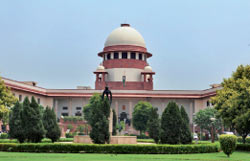
 Yet, in its own unique way, Indian democracy, too, is facing challenges related to freedom of speech (the latest antics of the West Bengal government is just one fleeting example of how those in positions of power and authority are trying damn hard to suppress free speech, often aided by ideologues, demagogues and mobs). I am referring to the contentious hearings in India’s Supreme Court on a proposal to set guidelines for journalists covering court hearings and reporting on them. These hearings have been a result of repeated complaints from politicians, industrialists and lawyers that the mediaoften presents legal issues and court hearings in a biased, prejudiced and sensational manner. The other part of this sometimes valid complaint is that such reporting amounts to trial by media and an accused is declared guilty even before a court can hand out a verdict. The third element of this complaint is that such media coverage could affect the judges.
I will not bore you with tortured details and arguments that are flying around on this issue. The first thing I would say is that there is no doubt that the media and journalists sometimes get it wrong while reporting court hearings and judicial issues. They are human after all. And yet, as jurist Shanti Bhushan points out, Indian laws and courts already have enough powers to punish the media and journalistswho deliberately give misleading or false accounts. Why add another set of draconian guidelines to existing laws? Let me repeat what Bhushan said to the honourable judges during a recent hearing, “Judges are robust people. They are trained in law of evidence, IPC, CrPC etc. and they can’t be swayed by media reports. Public debate helps the course of justice.”
I wouldn’t even dream of claiming to understand the intricacies of Indian law and the Indian Constitution. But I think that common sense clearly points towards just one conclusion: It would be dangerous to impose curbs on the media just because of a few black sheep. Surely, some judges in India have been known to succumb to human temptations, sometimes leading to impeachment proceedings. Should we tar the entire judiciary because of a few black sheep?

 Issue Dated: Feb 5, 2017

